
The Touchscreen Overreach Is Being Corrected
For several years, car interior designers and cost accountants agreed on one thing: touchscreens were the future. Every function, from climate to audio to indicator stalk operations, could theoretically be buried inside a haptic panel. The result looked clean in press photos and cost less to produce than physical controls.
The problem is that people are dying because of it. Distracted drivers, eyes pulled from the road to navigate sub-menus while travelling at speed, is a documented safety issue. Safety organisations have noticed, and the industry is now being steered toward a correction.
ANCAP, Australia's new car safety rating body, has confirmed it will align its 2026 assessment criteria with Euro NCAP's new requirements covering how key driver controls are placed and accessed.
What ANCAP Now Requires
The new criteria specifically target controls that a driver needs to access quickly without taking their eyes off the road. These include indicators, hazard lights, windscreen wipers, headlights, and the horn.
Under the new framework, manufacturers are rewarded for providing physical buttons or stalks for these functions rather than burying them in touchscreen menus. The alternative is dedicating a fixed portion of the cabin display to these functions so they remain visible without menu navigation.
"If you've noticed that some new cars have the most basic driver controls buried within touchscreens and sub-menus, you're not alone," ANCAP's latest publication stated. "It's time to bring back buttons and stalks and remove some of the complication (and distraction!)."
Euro NCAP introduced its new Human-Machine Interface assessments as part of its 2026 criteria. They focus on "evaluating the placement, clarity, and ease of use of essential controls" and specifically address "the availability of physical buttons for commonly used functions, which consumer feedback suggests can reduce distraction."
Which Brands Are Most Affected
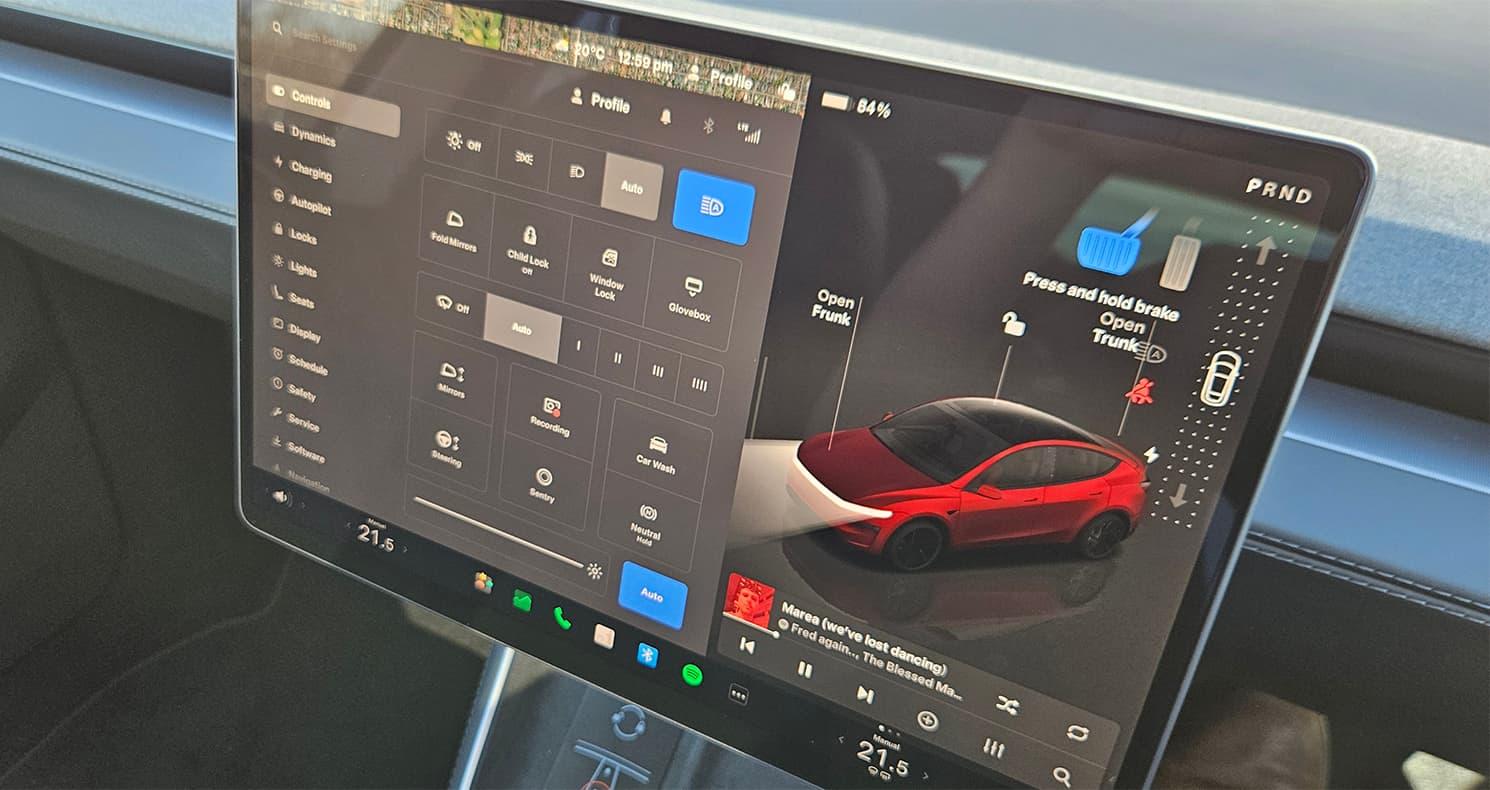
Tesla and Volvo have been among the most aggressive adopters of the all-screen approach. Tesla's Model Y and Model 3 route most vehicle functions through a single large central screen, including the gear selector and many safety controls. Volvo's recent models, while generally well-received for quality, have also pushed key functions into the infotainment system.
These brands will need to reconsider their approach if they want strong ANCAP ratings in the Australian market. That is a real commercial consideration, given that ANCAP five-star ratings are cited in advertising and heavily influence fleet buying decisions.
The correction here is not punitive, it is structural. Brands that have retained physical controls for primary driving functions will benefit from better scores without needing to redesign their interiors. Those that went all-in on screens face a more significant engineering task.
The Brands That Never Abandoned Buttons
Toyota and its premium sibling Lexus have largely retained physical controls for primary functions across their recent model ranges. The same is broadly true for Hyundai, Genesis, and Kia, though those brands have not been immune to the trend entirely.
Hyundai and Genesis chief creative officer Luc Donkerwolke was publicly candid about the issue in 2024, admitting the brands had "gone too far in minimising physical controls." His statement points to a decision made under commercial pressure that is now being reversed.
"We have a clear philosophy, eyes on the road, hands on the steering wheel," Donkerwolke said. He also confirmed that removing physical buttons is often motivated by cost reduction rather than genuine user experience improvement. "It's easy to reduce all costs when you only have digital keys. It's low tooling investment, you can do whatever you want. It's only software. The problem is it's not compatible with the use of a car."
That admission is more significant than it might initially appear. An OEM design chief acknowledging that physical button removal was primarily a cost decision, not a safety or user experience improvement, is a frank admission of an industry-wide calculation that has gone wrong.
The Designer Perspective
Not all interior designers have embraced the screen-heavy approach uncritically. Aston Martin's director of design Miles Nurnberger articulated the counterargument clearly: physical controls allow drivers to operate the car without looking at a screen, which is both safer and more intuitive.
"I might be able to make something seemingly more efficient by burying everything in a screen, but it doesn't talk to the real user experience," Nurnberger said. "You look at the best experience, the best user solution. It might be physical, it's tactile. I can do that with my thumb. I don't take my eyes off the road. I'm a better driver for it."
This is the argument that ANCAP's new criteria effectively validate through their scoring system. Brands that prioritised tactile usability are being rewarded. Brands that prioritised visual minimalism and cost reduction are being asked to reconsider.
What Buyers Should Do
If you are currently shopping for a new car in Australia and interface usability matters to you, the following is practical guidance.
Look for physical controls for indicators, hazard lights, wipers, and headlights. These are non-negotiable under ANCAP's new framework. If a car you are considering has these buried in a touchscreen, that is both a safety concern and a likely indicator of a future design update.
Test the infotainment system in the showroom specifically for distraction. Can you adjust the radio volume without looking at the screen? Can you turn on the heated seats while driving? These are useful tests of whether a vehicle's interface was designed for usability or aesthetics.
Carseekers provides independent guidance on new car purchases in Australia. For buyers who want to understand how different models perform on usability rather than just features lists, that kind of hands-on assessment is exactly what our team helps with.
Considering finance for your next car? Loanseekers can help you explore car loan options.
The finer details
Your questions answered.
Are new cars required to have physical buttons in Australia?
Not required, but ANCAP's 2026 assessment criteria now reward physical controls for key driver functions such as indicators, hazard lights, wipers, headlights, and the horn. Cars that bury these in touchscreens will score lower on ANCAP's new Human-Machine Interface assessment, which can affect overall star ratings.
Which car brands are most affected by ANCAP's new physical controls rules?
Tesla and Volvo have been the most aggressive adopters of all-screen interiors and will face the most pressure to adapt. Brands like Toyota, Lexus, Hyundai, and Kia, which retained physical controls for primary functions, are better positioned under the new criteria.
Why did car brands remove physical buttons in the first place?
Primarily cost reduction. Physical buttons require tooling, assembly, and quality control. Touchscreens consolidate multiple functions into software, which is cheaper to update and cheaper to manufacture at scale. Hyundai's design chief publicly acknowledged this was a cost-driven decision, not a user experience one.
Does it matter for safety whether a car has physical controls?
Yes. Safety research consistently shows that drivers take longer and experience greater distraction when accessing controls through touchscreen sub-menus compared to physical buttons. ANCAP's new criteria reflect this, targeting functions that need to be accessible without the driver looking away from the road.
How can I tell if a car has good physical controls before buying?
Test the car in the showroom specifically for the controls you use most: adjust the fan speed, turn on the heated seats, operate the wipers, and try the hazard lights. If any of these require navigating touchscreen menus, that is a practical limitation worth factoring into your purchase decision.
When did ANCAP change its rules about physical controls?
ANCAP aligned with Euro NCAP's 2026 assessment criteria, which introduced new Human-Machine Interface evaluations focused on the placement and accessibility of essential driver controls. Euro NCAP had signalled this direction from late 2025, and ANCAP confirmed it would follow the same approach for 2026 assessments.