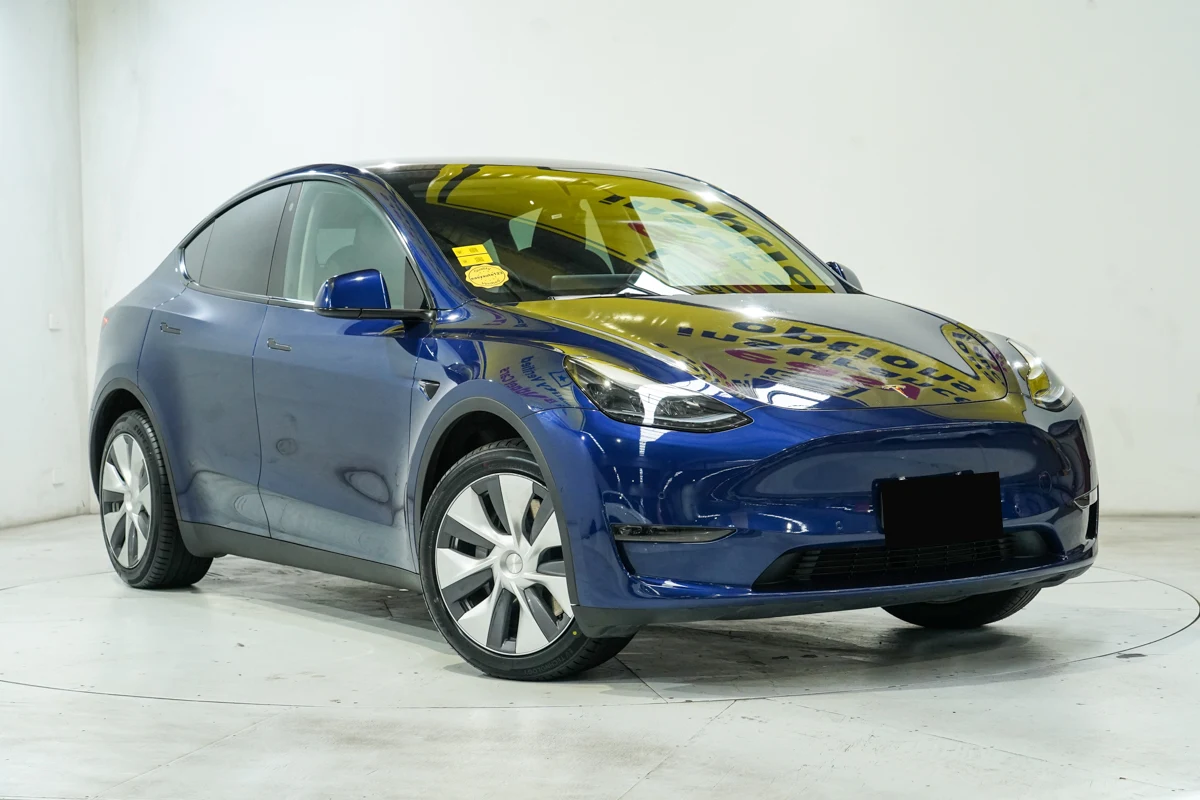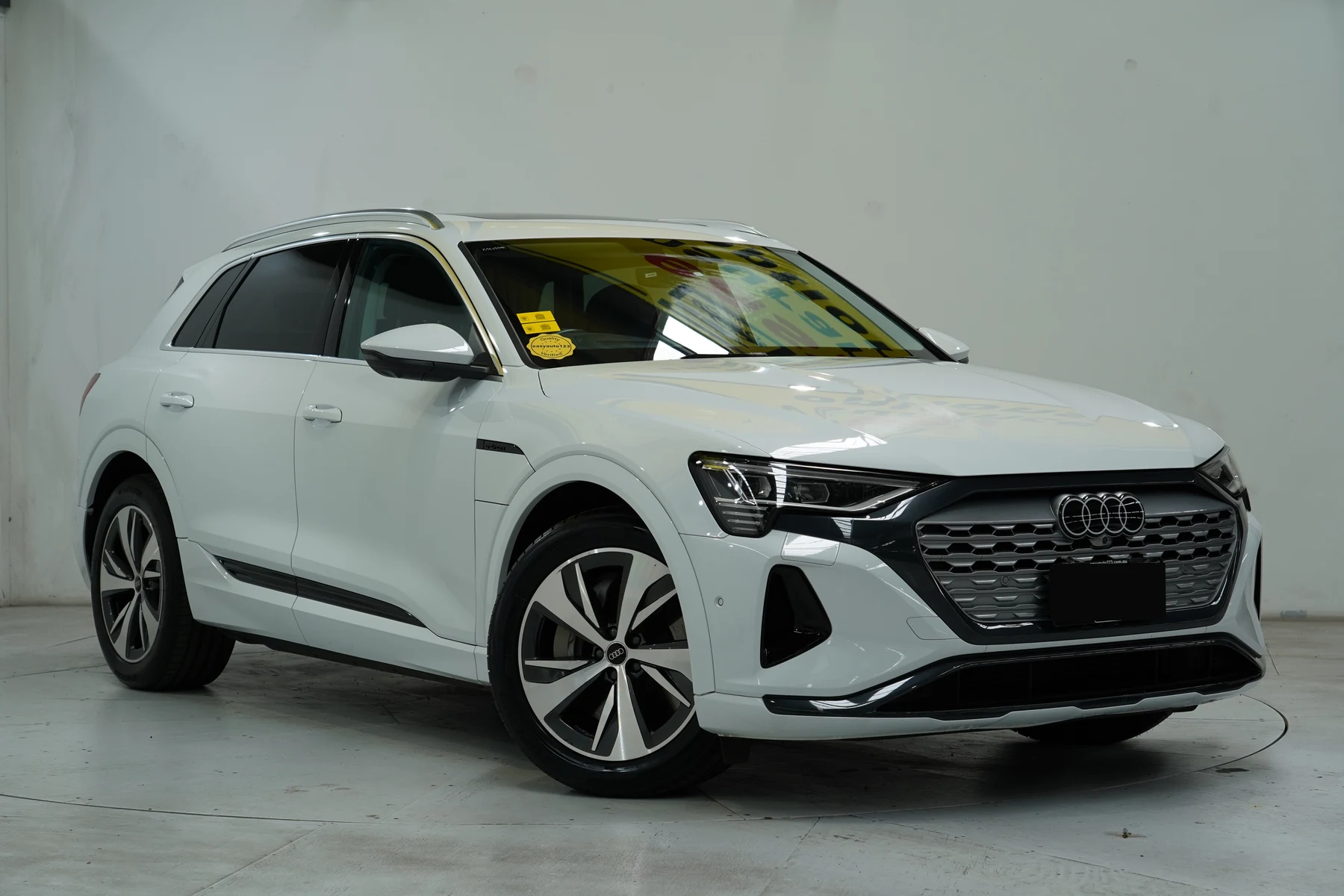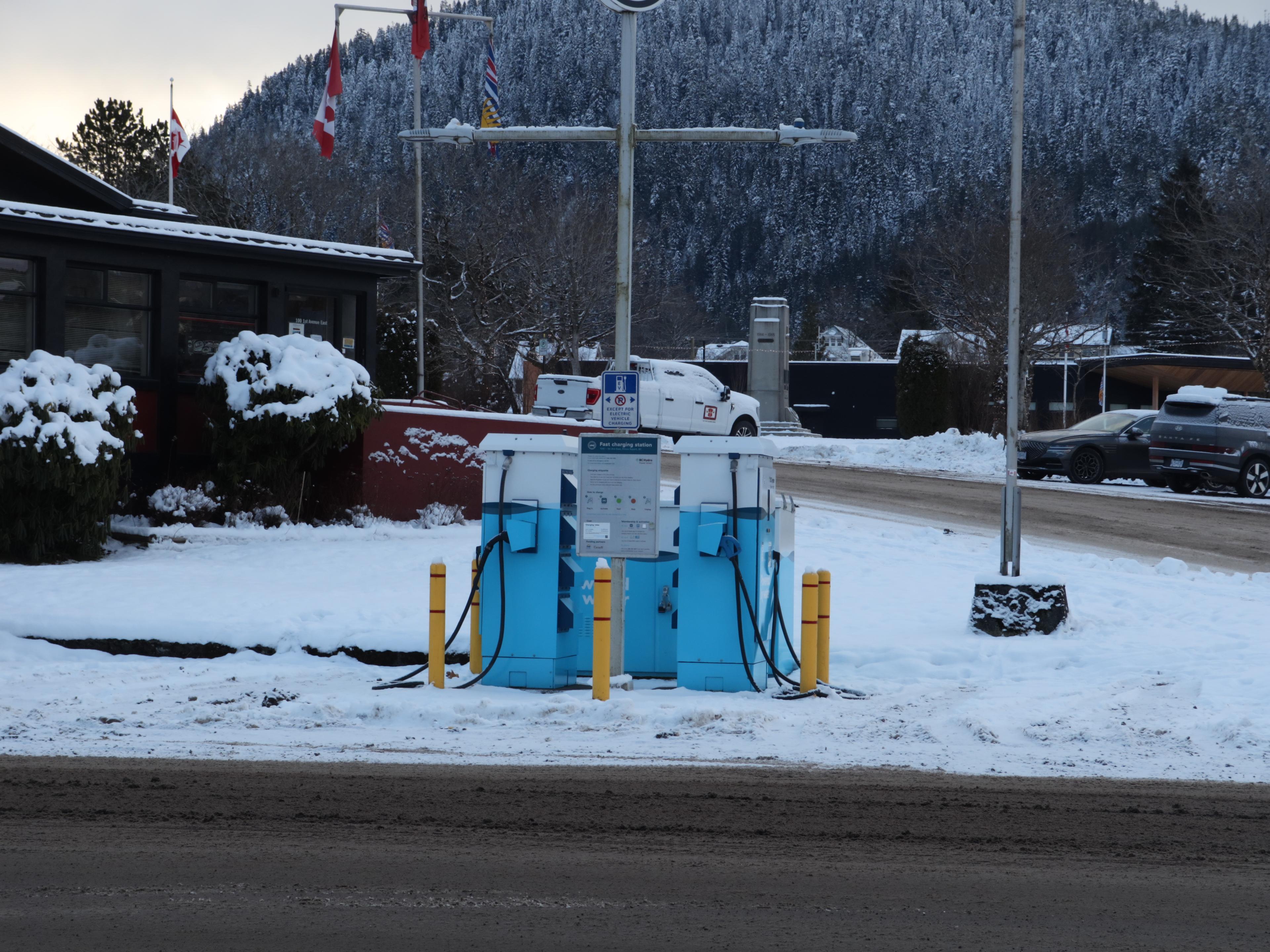

A fast-charging station in snow in Prince Rupert, Canada. Illustrative cold-weather charging context, not an Australian location. Previews may crop the photograph.
Photo: WindBorneListener · CC0
EV winter range is a trip-planning question, not a percentage you can safely copy from another car. Check the exact vehicle's heating equipment and instructions, then build the journey around its current route prediction and a suitable reserve.
Tesla's Australian winter-driving guidance explains that cold conditions can increase energy use for cabin and battery heating. It also describes preconditioning and route-based battery warming. Follow your own manufacturer's procedure rather than assuming another brand behaves the same way.
Verify the equipment you are buying
Ask whether the exact variant and build has a heat pump, what its preconditioning system does and whether it can prepare the battery for a planned fast-charge stop. Obtain the Australian specification or VIN-specific confirmation.
Keep those questions separate. Cabin warmth, battery preparation and having a particular heating component do not establish a guaranteed range or charging time for your route.
Tesla also explains that a heat pump, where fitted, can recover heat from vehicle components to reduce heating energy in its range guidance. That does not establish a winter-range percentage for a different vehicle.
Do not apply an efficiency percentage from another vehicle, climate or test as though it were the fitted system's promise. If the manufacturer cannot confirm a feature on the supplied car, leave it unconfirmed in your comparison.
Write a winter-trip worksheet
Departure: starting charge, expected temperature, passengers and luggage, with the charging and preconditioning schedule permitted by the manual.
First leg: the car's predicted arrival charge, the reserve you plan to retain and an earlier alternative stop. Record the prediction's time and conditions so it is not mistaken for a fixed capability.
Charging: compatible connector, access, operating status and a backup. Allow for uncertainty in queueing and battery preparation instead of budgeting only the best advertised charging time.
Return: check charging availability at the destination and whether the return journey has different conditions. Do not plan the return solely from the outward estimate.
Reassess while the trip is still easy to change
Tesla's guidance describes its Energy app comparing consumption with predictions and its Trip Planner showing expected arrival energy. Check the equivalent information available in your vehicle and act on a narrowing reserve before passing a usable stop.
If you cannot establish a workable backup, change the departure charge, route or timing before setting out. Snow access, tyres and road restrictions also need their own current checks; range planning does not settle them.
Our EV range-concern article covers buying attitudes. This worksheet is for a particular winter journey, without promising that a heat pump eliminates the effect of cold weather.
Include intended travel and charging arrangements in the car budget. If considering finance for the vehicle, visit Loanseekers with the agreed purchase amount and a separate travel budget.