
Ford's Take on the BYD Ship Story
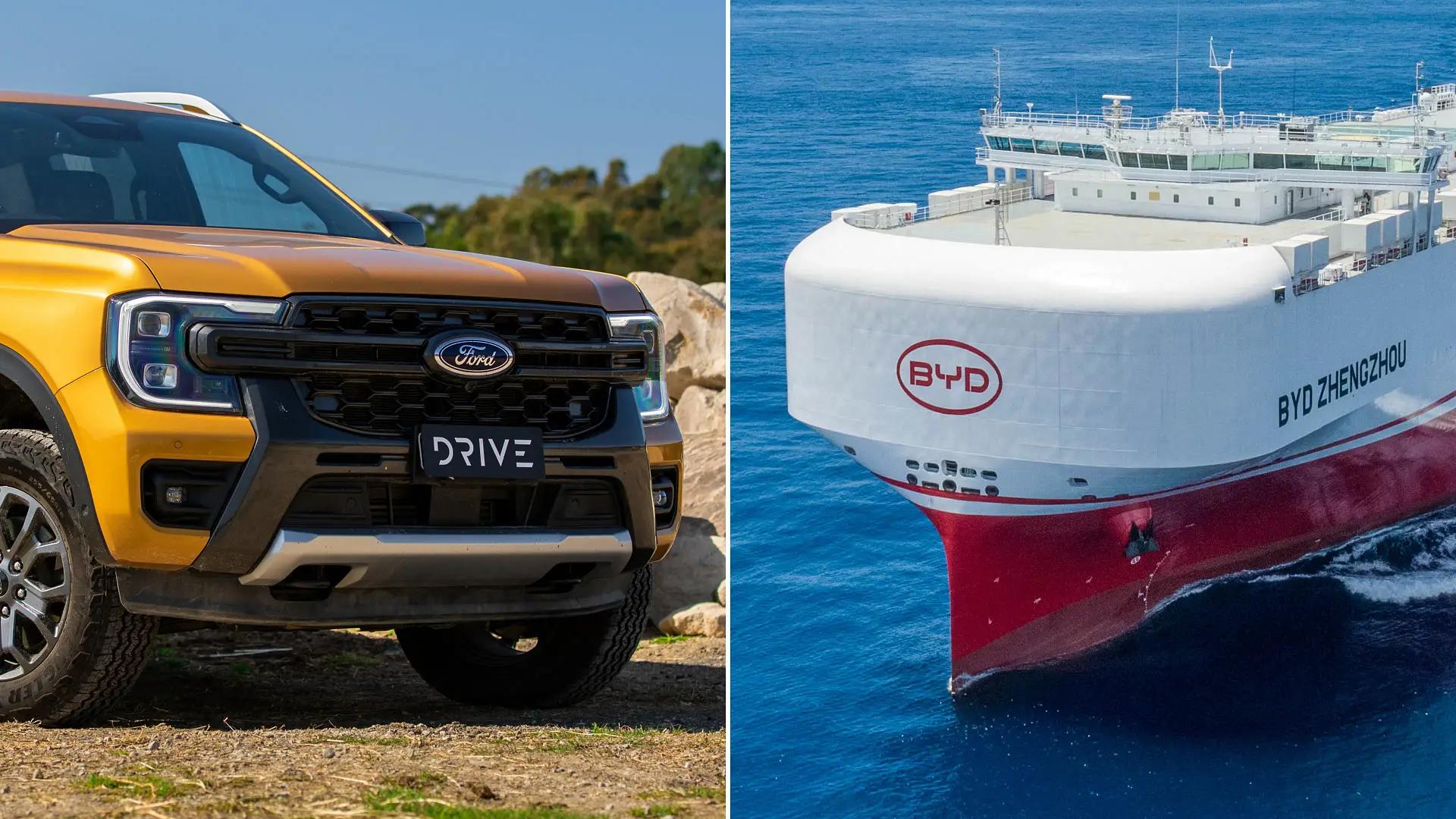
When BYD announced that one of its eight car-carrying ships was delivering nearly 5000 vehicles to Australia in a single voyage, the headlines made it sound like a statement of dominance. Ford's response: they have been doing the same thing for years, just without the press release.
Ford Australia marketing director Ambrose Henderson told local media the story was "part PR, part sensationalisation." He pointed out that Ford leased two dedicated ships three to four years ago to transport Rangers and Everests from Thailand, with at least one vessel capable of holding 2600 vehicles per trip.
"We do that every month. We do more than 5000 cars coming out of Thailand," Henderson said. The difference, as Ford sees it, is that it never issued a press release about its shipping logistics.
BYD Did Something Structurally Different
There is a genuine difference between Ford's arrangement and BYD's, and it matters. Ford leased ships from a third-party operator for a fixed term. BYD spent approximately $1.03 billion to purchase a fleet of eight roll-on, roll-off car carriers outright. The BYD Zhengzhou, heading to Australia, is one of those owned vessels.
Owning logistics infrastructure rather than leasing it is a strategic decision, not just a PR exercise. It means BYD controls its own supply chain, can prioritise Australian deliveries without negotiating with a third party, and can scale volume without the lead time of chartering additional vessels.
Ford is not wrong that the story has been sensationalised. But characterising BYD's logistics investment as equivalent to a short-term lease understates the scale of BYD's commitment to the Australian market.
Carseekers has tracked BYD's rapid growth in Australia, including a recent surge in shipments targeting 30,000 vehicles arriving in May and June alone.
What This Means for the Ranger and Everest
Almost 90 per cent of Ford's Australian sales volume is the Ranger and Everest. That is both a strength and a vulnerability. When those two models sell well, Ford does well. When the market shifts away from diesel-powered utes and SUVs, Ford faces a structural problem.
The NVES emissions rules are creating exactly that pressure. The Ranger and Everest in most variants run diesel engines with relatively high CO2 outputs. As the NVES limits tighten each year, Ford faces a growing penalty bill unless it shifts more buyers into lower-emission variants.
The Ranger PHEV is Ford's primary answer to that challenge. It qualified for drive-away pricing campaigns earlier this year to stimulate take-up. But the PHEV is more expensive to buy than the diesel, and most buyers choosing a ute for towing and off-road work have been slow to convert.
The 101-Year History Argument
Henderson invoked Ford's 101-year presence in Australia as evidence of the company's ability to navigate disruption. It is a reasonable historical point. Ford has survived depression, war, oil shocks, and the end of Australian manufacturing.
The Chinese EV and hybrid invasion is a different kind of disruption though. It is happening faster than previous market shifts, is driven by brands with significant government backing and manufacturing scale, and is targeting exactly the segments where Ford is most dependent.
BYD is not just selling cars. It is building the infrastructure to compete in Australia for decades. Owning shipping capacity is one example. Building out charging networks is another. Training local service technicians is a third. These are long-term commitments that suggest BYD's presence is not a temporary wave.
What Buyers Should Take From This
For buyers currently shopping a ute or large SUV, the Ford versus BYD narrative is mostly background noise. What matters is pricing, features, reliability, and resale.
The Ranger remains one of the best-built and most capable utes in Australia. Its PHEV and diesel variants cover different use cases well. Ford's logistics investment means supply should remain stable through periods of high demand.
BYD's Shark 6 is out-competing the Ranger on specification at similar price points in many trim comparisons, and the shipping investment means stock is arriving consistently. For buyers who would previously have defaulted to a Ranger because there was no serious competition, there is now a serious competition.
What Happens When NVES Penalties Escalate
The NVES penalties for selling too many high-emission vehicles escalate meaningfully in 2027 and 2028. For Ford, which relies on diesel Ranger and Everest sales for the vast majority of its Australian revenue, this creates a structural cost challenge.
Car companies facing penalty bills typically pass them to buyers as quiet price increases, or invest in lower-emission variants to offset the CO2 credits. Ford's PHEV investment is partly about that offset. But if the PHEV take-up rate remains low, the penalties accumulate and the bill eventually appears somewhere, either in Ford's margin or in the list price of a new Ranger.
Buyers considering a Ranger purchase in the next 12 to 24 months should watch for signs of price movement tied to NVES compliance costs.
The Competitive Pressure Is Real and Growing
Henderson acknowledged the competition directly: "There's a new wave of competitors coming. Of course, we are assessing what they are doing." That is the honest read.
Ford has earned the benefit of the doubt in Australia over a century of operation. But the competitive landscape is shifting faster than at any point since Japanese brands entered the Australian market in the 1970s. The ship story may be overblown. The pressure it represents is not.
For buyers, the right outcome here is lower prices, better features, and more powertrain choice as both brands compete harder for the same customer. That is already happening, and it should continue to intensify through 2026 and 2027.
Considering finance for your next car? Loanseekers can help you explore car loan options.
The finer details
Your questions answered.
Why did Ford call BYD's ship story sensationalist?
Ford Australia's marketing director said BYD's announcement of a 5000-vehicle car carrier heading to Australia was no different from Ford's own shipping arrangements, which see similar volumes arrive monthly from Thailand on leased vessels. Ford's point is that shipping cars in bulk is routine for large brands, not a statement of intent.
Does BYD own its ships and what does that mean for Australia?
Yes. BYD owns a fleet of eight roll-on, roll-off car carriers, having spent approximately $1.03 billion acquiring them in 2022. Owning logistics infrastructure rather than leasing it means BYD controls its own supply chain and can prioritise Australian deliveries without depending on third-party operators. That is a structural advantage over brands that charter vessels.
How much of Ford's Australian sales are the Ranger and Everest?
Almost 90 per cent. That concentration is both a strength in a segment where the Ranger has been Australia's best-selling vehicle for years, and a vulnerability as the NVES emissions rules tighten. Ford's entire Australian business is heavily exposed to the performance of two diesel-focused models.
Will NVES penalties make the Ford Ranger more expensive?
Potentially. The NVES CO2 limits tighten each year from 2026, and diesel Ranger variants will increasingly accrue penalty credits unless offset by low-emission variants like the Ranger PHEV. Car companies typically absorb some penalties and pass the rest to buyers as quiet list price increases. The risk for Ranger buyers grows if PHEV take-up stays low.
Is the BYD Shark 6 a genuine rival to the Ford Ranger in Australia?
Yes. The Shark 6 has established itself as a competitive alternative to the Ranger and Hilux with a strong feature list, plug-in hybrid power, and a lower running cost story. BYD's logistics investment means stock is arriving consistently, removing the availability excuses that slowed earlier Chinese brand growth in Australia.
Should Ranger buyers wait or buy now given the BYD competition?
If you need a workhorse diesel ute for towing and off-road use, the Ranger remains one of the best-built options available. If your use case is primarily road driving with occasional loads, the Shark 6 or Ranger PHEV both offer a more relevant powertrain mix. The competition is genuine and buyers benefit from it through better pricing and features.