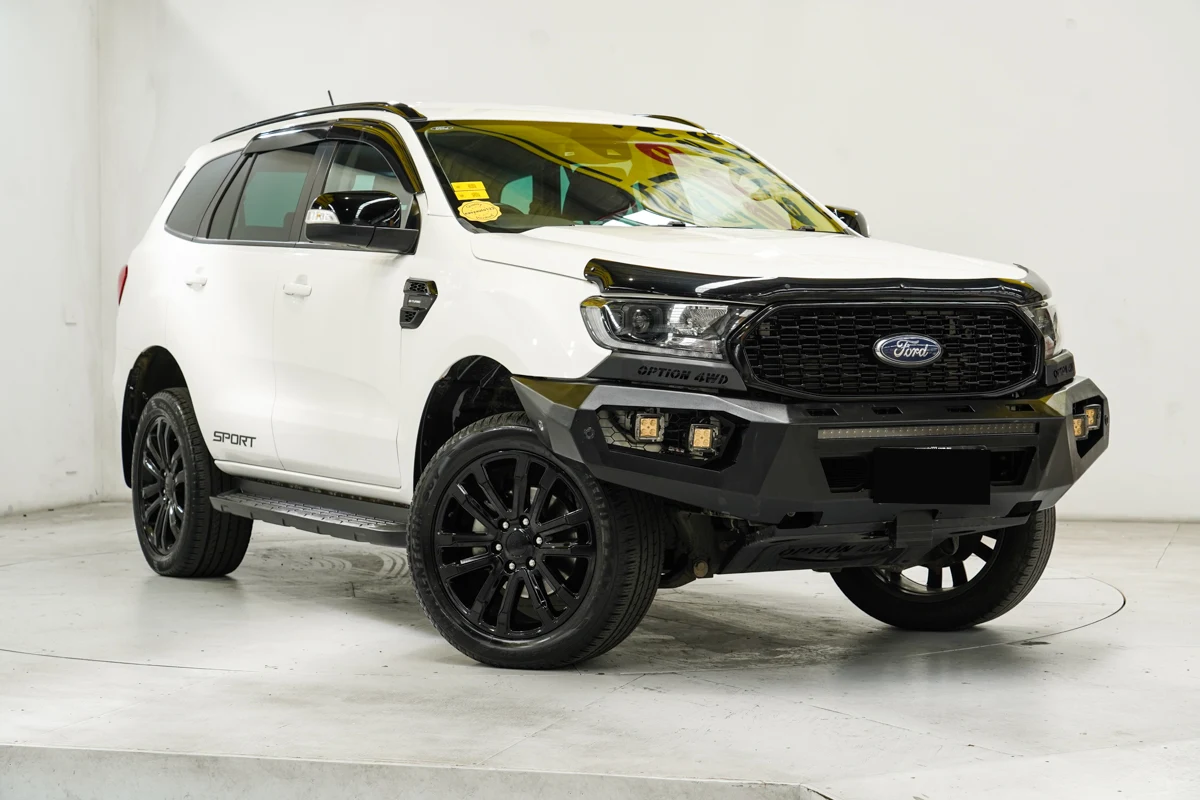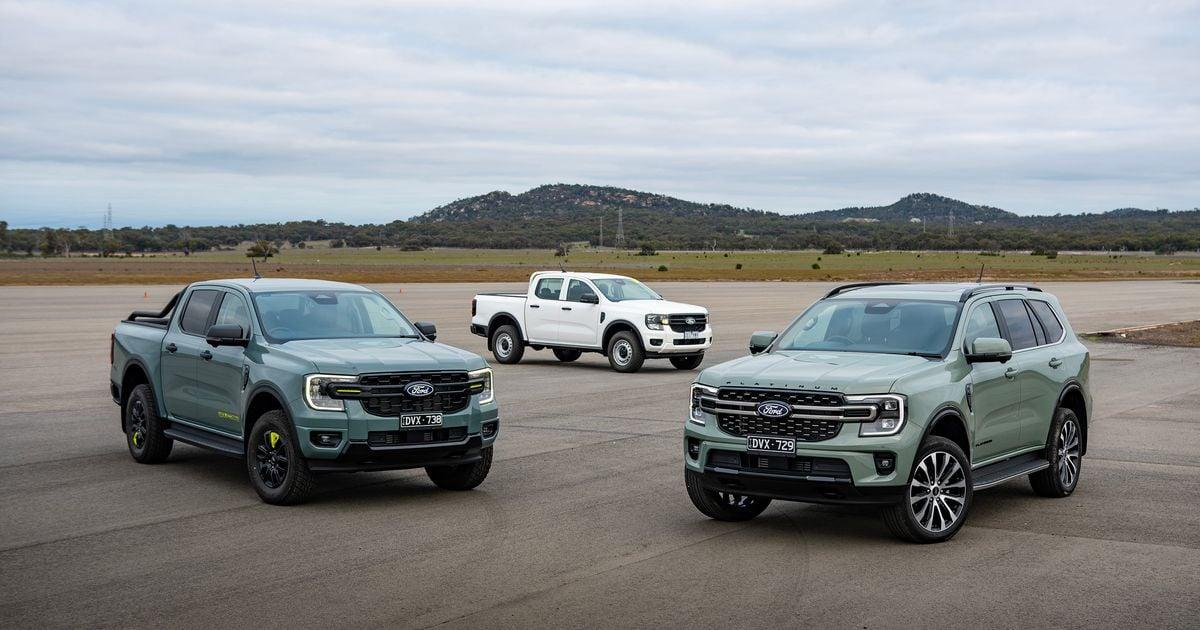

Ford has made a quietly controversial decision with the MY2026.50 update to the Ranger and Everest. The volume-selling 2.0-litre bi-turbo diesel that did the heavy lifting across both lineups has been pulled, replaced by a single-turbo 2.0-litre four-cylinder that on paper looks like a step backwards.
The outgoing bi-turbo made 154kW and 500Nm. The new single-turbo makes 125kW and 405Nm. That is a 29kW power deficit and a 95Nm torque deficit, in a segment where Australian buyers compare specs across the kitchen table.
Ford defended the change at the MY26.50 launch and the company's logic is more interesting than the spec sheet suggests. Carseekers has worked through what is actually changing under the bonnet, what Ford is and isn't telling buyers, and whether the new engine is the right choice for your ute.
The old bi-turbo had a problem you weren't supposed to know about
Ford did not just rationalise its engine portfolio for a bit of light cost-saving. The outgoing 2.0-litre bi-turbo diesel used a wet cambelt design, where the toothed timing belt runs in an oil bath rather than being chain-driven.
Wet belts have been a recurring headache for several manufacturers globally, including Ford itself across other product lines. Premature wear, contamination from oil additives and high replacement costs created a steady stream of warranty claims and out-of-warranty horror stories. Ford has now globally discontinued the bi-turbo engine, and that is the unspoken backdrop for everything Ford Australia said about the new unit.
The new single-turbo 2.0-litre is chain-driven. That single change removes one of the most common pain points in long-term Ranger and Everest ownership. From a five-to-seven-year ownership perspective, this is the most important detail in the entire update, and Ford has been careful to frame it as a customer cost-of-ownership upgrade rather than acknowledging the wet-belt issue directly.
What Ford actually says about the power drop
Ford Australia's director of marketing Ambrose Henderson defended the swap at the MY26.50 launch with a now-familiar line. Paper numbers don't matter, in-the-real-world drive characteristics do. "This is the most responsive diesel engine that we've ever produced," Henderson said.
That is the kind of statement that sounds great in a press release and is harder to verify on a dealer test drive. Ford does have a point on torque delivery, though. The new single-turbo's torque curve is flatter and the peak is held over a wider rev range than the old bi-turbo, which means more of its output is actually accessible in normal driving rather than only when the second turbo spools.
Ford has also paired the new engine with a 10-speed automatic in place of the old six-speed and a shorter 3.73 final drive. Both changes are designed to mask the headline power loss by keeping the engine closer to its sweet spot more of the time.
How it compares to the new HiLux and Triton
This is where the spec-sheet pain genuinely shows up. The new Toyota HiLux lineup is powered by a 2.8-litre turbo-diesel producing 150kW and 500Nm (420Nm for manual variants). The Mitsubishi Triton and Nissan Navara, now sharing a platform and powertrain, run a 2.4-litre bi-turbo diesel making 150kW and 470Nm.
The Ranger's entry diesel is now the least powerful in the mainstream dual-cab segment. That is a marketing problem for Ford, particularly when dealers from rival brands will eagerly point to the kilowatt-and-Newton-metre gap during a competitive cross-shop.
What the comparison glosses over is that the wider Ranger lineup still has the 3.0-litre V6 turbo-diesel, the 2.3-litre plug-in hybrid, and the 3.0-litre twin-turbo petrol V6 in the Raptor. Ford's argument is that buyers who want maximum capability move up to the V6, and the entry-level 2.0-litre is positioned as the value play. That is technically correct, and conveniently sells more V6 Rangers.
Fuel economy is genuinely better
The one place the new engine wins clearly is at the bowser. The MY26.50 Ranger 2.0-litre is rated at 6.8 to 7.6 L/100km combined (4x2 to 4x4), against the outgoing bi-turbo's 7.6 to 8.2 L/100km. With diesel prices where they are in 2026, that is a real number that flows through to the running cost calculation.
Ford global T6 platform chief program engineer Pritika Maharaj also confirmed a full recalibration of both engine and transmission, new fuel injectors, new fuel pumps, and steel pistons for better thermal management in combustion. None of that shows up in the headline power figure, but all of it points to a more durable, more efficient engine in the long run.
What this means for towing and capability
The new entry diesel keeps the Ranger's 3.5-tonne towing capacity intact, which is the number that matters for caravan and boat owners. Payload is unchanged. The 10-speed automatic helps the engine work harder up hills under load, but if your typical use case is towing 3 tonnes through the high country, the V6 turbo-diesel is still the engine you actually want.
The entry-level 2.0-litre exists for the buyer who wants a Ranger XLT or Sport for school drop-offs, weekend trailers, and the occasional run to the tip. For that buyer, the loss of 29kW is largely academic. The engine still delivers usable torque in city traffic, the auto smooths over any flat spots, and the long-term reliability story is now materially better.
Dealer behaviour to watch
This is the change that will reshape how Ranger dealers pitch the lineup. Expect a much stronger push toward the V6 diesel and the PHEV at point-of-sale, particularly for buyers who walk in asking about the 2.0-litre.
The sales psychology is straightforward. A salesperson now has a built-in upgrade story. "The entry engine is great for what it is, but for another five or six thousand dollars you can step up to the V6 with significantly more torque." That conversation was harder when the entry 2.0-litre had 154kW. It is much easier when it has 125kW.
If you have already decided that the 2.0-litre is the right engine for your use case, anchor that conversation early. Get drive-away pricing in writing on the variant you want before the salesperson tries to upsell you into a V6 you do not need.
Watch out for the usual finance and add-on theatre. Paint protection, undercoating, fabric protection and tinted window packages on a brand-new ute can add four to six thousand dollars to the deal in twenty minutes. None of it is necessary. The factory paint, plastic interior, and tinted privacy glass already handle Australian conditions perfectly well.
Should you wait for the price cut?
The global engine rationalisation also means Ford is no longer building inventory of the outgoing bi-turbo. Dealers should be working through final stock of the previous-generation 2.0-litre Ranger and Everest variants over the next few months, and that is where the genuine deals will be. If you have the patience to wait until late June or July 2026, run-out pricing on the bi-turbo could be meaningfully better than launch pricing on the new single-turbo, and the engine is the one customers have already lived with for years.
The upside of the new engine, namely the chain drive and the improved fuel economy, only matters if you intend to keep the ute for the long term. For a three-year lease buyer, run-out bi-turbo stock is probably the better play.
The Carseekers take
Less power on a spec sheet is never a good look, particularly when your two biggest rivals have not moved on their numbers. Ford's defence is grounded in legitimate engineering improvements, and the wet-belt-to-chain swap alone justifies the change for owners who keep their utes past warranty.
The risk for Ford is that the next-door dealer can simply hold up a Toyota or Triton spec sheet and let the kilowatts do the talking. That is a sales problem Ford created for itself, and there is a real chance MY26.50 entry-level Ranger and Everest sales suffer for it in the short term.
If you are buying for a five-plus-year ownership horizon, the new single-turbo is probably the better engine. If you are buying for a three-year cycle and care about maximum capability, either wait for V6 promotional pricing or hold out for the rivals to flinch on their own deals.
Considering finance for your next car? Loanseekers can help you explore car loan options.
The finer details
Your questions answered.
Why did Ford reduce the power of the Ranger and Everest 2.0-litre diesel?
Ford has globally retired the bi-turbo 2.0-litre, partly to meet emissions regulations and partly to walk away from its problematic wet-belt design. The replacement single-turbo 2.0-litre uses a chain drive instead, which Ford has framed as a cost-of-ownership upgrade rather than addressing the bi-turbo's issues directly.
How much power does the new Ford Ranger 2.0L produce?
The new single-turbo 2.0-litre diesel makes 125kW and 405Nm, which is 29kW and 95Nm less than the outgoing bi-turbo it replaces. It is paired with a 10-speed automatic and a shorter 3.73 final drive.
How does the new Ranger engine compare to the Toyota HiLux and Mitsubishi Triton?
The Toyota [HiLux](https://www.carseekers.com.au/model/toyota/hilux) 2.8-litre produces 150kW and 500Nm (420Nm for manual). The Mitsubishi [Triton](https://www.carseekers.com.au/model/mitsubishi/triton) 2.4-litre bi-turbo makes 150kW and 470Nm. The Ranger's entry diesel is now the least powerful in the mainstream dual-cab segment.
Is the new Ranger more fuel efficient?
Yes. The MY26.50 Ranger 2.0-litre is rated at 6.8 to 7.6 L/100km combined depending on drive type, against the outgoing bi-turbo's 7.6 to 8.2 L/100km. The 10-speed automatic and shorter final drive both contribute to the gain.
Can the new Ranger still tow 3.5 tonnes?
Yes, the 3.5-tonne braked towing capacity is unchanged with the new 2.0-litre single-turbo engine. However, for heavy towing on a regular basis the 3.0-litre V6 turbo-diesel is still the better choice because it delivers torque more comfortably under load.
Should I wait for run-out pricing on the old bi-turbo Ranger?
If you intend to keep the ute beyond five years, the new chain-driven single-turbo is the better long-term engine. If you are buying for a three-year cycle, dealer run-out pricing on remaining bi-turbo stock through June and July 2026 could deliver genuine savings, but get drive-away prices in writing before signing anything.