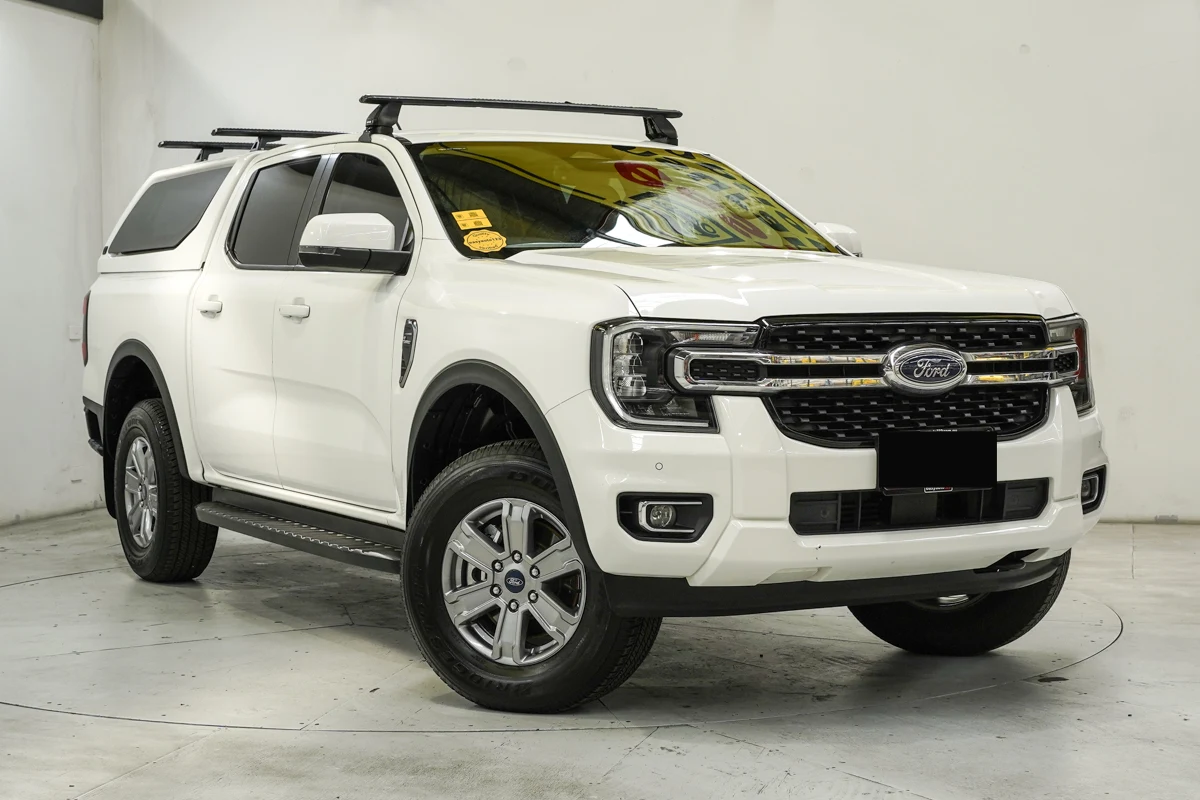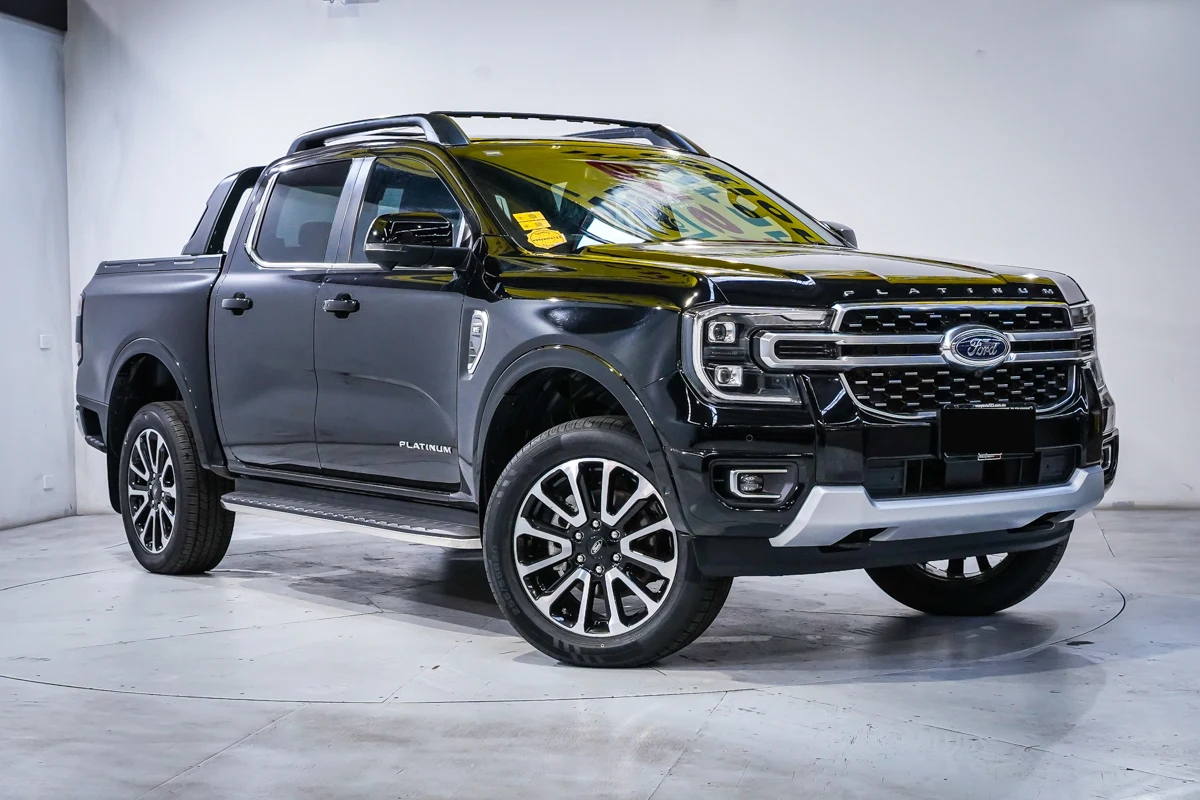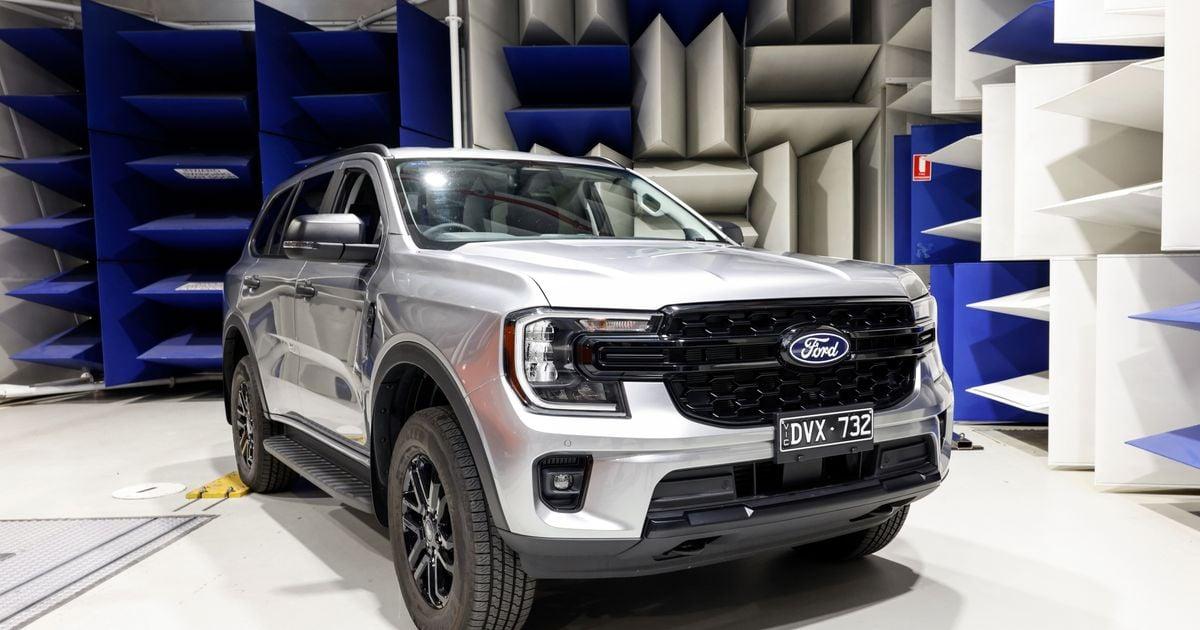

Ford has confirmed what Ranger buyers needed to hear: Australian engineers will develop the next generation of its best-selling ute, just as they've done for every generation since 2011.
The news comes at the launch of the MY26.50 Ranger update, and while it sounds like corporate reassurance, it matters more than it might appear. Earlier this year, Ford CEO Jim Farley visited Australia and explicitly warned that local product development could cease if the federal government's New Vehicle Efficiency Standard, NVES, didn't change. That was a real warning. This confirmation is a real answer.
Why Australian Engineering Actually Matters
Ford is the last automaker in Australia with the facilities and expertise to design and engineer a vehicle from the ground up in this country. It employs 1,500 people across four Victorian facilities: the You Yangs Proving Ground, an R&D site in Geelong, and two facilities at Broadmeadows in Melbourne's north.
Almost half the R&D workforce sits at the Ford International Markets Group Product Development Centre at Broadmeadows. The remaining staff are spread across Geelong, the You Yangs, and Ford's Plant #2 site. This isn't a design studio producing local decals and special editions, these are engineers who decide how the Ranger handles on Australian roads, how it survives outback conditions, and how much it can carry.
The current Ranger, the RA series introduced in 2022, and the PX series before it were both developed in Australia. So was the T6 ladder-frame platform that underpins not just the Ranger and Everest, but also the Ford Bronco and the Volkswagen Amarok. When Volkswagen needed a new Amarok, it licensed Ford's Australian-developed platform.
The NVES Threat Was Real
Ford CEO Jim Farley's March warning was not theatre. The New Vehicle Efficiency Standard penalises brands for selling high-emission vehicles, specifically, diesel utes, unless they offset those emissions with cleaner vehicles. For Ford, whose biggest volume is the Ranger, and whose biggest margins come from higher-specification Ranger variants, this is a direct pressure on profitability.
The Ford Ranger PHEV was part of the response, a plug-in hybrid variant that earns credits against the diesel lineup's emission penalties. But plug-in hybrids aren't enough to fully offset a large diesel ute fleet, and the regulatory settings remain a genuine constraint on how Ford structures its Australian lineup.
Ford Australia director of marketing Ambrose Henderson framed it plainly at the launch: "We have 1,500 personnel at Ford Australia, and every day they are innovating, they are investing in the next update, the next generation, the next advancement, to stay at the forefront of these vehicles, both here and around the world."
That's not a corporate non-answer, it's a direct statement that local development continues.
A Ranger EV Is Not Coming Anytime Soon
Ford Australia's vehicle program director for the T6 platform, Mario Brandini, was asked directly whether an electric Ranger was in development. His answer was about as clear as corporate speak gets: next-generation planning is happening, but the current Ranger has plenty of life left and an all-electric version is not part of the current lifecycle.
"We're out talking to the customers, working out what we really need, and then looking how technology can help deliver that," Brandini said. "We are looking and next gen is on our mind. But at the moment, the product we've got has got a lot of life in it."
Translation for buyers: the next Ranger will likely carry electrification, probably hybrid and PHEV, but a battery-electric ute in the mainstream sense isn't imminent. The BYD Shark 6 and Ford Ranger PHEV currently define the electrified ute category in Australia, and both are plug-in hybrids, not full EVs.
What the You Yangs Proving Ground Actually Does
The You Yangs facility operates 24 hours a day alongside Ford development teams in Dearborn (US), Cologne (Germany), and Nanjing (China). The site hosted the famous 70,000-mile Durability Run that promoted the XP Falcon in 1965, it's been running Fords hard since the year the first Mustang appeared.
Today it handles validation testing for vehicles that will be sold across 190 markets. The Ranger competes globally and is currently the world's second-best-selling mid-size pickup behind the Ford F-150. Ford's stated goal is to overtake the F-150 in global terms, an ambition that only makes sense with a locally developed product tuned for the conditions that define the segment's toughest use cases.
Former Ford Australia chief Jim Baumbick, now heading Ford's European operations, described the Australian team's role with some directness in a recent interview: "For T6, the Ranger vehicle line, this is the home base. The knowledge base around Ranger starts and finishes here."
That's a definitive statement about where the intellectual property and engineering capability for Ford's most global product actually sits.
The Super Duty Is the Model for What Comes Next
Ford's locally developed Ranger Super Duty is the clearest example of what Australian R&D can produce without waiting for global product decisions. Ford sat down with large fleet customers, asked what they needed, heavier payload, 4.5-tonne towing from the factory, and built the answer locally.
No other automaker in Australia could have done this. The Super Duty required accessing international parts catalogues, re-engineering the chassis to heavier gauge steel, and carrying out validation testing in conditions that only make sense for a proving ground in Victoria. The result is a product that directly addresses the aftermarket GVM upgrade industry, keeping money in Ford's ecosystem instead of ARB and Ironman's.
Mitsubishi's local product team has explicitly pointed to the Super Duty as the model it wants to follow with a heavier Triton variant, more on that elsewhere. The point is that the Super Duty demonstrates that Ford Australia can move from customer insight to production in roughly six years, which is a compelling argument for keeping the engineering capability local.
What This Means If You're Buying a Ranger Now
For buyers currently evaluating the Ford Ranger, the MY26.50 update is the current product. It's the right time to buy if you need a ute and the current spec meets your needs, the confirmation of next-generation local development doesn't mean a new model is imminent. The RA Ranger still has years ahead of it.
Buyers weighing up the Ranger against the BYD Shark 6 or JAC Hunter on electrification grounds should note that the Ranger PHEV exists today and is competitively priced. The advantage of buying from a brand with 1,500 local engineers is that product evolution happens continuously, the MY26.50 update is evidence of that.
For fleet buyers and tradespeople, the Super Duty confirmation is particularly relevant. Ford's commitment to Australian engineering includes its capacity to produce work-ready, commercially focused variants that no other brand can match without starting a local operation from scratch.
Carseekers will keep tracking the Ranger's competitive position as new entrants arrive in the electrified ute segment through 2026 and into 2027.
Considering finance for your next car? Loanseekers can help you explore car loan options.
The finer details
Your questions answered.
Is Ford still developing the Ranger in Australia?
Yes. Ford has confirmed that Australian engineers at its Victorian R&D facilities will develop the next-generation Ranger, continuing a run of Australian-developed Ranger generations since 2011. Ford employs 1,500 staff across four Victorian sites and has invested $5 billion in local R&D over the past decade.
Will there be an electric Ford Ranger in Australia?
Not in the current generation's lifecycle. Ford Australia's platform director effectively ruled out a Ranger EV for the existing RA series, saying next-generation planning is underway but the current product has plenty of life left. A plug-in hybrid Ranger PHEV is available now. A future full EV is likely further away than 2028.
What is the Ford Ranger MY26.50 update?
The MY26.50 is a mid-cycle update to the current RA Ranger, announced at a You Yangs Proving Ground launch event. Changes include a move to a single-turbo 2.0-litre diesel on some variants, which reduces peak power slightly. It represents continuous engineering improvement rather than a new-generation product.
Why did Ford CEO Jim Farley threaten to stop Australian development?
Ford CEO Jim Farley warned in March 2026 that Australian product development could cease if the NVES (New Vehicle Efficiency Standard) wasn't changed. The regulations penalise brands for selling high-emission vehicles like the diesel Ranger without sufficient offset from cleaner vehicles. Ford has since confirmed development continues, suggesting the regulatory picture has settled enough to proceed.
What does Ford's Australian R&D team actually build?
Ford's Australian team develops the T6 ladder-frame platform used by the Ranger, Everest, Bronco, and Volkswagen Amarok. They handle design, engineering, and global validation testing at the You Yangs Proving Ground. The team also created the Ranger Super Duty, an Australian-specific heavy-duty variant developed for local fleet needs.
Should I wait for the next-generation Ford Ranger or buy now?
Buy now if you need a ute and the current spec works for you. The next-generation Ranger is in early planning; production is at least several years away. The MY26.50 Ranger is a well-sorted, globally proven product. Waiting makes sense only if you specifically need electrification features beyond what the current Ranger PHEV offers.