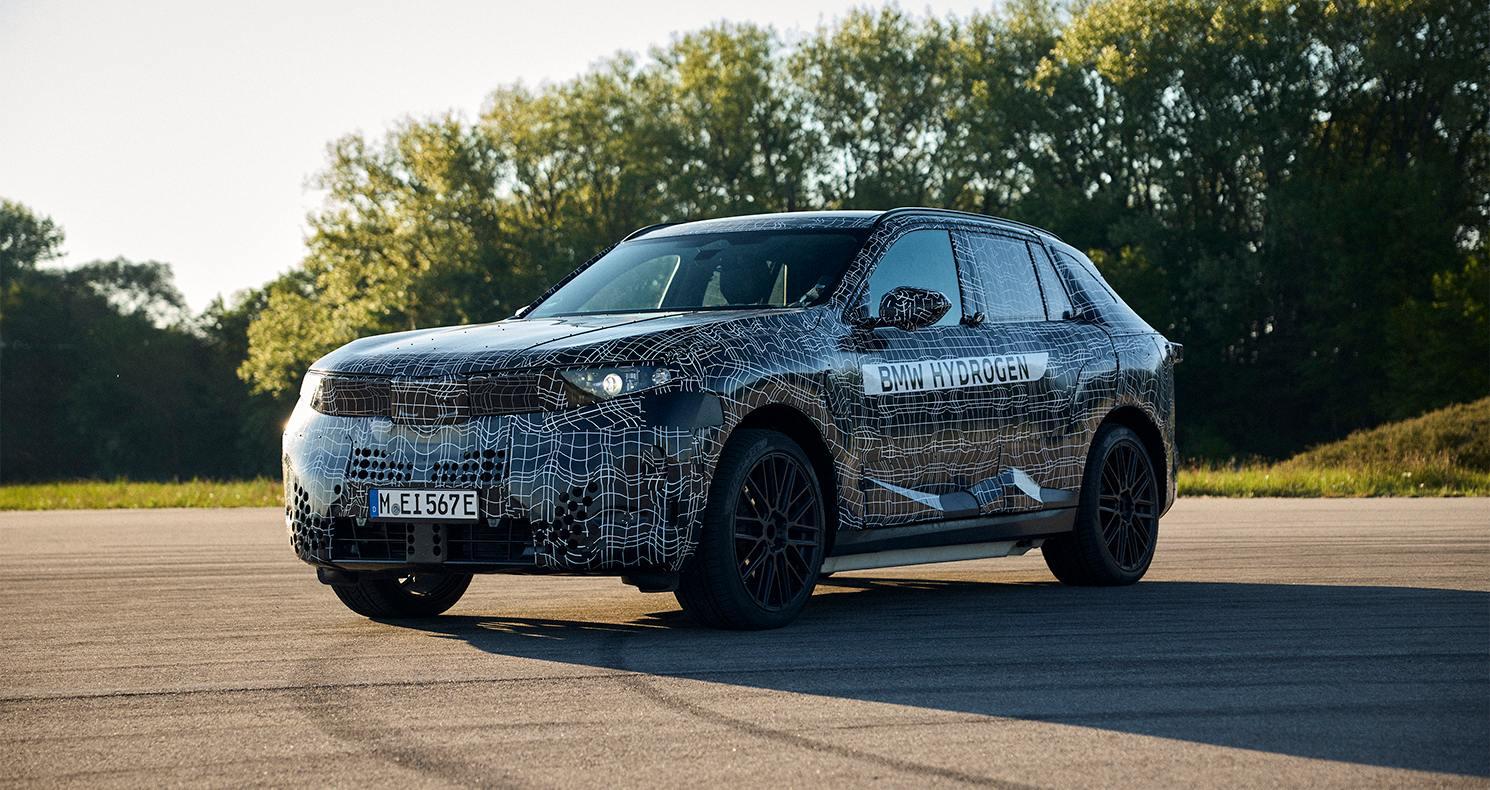

BMW is forging ahead with hydrogen fuel cell technology that the German brand frames as the anti-battery EV alternative. The iX5 Hydrogen will launch in 2028, and BMW has now confirmed a new hydrogen storage system that fits the same space currently used for the brand's Neue Klasse batteries. The implications are significant for how cost-effectively BMW can produce fuel cell vehicles alongside its battery EV lineup.
For Australian buyers, BMW's hydrogen push is interesting because it tells you the brand isn't betting solely on battery-electric. Like Toyota and Hyundai, BMW continues to invest in hydrogen as a parallel path to zero-emission motoring. The Australian context is different from Europe, where hydrogen infrastructure is more developed. But if iX5 Hydrogen lands here even in small numbers, it would mark Australia's first mainstream luxury fuel cell SUV.
What changes with the new hydrogen storage system
The key engineering breakthrough is package efficiency. BMW's new hydrogen storage setup for the iX5 FCEV fits into the same physical space used by the brand's latest batteries. That means BMW can produce hydrogen variants on the same production line as battery EVs without major plant retooling.
BMW board member Dr Joachim Post described the engineering simply: "Think of it as installation Tetris." The brand can now produce a battery-electric Neue Klasse SUV or a hydrogen-fuelled Neue Klasse SUV with minimal manufacturing changes. That solves one of the biggest cost barriers to building fuel cell cars at scale.
The new system also delivers genuinely useful real-world numbers. Up to 750km of driving range. Refills in under five minutes. BMW also claims significantly improved safety compared to earlier hydrogen storage tank designs.
The Energy Master controller
BMW has started production of what it calls the Energy Master. This is the brain of the hydrogen power setup, managing the fuel cell system, the buffer battery and the electric drive motors. It is effectively the brain of the iX5 Hydrogen.
Production startup for the Energy Master is a meaningful signal. BMW is far enough along in the iX5 Hydrogen development cycle to be tooling up dedicated components rather than relying on prototype hardware. Production launch in 2028 is now a credible target rather than an aspiration.
Why BMW is pushing hydrogen alongside batteries
BMW's argument for hydrogen mirrors Toyota's. The brand frames it as "electric driving with long range and fast refuelling, diversifies energy sources and reduces dependence on a single infrastructure or raw material supply chain." Translation: hydrogen reduces dependence on lithium, cobalt and nickel supply chains, all of which are currently dominated by China.
This is a strategic supply chain argument as much as a product argument. European and Japanese governments have been pushing automakers to diversify away from battery-only EV strategies precisely because the battery raw materials supply chain creates geopolitical exposure. Hydrogen is part of that diversification play, even if the current hydrogen production infrastructure is far less developed than the battery supply chain.
For Australian buyers, the practical implication is that BMW will offer both battery-electric and hydrogen options across the Neue Klasse range over the next several years. The choice for buyers will come down to local infrastructure availability and personal preference rather than being forced into one technology by the brand's lineup.
Australian hydrogen infrastructure reality
Australia has very limited public hydrogen refuelling infrastructure currently. Toyota Mirai owners can refuel at a handful of stations in Sydney, Melbourne and Brisbane. The Hyundai Nexo Forever program supports a small fleet. That is essentially the whole network.
For an iX5 Hydrogen launch in Australia to make sense, BMW would need partnership commitments from infrastructure providers. The current most credible option is the H2X Global expansion plans, which have committed to a national hydrogen refuelling network over the next several years. Whether that timeline aligns with the iX5 Hydrogen 2028 launch is the open question.
Without meaningful infrastructure expansion, iX5 Hydrogen Australian sales would be limited to corporate and government fleet trials in metro Sydney and Melbourne. That is fine for a brand demonstrator program but not for genuine retail volume.
How the iX5 Hydrogen compares to the iX5 BEV
BMW has not published specific iX5 Hydrogen pricing or detailed specifications, but the comparison with the iX battery-electric SUV gives a benchmark. The iX 50 currently lists from around $190,000 driveaway in Australia and offers 500km plus of WLTP range.
The iX5 Hydrogen would deliver 750km of range from the new storage system, plus the five-minute refuel advantage. The trade-off is the infrastructure dependency. If you can't refuel hydrogen near you, all the range and refuel-time advantages are theoretical.
For buyers who do mostly metro driving, the iX 50 already meets their needs. For buyers who do long highway distances regularly between fixed hydrogen-equipped cities, the iX5 Hydrogen could be a better fit. The reality is that very few Australian buyers fall into the second category right now.
What BMW Australia buyers should do
If you are shopping a luxury electric SUV in 2026 and 2027, buy the iX or wait for the next Neue Klasse iX models due later in 2026 and 2027. The iX5 Hydrogen is at least 18 to 24 months away from any Australian launch and the local infrastructure question is unresolved.
If you are interested in hydrogen as a future option and want to influence BMW's local product decisions, contact BMW Australia and register your interest. As with Peugeot, demand signals matter for low-volume product allocation decisions.
Carseekers tracks every BMW Australia launch and pricing announcement. Hydrogen is a small but increasingly credible part of the Australian premium vehicle conversation, and the iX5 Hydrogen will be one of the most interesting launches of 2028.
Considering finance for your next car? Loanseekers can help you explore car loan options.
The finer details
Your questions answered.
When will the BMW iX5 Hydrogen launch?
BMW has confirmed a 2028 launch for the iX5 Hydrogen globally. Australian arrival timing has not been announced and depends partly on the development of local hydrogen refuelling infrastructure to support meaningful sales volume.
What is the BMW iX5 Hydrogen's range?
The new hydrogen storage system in the iX5 Hydrogen delivers up to 750km of driving range. Refills take under five minutes, comparable to a conventional petrol or diesel fill rather than the slower charging times associated with battery EVs.
Will the BMW iX5 Hydrogen come to Australia?
BMW Australia has not confirmed local availability. The biggest constraint is Australian hydrogen refuelling infrastructure, which is currently limited to a handful of stations in Sydney, Melbourne and Brisbane. Meaningful local sales would require infrastructure expansion.
How does the BMW iX5 Hydrogen differ from the BMW iX EV?
The iX5 Hydrogen uses a fuel cell to generate electricity from hydrogen, with a small buffer battery and electric motors providing drive. The iX is a conventional battery EV. The Hydrogen has longer range and faster refills but requires hydrogen infrastructure to be usable.
Is hydrogen safer than battery EVs?
BMW claims its new hydrogen storage system is significantly safer than earlier designs. Modern hydrogen storage tanks are tested to extreme impact and fire conditions. Both battery EVs and hydrogen FCEVs have strong safety records when properly engineered, though they present different failure modes.
Why is BMW pushing hydrogen instead of just batteries?
BMW frames hydrogen as a way to diversify away from battery raw material supply chains dominated by China. The brand also argues hydrogen offers a better fit for certain long-distance use cases where battery charging time is a barrier. The strategy parallels Toyota's multi-technology approach.