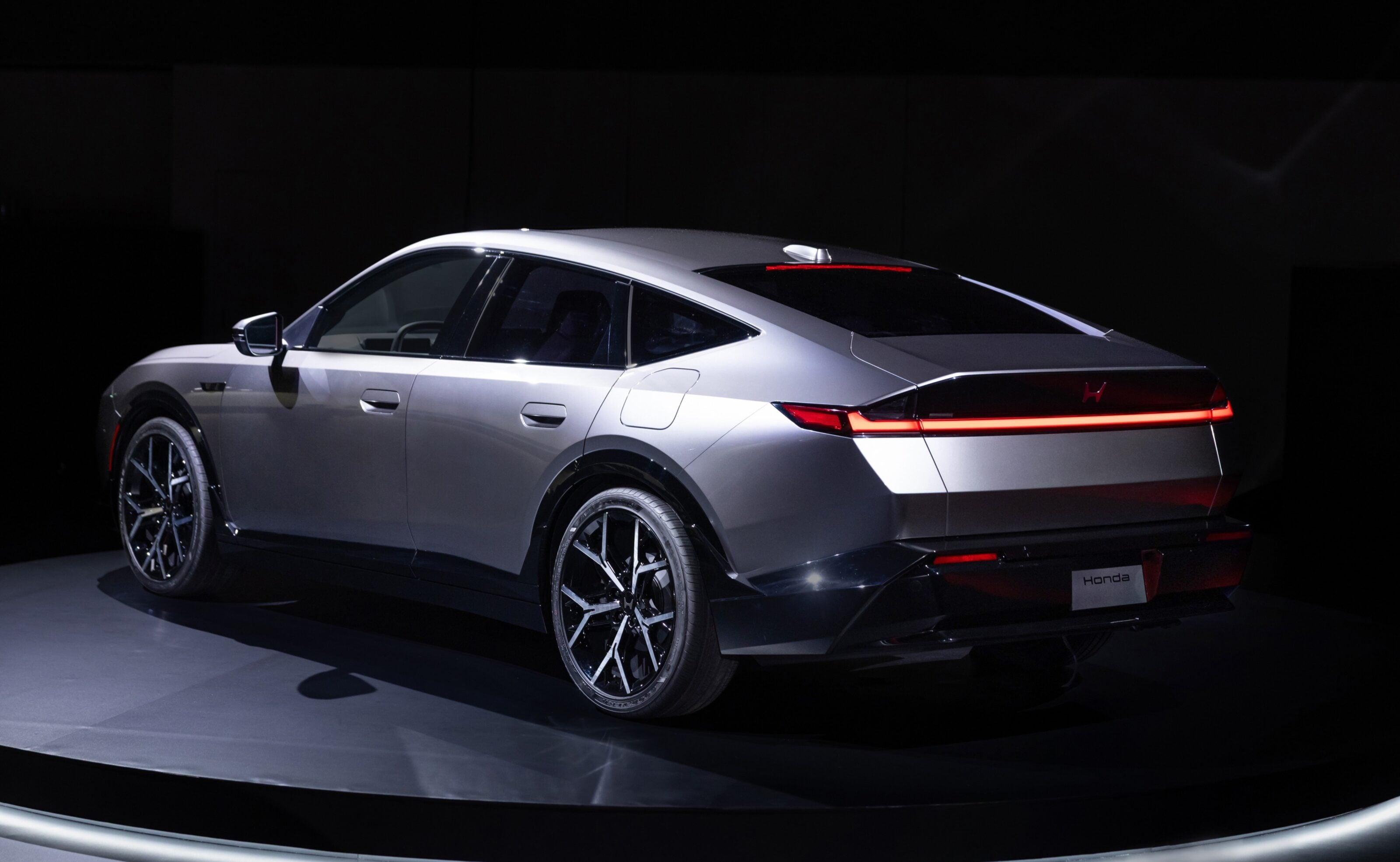

Honda has officially abandoned its dedicated EV strategy and is moving to a new multi-energy platform that can support both fully electric and hybrid drivetrains. The pivot was confirmed during the company's financial reporting and is the clearest sign yet that Honda president Toshihiro Mibe has lost confidence in a one-shot EV product strategy for the next product cycle.
In March this year, Honda quietly cancelled plans for three dedicated EVs. Sony's EV program, which was sharing underpinnings with one of those Honda models, was cancelled shortly afterwards. Honda cited "changing market conditions and concerns about profitability" at the time. The new platform announcement now fills the product gap that left behind.
Why Honda is hedging
Mibe was unusually direct about the politics behind the shift. "The market could change depending on the Trump administration over the next two and a half years and the outcome of the November midterm elections," he said. "We are studying systems and next-generation EV concepts that would work no matter which way things evolve."
Translation: US emissions rules are uncertain through 2028. Honda doesn't want to bet its R&D budget on a regulatory regime that could be rewritten by the next administration. Multi-energy platforms let the company shift between hybrid and full EV mix depending on which way Washington moves.
For Australian buyers, the politics are different, but the consequence is similar. Honda Australia will get whatever the global multi-energy platform delivers. That likely means more hybrid product, fewer pure EV bets, and a slower path to electrification across the Honda lineup locally.
The platform details we have so far
Details on the new architecture are thin. Honda calls it a "highly competitive EV hardware platform," which is a strong signal it will still prioritise electric drivetrains while leaving room for hybrid and extended-range plug-in variants. The platform is separate from Honda's existing all-new hybrid system, which is set to spawn 15 new models between now and 2030.
That hybrid platform aims to cut production costs by 30 per cent and lift fuel efficiency by 10 per cent. Combined with the new multi-energy architecture, Honda is essentially running two parallel platforms: one optimised for hybrid scale and one optimised for flexible EV and extended-range builds. That is a lot of architectural overhead for one company, and the cost of running both will eventually show up in vehicle pricing.
What this means for Honda Australia buyers
The practical impact for Australian buyers is most visible in the hybrid range. Honda Australia has been pushing the Honda Civic e:HEV, CR-V hybrid, and HR-V hybrid hard, and the new hybrid platform will eventually underpin the next generation of all three. Expect those cars to land with sharper pricing thanks to the 30 per cent production cost cut Honda is targeting.
The multi-energy platform will likely arrive first in North America. Honda Australia historically gets product 18 to 24 months after US launch. That means the first multi-energy Honda for Australia is probably 2028 or 2029.
In the meantime, Honda's local lineup will lean even more heavily on hybrids. Honda Australia recently confirmed it would launch a Honda Super One electric hot hatch in 2026, but beyond that, the EV roadmap is thin.
The bigger context: Honda's hybrid-first pivot
Honda has confirmed it will introduce hybrid versions across every model line in its portfolio. Product plans for North America include hybrid systems on engines up to 3.5 litres, which opens the door to electrified versions of the Pilot and Passport SUVs and the Ridgeline pick-up. None of those models are currently sold in Australia, but the broader signal matters. Honda is going hybrid everywhere it can, and EVs are now the secondary investment.
This is a noticeable reversal from Honda's 2050 carbon neutrality target, which originally implied a much more aggressive EV ramp. The new plan reads more like a 2030 hybrid push with EV optionality, rather than a true EV transition. Honda's competitors, particularly Toyota and Hyundai, are watching closely. Toyota has been making the same hybrid-first argument for years and is now seeing it validated by Honda's pivot.
What Honda buyers should do right now
If you are shopping a current-generation Honda Civic, CR-V or HR-V hybrid, do it. These cars are not going anywhere in the short term and the current models are now mature, well-priced and well-supported. Dealer discounting on outgoing-generation Civics is likely to sharpen through the second half of 2026.
If you are holding out for a Honda EV, the calendar got longer. The Super One small hatch is the most concrete near-term EV from Honda Australia. Anything bigger or more premium is now pushed out by the multi-energy platform reset. Plan accordingly.
Carseekers monitors the Honda Australia lineup, pricing and dealer offers across every state. The Honda hybrid range is one of the best-value mainstream lineups in the country right now, and the platform shift announcement does nothing to change that in the short term.
Considering finance for your next car? Loanseekers can help you explore car loan options.
The finer details
Your questions answered.
What is Honda's multi-energy platform?
It is a new vehicle architecture announced by Honda that can support both fully electric and hybrid drivetrains. The flexibility lets Honda adjust EV versus hybrid product mix depending on regulatory and market conditions in each region.
When will Honda's multi-energy platform reach Australia?
Honda has not confirmed a timeline. Based on Honda's historical lag between US launches and Australian arrival, expect the first multi-energy Honda models to land locally in 2028 or 2029 at the earliest.
Is Honda cancelling its EV plans for Australia?
Not entirely. Honda Australia has confirmed the Super One electric hot hatch for 2026. However, the cancellation of three dedicated EV models globally means Honda's broader EV lineup will arrive later than previously expected.
Should I buy a Honda Civic hybrid now or wait?
Buy now if you want a Civic hybrid in your driveway in the next 12 months. The current generation is mature, well-priced and dealer discounting is sharpening as the year progresses. The next-generation Civic on the new hybrid platform is at least two years away from Australian showrooms.
How does Honda's new platform compare to Toyota's hybrid strategy?
Toyota has been running a hybrid-first strategy for years, with EVs treated as a secondary investment. Honda's pivot brings it much closer to Toyota's approach. Hyundai and Kia remain more aggressively committed to dedicated EV platforms, putting them on a divergent path from both Japanese giants.
Will the Honda CR-V get cheaper under the new hybrid platform?
Possibly. Honda has stated the new hybrid platform aims to cut production costs by 30 per cent. Some of those savings will likely be passed to buyers, particularly in the volume CR-V and Civic ranges. Don't expect dramatic price cuts on current generation cars, but next-gen pricing should be sharper.