
Hyundai has patented a new shift-by-wire gear selector that could give its future performance EVs a physical gear stick instead of, or alongside, the paddle shifters already fitted to the Ioniq 5 N and Ioniq 6 N.
The patent (US-12624755-B1) shows a shifter with multiple gates and no mechanical connection to the drivetrain, operating entirely through software. It can function as a gated manual or a conventional automatic depending on the mode selected.
Why This Matters for Performance EV Buyers
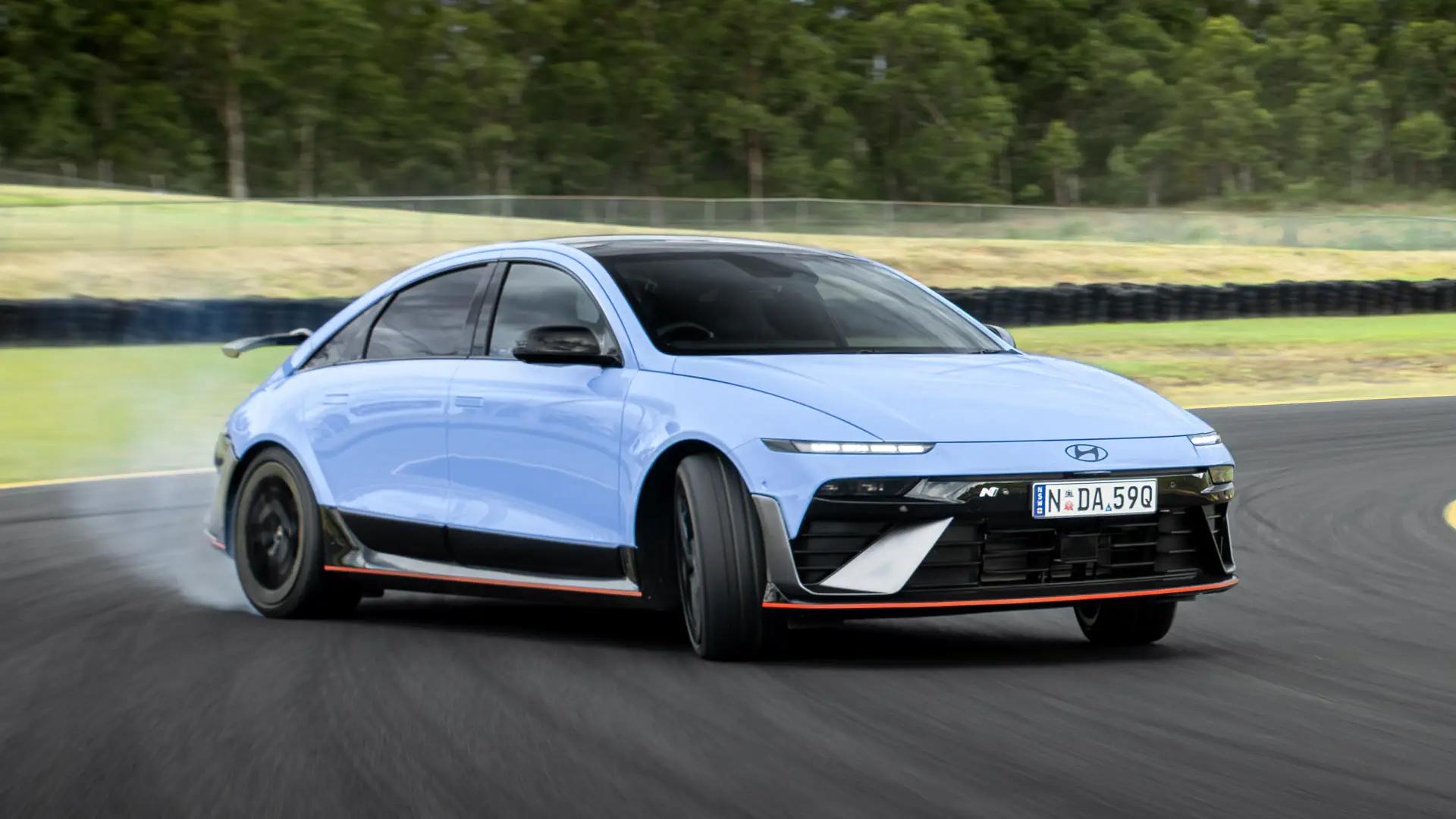
The Ioniq 5 N and Ioniq 5 N already offer simulated gear shifts through steering wheel paddles, complete with artificial power cuts between ratios and engine-braking simulation. Hyundai even offers optional soundtracks, including one designed to mimic the i30 N's 2.0-litre four-cylinder.
Those systems are genuinely well executed. But paddles, however good, cannot replicate the proprioceptive feel of moving a physical lever through a gate. A shifter that clicks into position, resists the next gate, and responds to a wrist movement gives the driver a tactile connection that software cannot fully replicate through haptic steering wheel buttons.
If Hyundai's patent translates into a production system, it would put the brand ahead of almost every rival in terms of EV driving engagement.
How the Patent Works
The filed design shows a shifter with multiple gate positions and no connection to any mechanical transmission. It operates purely by wire, with the car's software interpreting selector position and translating it into motor response.
The system can be configured to behave like a traditional H-pattern manual, allowing the driver to select a specific simulated ratio, or like a straight-line automatic for everyday use. A neutral position and a clutch-activation sequence are included in the design.
This is broadly similar to the approach Koenigsegg uses in its Light Speed Transmission, a nine-speed multi-clutch unit where the driver can cross a gate and engage a manual mode with a physical clutch. The difference is that Koenigsegg's system involves real mechanical complexity, while Hyundai's patent describes a software-only analogue.
Not Just for EVs
The patent does not specify the powertrain it applies to. Hyundai engineers acknowledged it could be used in petrol-powered cars with dual-clutch automatics, giving performance buyers a manual feel without the mechanical complexity of a full manual gearbox.
This is directly relevant to the future of the i30 N. Reports suggest the hot hatch will be updated with electrification rather than an all-new model, with the 1.6-litre turbo likely gaining a hybrid assist. A shift-by-wire system would allow that future car to retain a manual character even if the transmission itself becomes a dual-clutch hybrid unit.
Porsche has also filed patents for a similar shift-by-wire setup aimed at preserving manual engagement as emissions rules force automatic gearboxes into more vehicles. The motivation is the same across brands: buyers of performance cars place genuine value on the feeling of making a gear change, and manufacturers do not want to lose that appeal.
What It Means for Australian N Buyers
The Ioniq 5 N and Ioniq 6 N are the most fully realised performance EVs available in Australia right now. Their simulated shift systems already attract attention from buyers who assumed EVs would be dull to drive. A physical gear lever would extend that lead considerably.
Hyundai has not confirmed production plans for the patented system. Patents frequently describe technology that never reaches a showroom. But the level of detail in this filing, combined with the brand's clear appetite for engaging performance EVs, suggests it is more than a defensive registration.
For buyers who have been on the fence about whether a performance EV can be as satisfying as a manual sports car, developments like this are worth tracking. Carseekers will report when Hyundai confirms any production application of the technology.
The Broader Shift Toward Analogue Feel in Digital Cars
Hyundai is not alone in recognising that removing mechanical connections from cars creates a driver engagement deficit. Ferrari's new GTO features a shifting system designed to feel like a manual. BMW has brought back physical volume knobs to interiors that went all-touchscreen. Porsche retained a manual option for the 911 GT3 at significant engineering cost.
The shift-by-wire gear selector represents a slightly different approach: rather than maintaining old mechanical systems, manufacturers are investing in high-quality software-driven approximations that can evolve with each software update.
Whether that is a satisfying substitute for the real thing depends entirely on the buyer. But the fact that Hyundai is pursuing it for EVs specifically, where the mechanical argument for a gear lever is zero, says a great deal about where the industry believes driver engagement has to go.
Considering finance for your next car? Loanseekers can help you explore car loan options.
The finer details
Your questions answered.
Will the Hyundai Ioniq 5 N get a physical gear stick?
Hyundai has not confirmed production plans for the patented shift-by-wire gear selector. The current Ioniq 5 N uses steering-wheel paddles for simulated gear shifts. If the patent progresses to production, a physical shifter could be added to a future update or new model.
What is a shift-by-wire gear selector?
A shift-by-wire system replaces the mechanical connection between a gear lever and the transmission with a software signal. The driver moves a physical selector, but the car interprets that movement in software and responds accordingly, with no physical link to the drivetrain.
How do simulated gear shifts work in the Ioniq 5 N?
The Ioniq 5 N's N e-shift system uses paddles to trigger software-simulated gear changes, including a brief torque reduction between ratios and increased regen for engine-brake feel. Optional N Active Sound+ adds audio cues, including a track that mimics the i30 N's petrol engine.
Is Hyundai planning a new Ioniq 3 N performance EV?
A performance version of the Ioniq 3 has been reported in industry media, with Hyundai expected to follow the Ioniq 5 N and 6 N pattern. No official announcement or Australian pricing has been confirmed as of mid-2026.
How much does the Hyundai Ioniq 5 N cost in Australia?
The Hyundai Ioniq 5 N is priced from around $99,000 drive-away in Australia. It produces 478kW in Boost mode and offers the N e-shift system as standard, making it one of the most driver-focused electric cars available locally.
Are there other performance EVs with simulated manual shifts in Australia?
The Ioniq 5 N and Ioniq 6 N are the most developed examples in Australia. BMW's M models offer simulated shift sounds, and Porsche offers a manual transmission in the 911, but shift-by-wire simulation for EVs remains largely Hyundai's domain for now.