
What the Ioniq V Is and Where It Fits
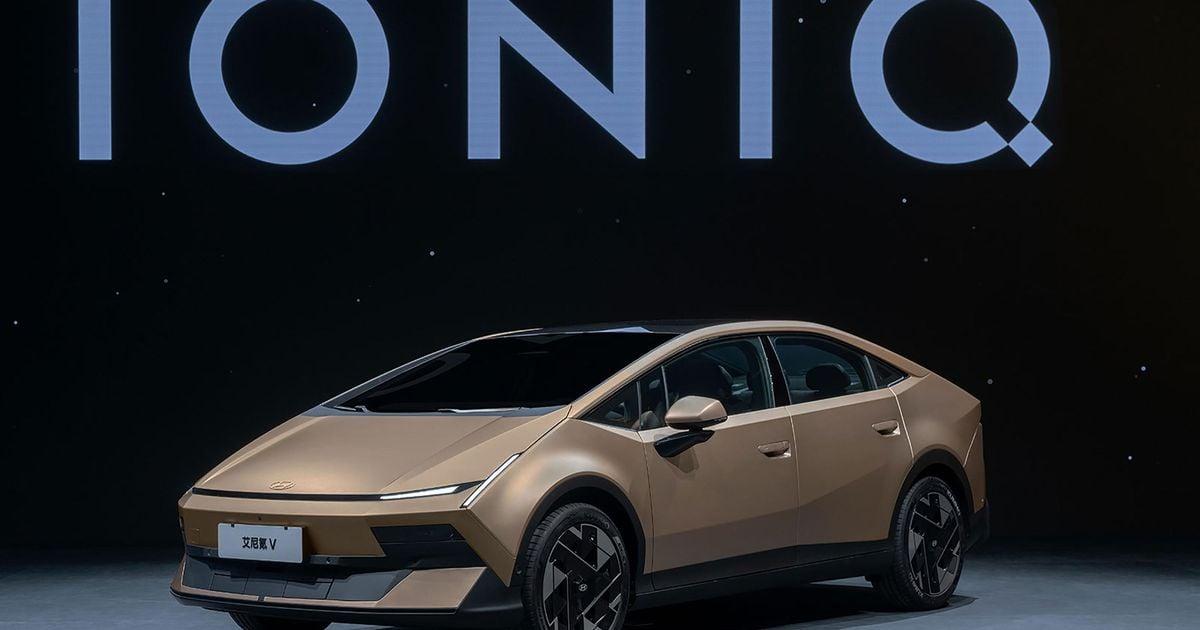
The Ioniq V is the first model from Hyundai's Ioniq sub-brand developed purely for China, unveiled at the 2026 Beijing Auto Show. It follows the Ioniq Venus concept shown a few weeks prior and takes the form of a four-door with a Kammback roofline, not unlike the shape Toyota has used on the Prius since its second generation.
Hyundai's designers used a single-curve roofline, frameless side windows and floating wing mirrors to reduce drag. No specific aerodynamic coefficient has been published yet.
The Specs That Matter
At 4,900mm long and 2,900mm of wheelbase, the Ioniq V is a large car. It sits on the E-GMP platform that underpins the Ioniq 5, Ioniq 6, Kia EV6 and Genesis GV60, so Australian buyers will recognise the engineering underneath.
Hyundai has not confirmed full powertrain details yet. Long-range variants are claimed to exceed 600km under the CLTC standard. Adjusted for Australian real-world conditions, expect something closer to 480 to 520km depending on variant and driving style. Still competitive.
Inside, a 27.0-inch 4K touchscreen dominates the cabin. A Horizon Head Up Display sits at the junction of the dashboard and windscreen base rather than projecting onto the glass itself. A Qualcomm Snapdragon 8295 chip runs infotainment and voice AI. ADAS comes from Momenta, a Chinese specialist.
The Investment Behind It
The Ioniq V is being built by Beijing Hyundai, a joint venture with BAIC. The two partners have committed A$1.6 billion to developing a range of China-specific models, targeting 500,000 units per year.
After the Ioniq V sedan, Hyundai plans a China-spec SUV in the first half of 2027, likely based on the Ioniq Earth concept. That will be followed by models available with both full EV and EREV drivetrains.
Why EREV Matters for Australian Buyers
An EREV uses a small petrol engine purely as a generator. All drive is electric. The petrol motor exists only to recharge the battery, removing range anxiety without requiring a mechanical gearbox or drive connection to the wheels.
For buyers outside major Australian cities, where fast charging is still patchy, this architecture could make more practical sense than a full BEV. If any of Hyundai's China-developed EREV models reach Australia, they will be worth a serious look for regional buyers sitting on the fence.
Will It Come Here?
Hyundai has not confirmed Australian plans for the Ioniq V. The 'To Global' element of its China strategy is an aspiration, not a commitment. That said, the Hyundai Elexio, another China-first EV, did make it to Australia earlier in 2026, so the pathway exists.
For more context on Hyundai's electric direction in Australia, the confirmed 2027 Hyundai Ioniq 3 and what it costs and why Korean and Japanese brands are investing so heavily in China are worth reading alongside this.
If you are weighing up an Ioniq 5 or Ioniq 6 purchase in the next 12 months, it is worth tracking Hyundai's announcement schedule before committing. Carseekers will update this when Hyundai Australia makes any local confirmation.
Considering finance for your next car? Loanseekers can help you explore car loan options.
The finer details
Your questions answered.
What is the Hyundai Ioniq V and will it come to Australia?
The Ioniq V is Hyundai's first Ioniq-sub-brand model developed exclusively for China, revealed at the 2026 Beijing Auto Show. It is a four-door with a Kammback roofline targeting Chinese buyers. An Australian launch has not been confirmed, and as a China-specific model the Ioniq V may never officially arrive here.
How does the Hyundai Ioniq V differ from the Ioniq 5 and Ioniq 6?
The Ioniq V is designed specifically for Chinese market preferences in proportions, features, and infotainment integration. The Ioniq 5 and Ioniq 6 are global models sold across multiple markets including Australia. The Ioniq V's China-specific development means its design and technology may differ meaningfully from Australian-market Ioniq products.
Is the Hyundai Ioniq 6 still the best Ioniq sedan for Australian buyers?
Yes. The Ioniq 6 is the current generation all-electric sedan available in Australia with strong range, efficient aerodynamic design, and Hyundai's comprehensive warranty. It remains one of the stronger mid-size electric sedans in the $70,000 to $80,000 bracket against rivals from BMW, Mercedes, and Kia.
Why is Hyundai making a China-only version of the Ioniq brand?
China is Hyundai's largest single market and Chinese EV buyers have specific preferences around design, connectivity, and local software integration that differ from global markets. Building a China-specific model allows Hyundai to optimise for those requirements without compromising the global Ioniq lineup's engineering direction.
What Hyundai EVs are available in Australia right now?
The current Hyundai EV range in Australia includes the Ioniq 5, Ioniq 6, and Kona Electric. The Ioniq 5 N performance variant has also arrived. Hyundai has confirmed the Ioniq 3 for early 2027. The Ioniq V is not part of the Australian product plan at this time.
Is Hyundai's EV technology competitive with BYD in Australia?
Yes. Hyundai's E-GMP platform is among the most technically accomplished EV architectures globally, offering 800V ultra-fast charging and competitive range across Ioniq models. BYD's Blade battery technology provides its own advantages in energy density and safety. Both are class-leading in different respects; direct comparison depends on the specific models and use case.