
Kia has done something car brands almost never do. A senior global executive has publicly admitted the Kia Tasman ute is a "disappointment" in Australia, and promised both short-term and mid-term changes to styling, powertrains and equipment well before the planned 2028 facelift. For Australian buyers staring at a Tasman in the showroom or comparing it against a Ford Ranger on a spreadsheet, that admission is significant.
It also raises an obvious question. If the brand itself says changes are coming "in the short term," should you buy a Tasman this year, wait for the update, or write the whole project off and look at a Toyota HiLux or Isuzu D-Max instead? Carseekers has unpacked what was actually said, what is realistic to expect, and how the announcement should reshape your negotiating position.
What the Kia executive actually said
Spencer Cho, Kia's head of global business planning, told Australian media in South Korea that "the answer is, clearly, we are not satisfied yet." He went further, acknowledging "the early disappointment we have in the Australian market that gave us a lot of the good lessons."
Cho promised the brand would deliver "countermeasures" including "another powertrain choices if we can, and also another design changes or improvement, or any other offerings for the new features and content and technologies." Translation: Kia is overhauling the Tasman well before the timeline it originally planned, and the brand is not ruling out anything from sheetmetal to engines.
How badly the Tasman is actually selling
The numbers explain why Kia is being so blunt. Just 320 Tasmans were registered last month, against 3661 Ford Rangers, 2835 Toyota HiLuxes and 2195 Isuzu D-Maxes. That puts the Tasman at a 2.1 per cent share of the ute market, when Kia originally targeted 9 per cent and 20,000 annual sales.
The Ranger is outselling the Tasman more than eleven to one. Kia Australia has already walked back its ambitious volume targets, and the brand has just rolled out price cuts of up to $14,000 to clear 2025-built stock sitting at dealers. That is the largest single discount on a new ute in the Australian market right now.
Why the styling is the biggest problem
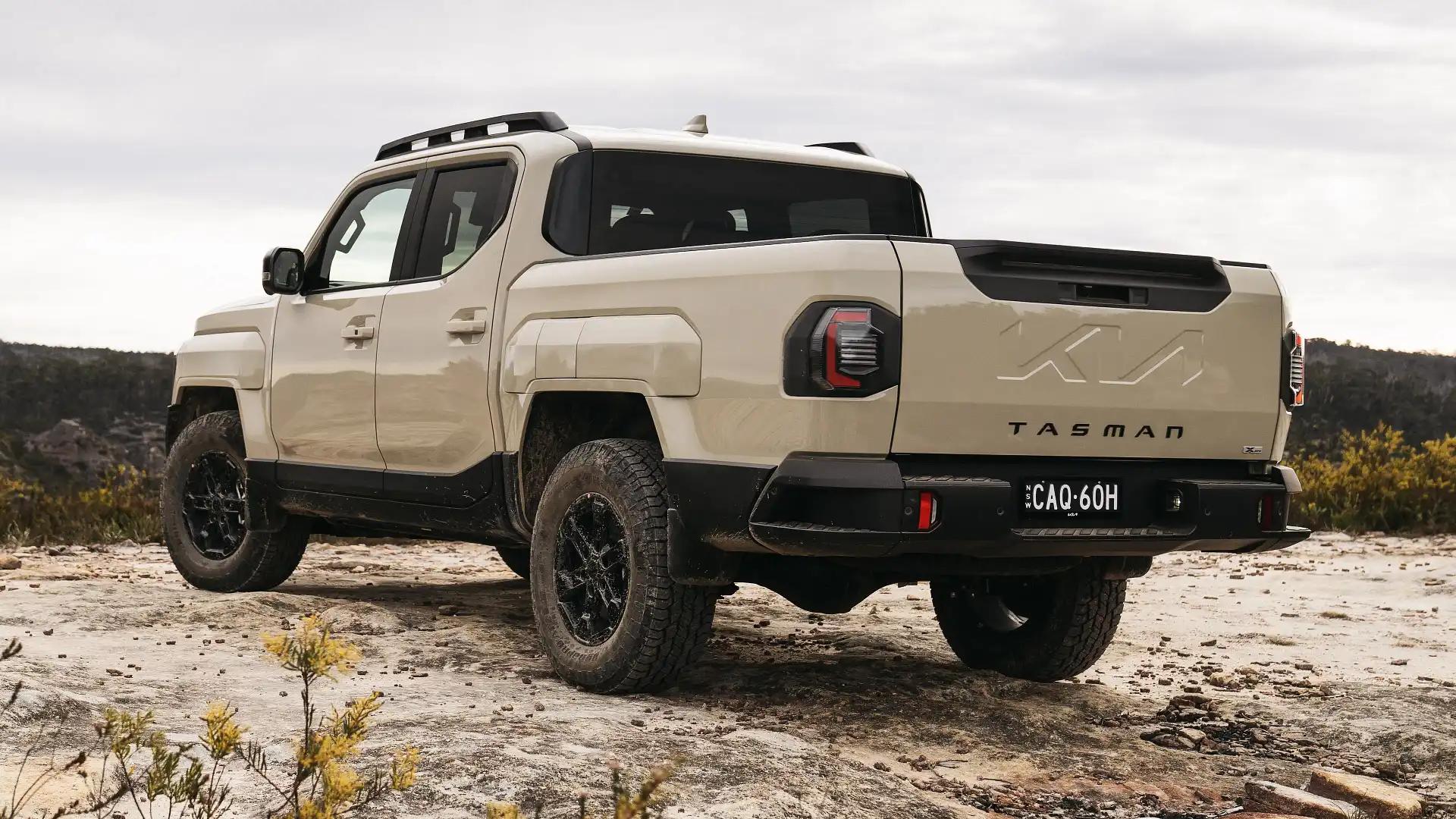
The Tasman's polarising look is the single most cited reason buyers walk past it on the dealer lot. The blocky front, oversized wheel arches and unconventional proportions were meant to make a statement. Instead, focus groups and online reaction have been brutal, and Kia's own executive admitted the brand is "working on every area which we can improve the performance of the Tasman, especially in the Australian market."
Cho confirmed both short-term and mid-term design changes are planned. The short-term tweaks will almost certainly focus on cheaper changes like bumper inserts, wheel arch trims and grille colour. Anything involving stamped metal panels will have to wait for the proper facelift, expected in 2028. Do not expect a transformed Tasman by Christmas, but expect the worst visual offences to be softened within twelve months.
A hybrid Tasman is the powertrain everyone wants
Kia Australia executives have previously made clear they would prefer a hybrid Tasman over a larger diesel or a high-performance petrol variant, and Cho's openness to "another powertrain choices" suggests the global team is now listening. The current Tasman is diesel-only, which puts it at a disadvantage against the Ford Ranger PHEV, the BYD Shark 6 and the GWM Cannon Alpha PHEV.
A hybrid Tasman would also help Kia meet Australia's tightening CO2 rules for new vehicles, which start biting harder in 2026. A smaller, cheaper short-term fix could be adding stop-start technology to the current 2.2-litre diesel, mirroring what Ford and Toyota already do. That alone could trim claimed fuel consumption and help fleet buyers tick off compliance requirements.
The $14,000 discount is a buyer's tactical opportunity
Kia's current limited-time stock-clearance deal cuts up to $14,000 off MY2025-built Tasmans. That is a serious discount for a brand-new ute, and it tells you everything about how desperate Kia is to move metal before the short-term updates land. For a buyer who is happy with the current Tasman, this is the best price the model will ever see, because once stock clears, list prices will reset.
The trade-off is honest. You are buying a vehicle that the manufacturer itself has publicly acknowledged needs work. Resale value over five years will be softer than the Ranger or HiLux equivalents, and your Tasman will look dated faster as the short-term styling tweaks roll out on newer builds. If you keep your utes long term and the discount makes the price right, that may not bother you. If you plan to trade in three years, it should.
Should you wait for the updated Tasman instead?
Here is the honest read. "Short term" in car-industry speak typically means six to twelve months for cosmetic tweaks, twelve to eighteen for added features, and two-plus years for any powertrain change. Cho specifically said Kia is working on "the short-term and the mid-term solutions at the same time," so the first wave will likely be small visual refreshes and possibly an equipment update for MY2026 or MY2027 builds. The hybrid is more likely to land with the 2028 facelift.
If you are not desperate, waiting six months will probably yield a slightly less divisive Tasman with stronger equipment. Waiting two years should bring genuine powertrain choice. If you need a ute now, the discount on current stock is real, but cross-shop the Ranger, HiLux and D-Max hard, and negotiate from a position of knowing the seller is under pressure.
How dealers are likely to respond
Kia dealers are sitting on Tasman stock that the brand itself has publicly admitted is underperforming. That is the strongest negotiating position you will see on a new ute in 2026. Expect dealers to be willing to discount accessories, throw in service packs, and bundle finance deals on top of the headline $14,000 cut. Walk in with a competitive Ranger or D-Max quote and the dealer will move further.
Do not accept the first drive-away figure. The Tasman's slow sales mean dealer margin is higher than usual, because Kia is propping up the model with manufacturer support. Push for a sharper trade-in valuation, and ask about extended warranty options included at no cost.
What this all means for the ute market
The Tasman story is also a warning shot for any new entrant. Australian ute buyers are loyal, value-conscious, and unforgiving of styling missteps. Kia spent years developing the Tasman and still mis-read the market on look and powertrain mix. The Ford Ranger, Toyota HiLux and Isuzu D-Max remain dominant because they nail the buyer brief on capability, towing, fuel use and resale.
For Australian buyers, the takeaway is straightforward. The Tasman is genuinely cheap right now, and Kia is committed to improving it. But the safer money still buys the established three, and the most interesting alternative for buyers wanting something different is the BYD Shark 6 or GWM Cannon Alpha PHEV, where the buyer brief is genuinely different. Carseekers will keep tracking Tasman pricing and any update announcements so you can time your purchase if you are leaning towards waiting.
Considering finance for your next car? Loanseekers can help you explore car loan options.
The finer details
Your questions answered.
Is the Kia Tasman being discontinued?
No, Kia is committed to the Tasman and is bringing forward updates rather than pulling it. The brand has publicly promised both short-term and mid-term improvements to styling, powertrains and equipment well before the planned 2028 facelift. The model is staying in the line-up, just being reworked aggressively.
How much can I save on a Kia Tasman right now?
Kia is currently offering up to $14,000 off MY2025-built Tasmans as part of a limited-time stock-clearance deal. Dealers also have room to add value through accessory packs, service plans and trade-in valuations because the slow sales mean they are under pressure to move stock. Push hard and bring a competitive Ranger or D-Max quote with you.
When will a Kia Tasman hybrid be available?
Kia has not confirmed a date, but a hybrid Tasman is most likely to arrive with the model's facelift, currently expected in 2028. Kia Australia executives have publicly stated they prefer a hybrid over a larger diesel or high-performance petrol option, and the global business planning chief has confirmed powertrain changes are on the table. Expect an interim diesel tweak before then.
Will the Kia Tasman's styling actually change soon?
Yes, but only the cheaper components. Short-term changes will likely focus on bumper inserts, wheel arch trims and grille colour, since stamped metal panels are not changed mid-cycle. The bigger visual overhaul is reserved for the 2028 facelift. Do not expect a transformed Tasman within twelve months, but the most divisive details should be softened.
Should I buy a Kia Tasman now or wait for the update?
If you keep utes long term and the $14,000 discount makes the price right, the current Tasman is the cheapest it will ever be. If you plan to trade in three years, your resale value will be hurt by the upcoming updates and a hybrid powertrain landing on later builds. Cross-shop the Ford Ranger, Toyota HiLux and Isuzu D-Max before signing.
How does the Kia Tasman compare to the Ford Ranger on sales?
The Ford Ranger outsold the Kia Tasman more than eleven to one last month, with 3661 Rangers registered against just 320 Tasmans. The Tasman holds 2.1 per cent of the ute market, well short of Kia's original 9 per cent target. The Ranger's dominance is the single biggest reason Kia is bringing Tasman updates forward.