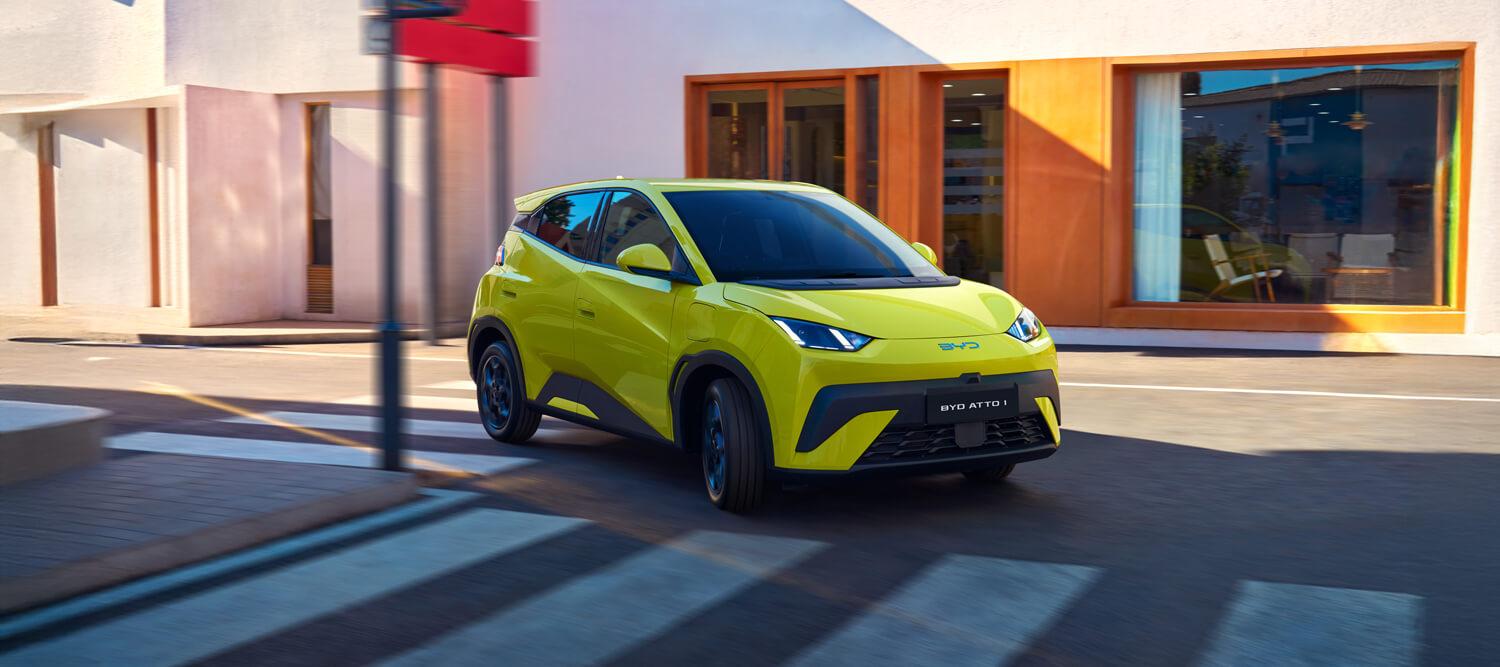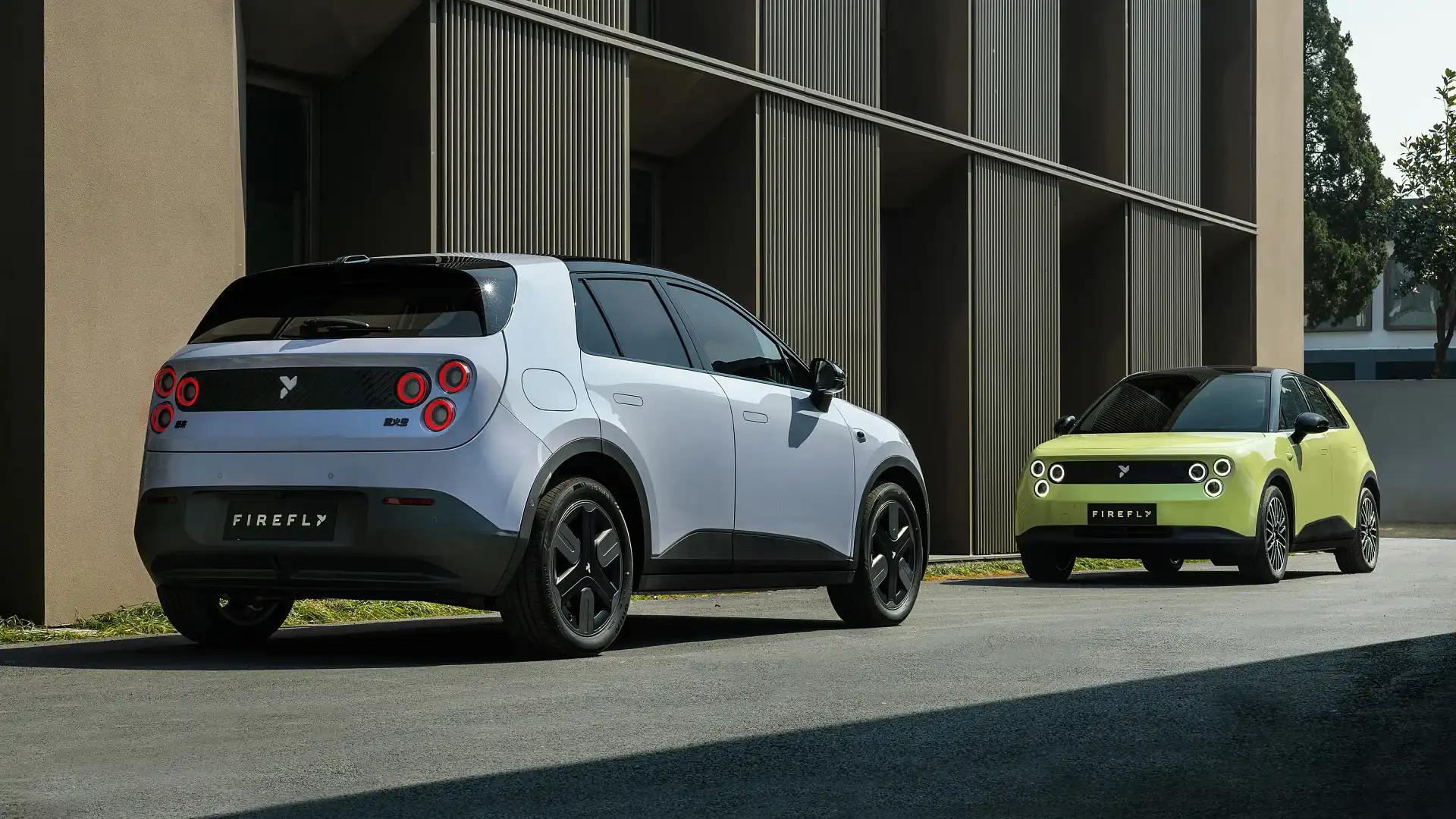
Nio's pint-sized Firefly electric car has been locked in for Australian showrooms by the end of 2026, but it has no intention of being a $30,000 rival to the BYD Dolphin or upcoming Geely EX2. Firefly global president Daniel Jin has confirmed the small EV is targeting Mini, Volvo and Smart in Australia, with launch pricing likely to start north of $40,000 before on-road costs.
That positioning matters for two reasons. First, it tells you the Firefly is going head-to-head with the Mini Cooper and Volvo EX30 rather than the cheap-and-cheerful Chinese hatchbacks already filling Australian driveways. Second, it confirms the gap in the small premium electric car market that Nio has spotted, where buyers want a small footprint without the budget compromises that come with sub-$30,000 city EVs.
Why Firefly is targeting Mini, not BYD
Firefly is a sub-brand of Chinese premium EV maker Nio, and the small electric car shares Nio's ambition to climb the value ladder rather than compete on price. Jin told Drive at the Beijing motor show that the Firefly will be positioned in Australia as 'a small premium brand, not competing directly with those value-for-money competitors. We're different.'
'In China, we position the car as a premium small car, so we target the Mini in China. Mini, [Volkswagen] ID.3, Volvo EX30, and the Smart #1,' Jin said. 'We don't want to compete with BYD, with the Geely, because in China, it's a completely different segment. They are below 100,000 RMB [AUD$20,000], we call this the value for money segment; we are premium segment.'
That positioning has consequences for the price tag. Mini Cooper currently starts at $41,990 plus on-road costs with petrol power, or $58,990 plus on-roads as an EV in higher-spec form. The Volvo EX30 is $49,990 plus on-roads. The Smart #1 is $54,900 plus on-roads, before drive-away offers.
What Firefly is likely to cost in Australia
In the Netherlands, the Firefly is priced from €29,990 to €32,500, which is roughly $48,700 to $52,800 in Australian dollars at current exchange rates. That gives a useful benchmark, because the European pricing already includes import duty and VAT-equivalent loadings.
Jin suggested the Australian price will land closer to the Mini Cooper than to the Volvo EX30. 'Maybe in Australia, we are still a little bit cheaper than Mini, because Mini has [such a] long heritage and it's a BMW Group premium brand. And we are nobody from day one, so we need some time. We need to be humble, so we probably cannot price head-to-head with Mini. Lower, a little bit lower, but definitely higher than those value-for-money brands.'
That language points to a launch price in the low to mid $40,000 range before on-road costs. Drive-away pricing for an entry-level Firefly is likely to land between $45,000 and $50,000 once dealer charges and standard premium paint are factored in.
What the Firefly actually offers
The Firefly is roughly the size of a BYD Dolphin or upcoming Geely EX2 (Drive's reference point, not Carseekers'), but its kit list and pitch are aimed higher. The Australian-approved version will use a single 105kW/200Nm electric motor driving the rear wheels, paired with a 41.2kWh battery pack rated for 320km to 330km of WLTP range.
A more powerful 120kW motor has just been rolled out in China, trimming the claimed 0-100km/h time from 8.1 seconds to 7.9 seconds. Whether the upgraded motor lands in time for the Australian launch is unclear.
DC fast charging at up to 100kW is claimed to deliver a 10 to 80 per cent top-up in 29 minutes in European examples. That is not class-leading by 2026 standards, but it is enough for typical urban use cases where most Firefly buyers will charge primarily at home.
Why the rear-wheel drive matters
Most small electric cars in this segment use front-wheel drive, which is cheaper to engineer but less satisfying to drive. The Firefly's rear-wheel-drive layout aligns it more closely with the Mini Cooper Electric, the Smart #1 and the BMW i3 of years past. For buyers who actually care about how a small EV handles, that is meaningful.
It also suggests Nio is engineering the car for the kind of driver who is cross-shopping the Mini Cooper Electric on dynamics rather than the BYD Dolphin on pure value. Whether the Firefly delivers on that promise will only be clear after Australian first drives, but the platform choice is the right one for the segment Nio is targeting.
How Firefly will be sold in Australia
Nio is not setting up its own dealer network for the Firefly in Australia. Jin confirmed the brand is in talks with 'several' general distributors, similar to the way Ateco distributes Renault, Ram and Maserati locally, or Inchcape distributes Subaru.
'We planned right-hand drive from day one, and as a result, Australia, UK, New Zealand, Singapore [and] Thailand, are definitely our target markets,' Jin said. 'Starting from last year, we started to do the homologation in Australia, and right now, we are also discussing with some local dealers to talk about the opportunity to bring Firefly into Australia as a general distributor model. That's the plan.'
A general distributor model has implications for buyers. The good news is faster network rollout, because the distributor brings existing dealer relationships to the table. The downside is that warranty, service support and parts availability live with the distributor, not directly with Nio. Distributor-led launches generally require more careful due diligence on after-sales support, particularly for an unfamiliar brand.
What the launch timing actually means
Jin told Drive it is 'highly likely' the first examples will arrive sometime in 2026, rather than in 2027. Without a confirmed distributor and a published showroom date, that is a soft commitment, not a hard one. Right-hand drive production has already started for Asian and UK markets, so the manufacturing pipeline is in place.
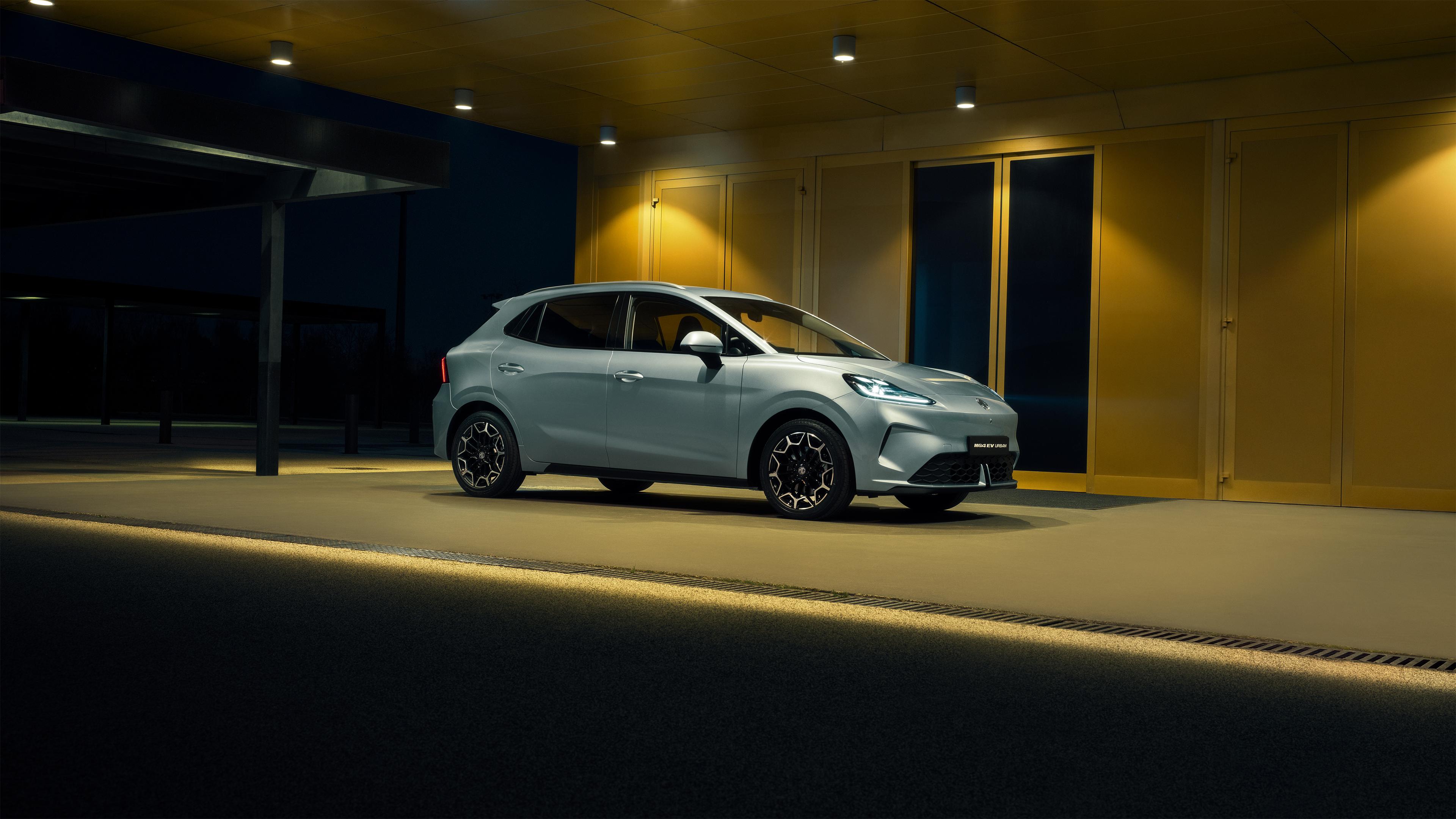
For Australian buyers cross-shopping a small premium EV right now, the Firefly is not on the shortlist. The realistic 2026 contenders remain the Mini Cooper Electric, the Volvo EX30, the Smart #1 and the existing BYD Dolphin and MG 4 Urban (which is $34,990 drive-away in top-of-the-range trim).
If you can wait into 2027, the Firefly becomes a real option, and one with a genuinely interesting positioning between the value-led Chinese hatchbacks and the established European premium small EVs.
What to watch for between now and launch
Three things will matter most when the Firefly finally lands in Australian showrooms. First, who the distributor is, because that determines the dealer network, warranty terms and after-sales experience. Second, the final Australian price, particularly whether it lands closer to the Volvo EX30 at $49,990 plus on-roads or the Mini Cooper Electric in the high $50,000s. Third, the equipment list, because Nio's Chinese pitch is built around premium materials and tech that Australian buyers will scrutinise closely at this price point.
Nio has a chance to do something interesting in the small premium EV space, but the brand is genuinely starting from zero brand awareness in Australia. That is a structural disadvantage when the average Australian buyer walks into a Mini showroom already knowing the brand. The Firefly will need a sharp launch price, a credible distributor and a strong first-drive narrative to win those buyers.
Should you wait for the Firefly?
If you are committed to a small premium EV right now, do not wait. The current crop of competitors is good, and EOFY pricing on the Volvo EX30, Mini Cooper Electric and other rivals is sharper than it will be when Firefly launches. The Carseekers market data shows small premium EV prices typically firm up after a new entrant lands, not soften.
If you are casually shopping and want to see what a credible Chinese alternative to Mini and Volvo looks like, the Firefly is worth waiting for. The brand has been spotted testing on local roads, the distribution conversations are active, and the soft 'end of 2026' timeline is realistic if not guaranteed.
Considering finance for your next car? Loanseekers can help you explore car loan options.
The finer details
Your questions answered.
When will the Nio Firefly launch in Australia?
Firefly global president Daniel Jin says it is highly likely the first examples will arrive in Australia in 2026 rather than 2027. Right-hand-drive production is already underway for Asian and UK markets, but no confirmed Australian distributor or specific launch date has been announced yet.
How much will the Nio Firefly cost in Australia?
Pricing is likely to start above $40,000 before on-road costs, positioning the Firefly between value-led rivals like the BYD Dolphin and premium small EVs like the Mini Cooper Electric. European pricing equates to roughly $48,700 to $52,800, but Australian launch pricing will likely undercut Mini slightly.
What is the Firefly's range and battery size?
The Australian-approved version uses a 41.2kWh battery rated for 320km to 330km of WLTP range, with a single 105kW/200Nm rear-mounted electric motor. DC fast charging at up to 100kW delivers a 10 to 80 per cent top-up in 29 minutes in European examples.
Is the Firefly competing with the BYD Dolphin?
No. Firefly is deliberately targeting the Mini Cooper, Volvo EX30 and Smart #1 instead of value-led Chinese hatchbacks. Nio's Daniel Jin has been explicit that Firefly is positioned as a premium small EV, not a budget rival to BYD or Geely. Pricing reflects that, sitting well above the BYD Dolphin.
Will the Firefly be sold through Nio dealers in Australia?
No. Nio is in discussions with general distributors to handle Australian sales, similar to how Ateco distributes Renault, Ram and Maserati or Inchcape distributes Subaru. The distributor will manage the dealer network, warranty and after-sales support, which is worth scrutinising closely before purchase.
Should I wait for the Firefly or buy a small EV now?
If you need a small premium EV in 2026, the realistic contenders remain the Mini Cooper Electric, Volvo EX30, Smart #1, BYD Dolphin and MG 4 Urban. Firefly is not yet on a confirmed showroom date, so do not delay a needed purchase. If you can wait into 2027, Firefly is worth tracking carefully.