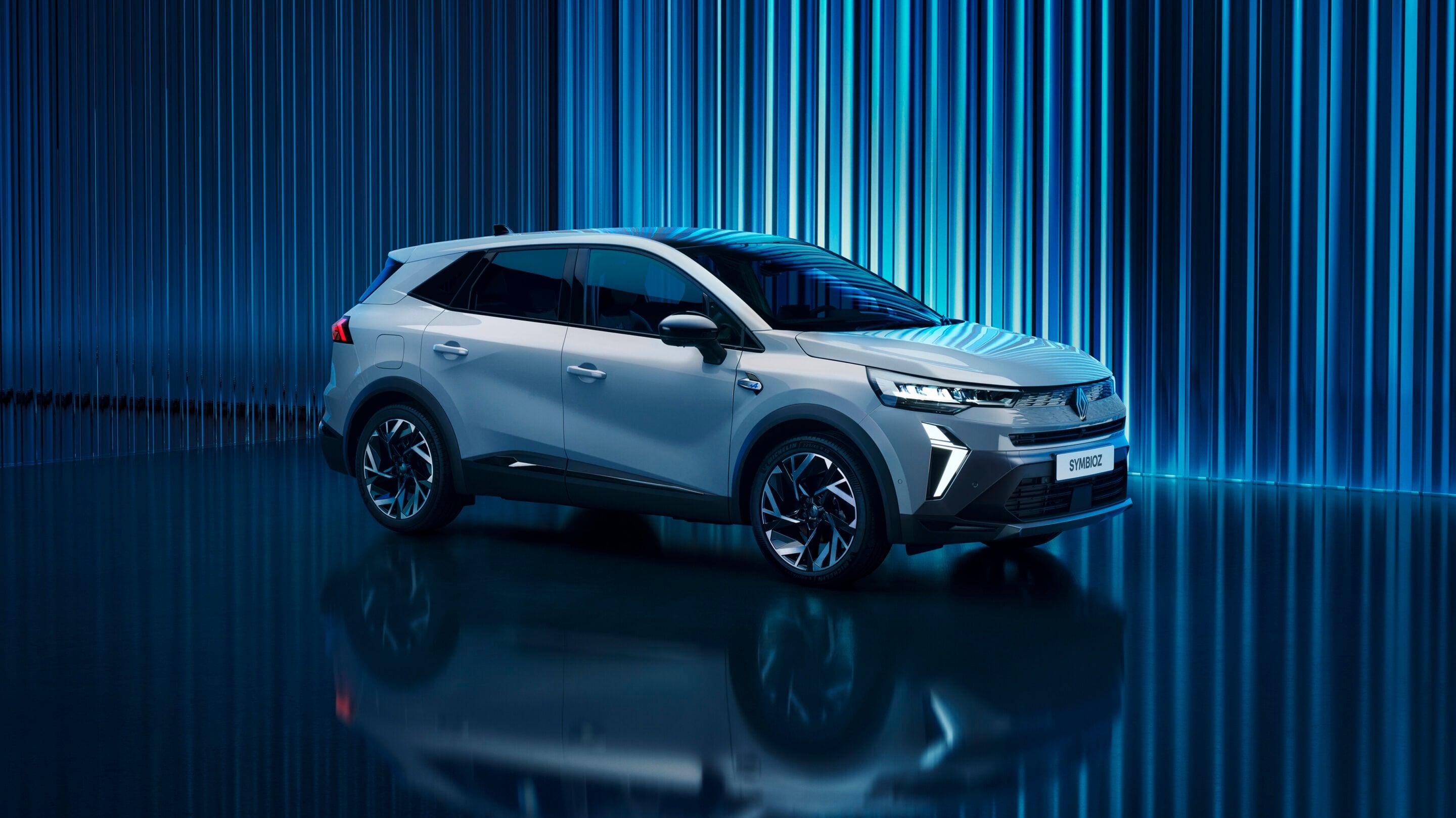
Renault is finally bringing a full hybrid to Australia, and it is wrapping it in a new small SUV called the Symbioz. Local pricing and specs are locked in ahead of arrivals in July 2026, starting from $36,990 plus on-road costs.
The Symbioz replaces the Captur in Renault's local lineup and slots in above the Duster. More importantly, it marks the first time Renault has offered a proper full hybrid in Australia, which is a notable gap the brand is only now closing.
For buyers, a new entrant in the fiercely contested small SUV hybrid space is welcome. More competition tends to mean sharper pricing and better deals, especially for a brand that needs to win attention back.
Renault's first full hybrid lands in Australia
The headline here is the powertrain. Renault has lagged rivals like Toyota, Honda and a wave of Chinese brands on hybrid tech locally, and the Symbioz is its catch-up move in one of the hottest segments going.
Renault Australia's general manager Glen Sealey framed it as giving buyers a choice of hybrid options in a hotly contested part of the market, and pitched the full hybrid as a way to deliver genuine fuel savings while petrol prices stay high. That last point is the real sales hook in 2026.
What $36,990 buys, and where the hybrid sits
The range opens at $36,990 plus on-road costs for the Techno mild-hybrid. Step up to the full hybrid and the Techno hybrid lands at $42,990, while the top-spec Esprit Alpine hybrid sits at $45,990, both before on-road costs.
That spread matters. The advertised $36,990 entry point is the mild-hybrid, not the full hybrid that headlines the launch. To get the 4.7L/100km full hybrid, you are looking at $42,990 and up, a $6000 jump over the entry car.
It is a familiar tactic. The sharp opening price gets attention, but the technology most buyers will actually want sits a few thousand dollars higher. Read the spec sheet before you anchor on the headline number.
Two very different drivetrains under one badge
The Symbioz offers two genuinely different setups. The mild-hybrid uses a 104kW/245Nm 1.3-litre turbo-petrol engine with a seven-speed dual-clutch transmission. The full hybrid pairs a 116kW/265Nm 1.8-litre naturally aspirated engine with a dedicated hybrid transmission and a 1.4kWh battery.
On fuel, the gap is real. The mild-hybrid is rated at 6.4L/100km with 144g/km of CO2, while the full hybrid drops to 4.7L/100km and 107g/km. Over a few years of driving, that difference adds up at the bowser.
Performance is close, with the mild-hybrid hitting 100km/h in 9.4 seconds and the hybrid marginally quicker at 9.1. Both are front-wheel drive, so neither is pitched as a performance machine. This is about efficiency and everyday ease, not pace.
Bigger than it looks, and that matters
The Symbioz sits at the larger end of the small SUV class. At 4412mm long it is only 13mm shorter than a Nissan Qashqai, which is a size class up in most buyers' minds. That makes it roomier than the Captur it replaces.
Boot space is decent too, with the mild-hybrid offering 563 litres, expanding to 695 litres with the rear seat slid forward. The full hybrid gives up some space to its battery, at 460 litres, so families weighing cargo room should note the trade-off.
Why the timing plays into Renault's hands
Launching a fuel-sipping hybrid just as the fuel excise relief ends and pump prices climb is shrewd timing. Renault is leaning directly into buyer anxiety about running costs, and the full hybrid's 4.7L/100km figure is its strongest argument.
The Symbioz also closes the loop on the Captur, whose return to Australia has been ruled out, as we covered when the Captur was confirmed gone in favour of the Symbioz and Duster. Renault is simplifying and modernising its small SUV story in one move.
Is it worth stepping up to the full hybrid?
For city-bound drivers covering modest distances, the cheaper mild-hybrid may be enough, and it keeps the entry price tidy. But if you drive serious kilometres, the full hybrid's lower fuel use will likely repay its premium over time.
The bigger question is value against rivals. The small SUV hybrid segment is crowded with strong, sharply priced options, including Toyota, Hyundai and a growing list of Chinese contenders. Renault has to earn the sale on price and equipment, not badge loyalty.
That is good news for you. When a brand is fighting to re-establish itself, the deals tend to follow. Compare the Symbioz hybrid carefully against its rivals on the drive-away price, and let Carseekers do the cross-shopping so you only pay what the car is genuinely worth.
Considering finance for your next car? Loanseekers can help you explore car loan options.
The finer details
Your questions answered.
How much does the Renault Symbioz cost in Australia?
The Renault Symbioz range opens at $36,990 plus on-road costs for the Techno mild-hybrid. The full hybrid starts at $42,990 for the Techno hybrid, with the top Esprit Alpine hybrid at $45,990, both before on-road costs.
When does the Renault Symbioz arrive in Australia?
The Renault Symbioz is due to arrive in Australia from July 2026. It replaces the Captur in Renault's local lineup and sits above the Duster, and it is the first full hybrid Renault has offered in Australia.
What is the difference between the Symbioz mild-hybrid and full hybrid?
The mild-hybrid uses a 104kW 1.3-litre turbo with a dual-clutch gearbox and uses 6.4L/100km. The full hybrid pairs a 116kW 1.8-litre engine with a dedicated hybrid transmission and 1.4kWh battery, dropping fuel use to 4.7L/100km. The full hybrid costs about $6000 more.
Is the Renault Symbioz a small or medium SUV?
It sits at the larger end of the small SUV class. At 4412mm long it is only 13mm shorter than a Nissan Qashqai, making it roomier than the Captur it replaces. The mild-hybrid offers a 563-litre boot, while the full hybrid gives up space to its battery at 460 litres.
Is the Symbioz full hybrid worth the extra money?
For high-kilometre drivers, the full hybrid's 4.7L/100km should repay its premium over time, especially with fuel prices rising. City drivers covering short distances may find the cheaper mild-hybrid sufficient. Run the numbers against your real annual mileage before deciding.
How does the Renault Symbioz compare to rivals?
The small SUV hybrid segment is crowded with sharply priced options from Toyota, Hyundai and a growing list of Chinese brands. Renault has to win on price and equipment rather than badge loyalty, which means buyers should cross-shop hard on the drive-away price.