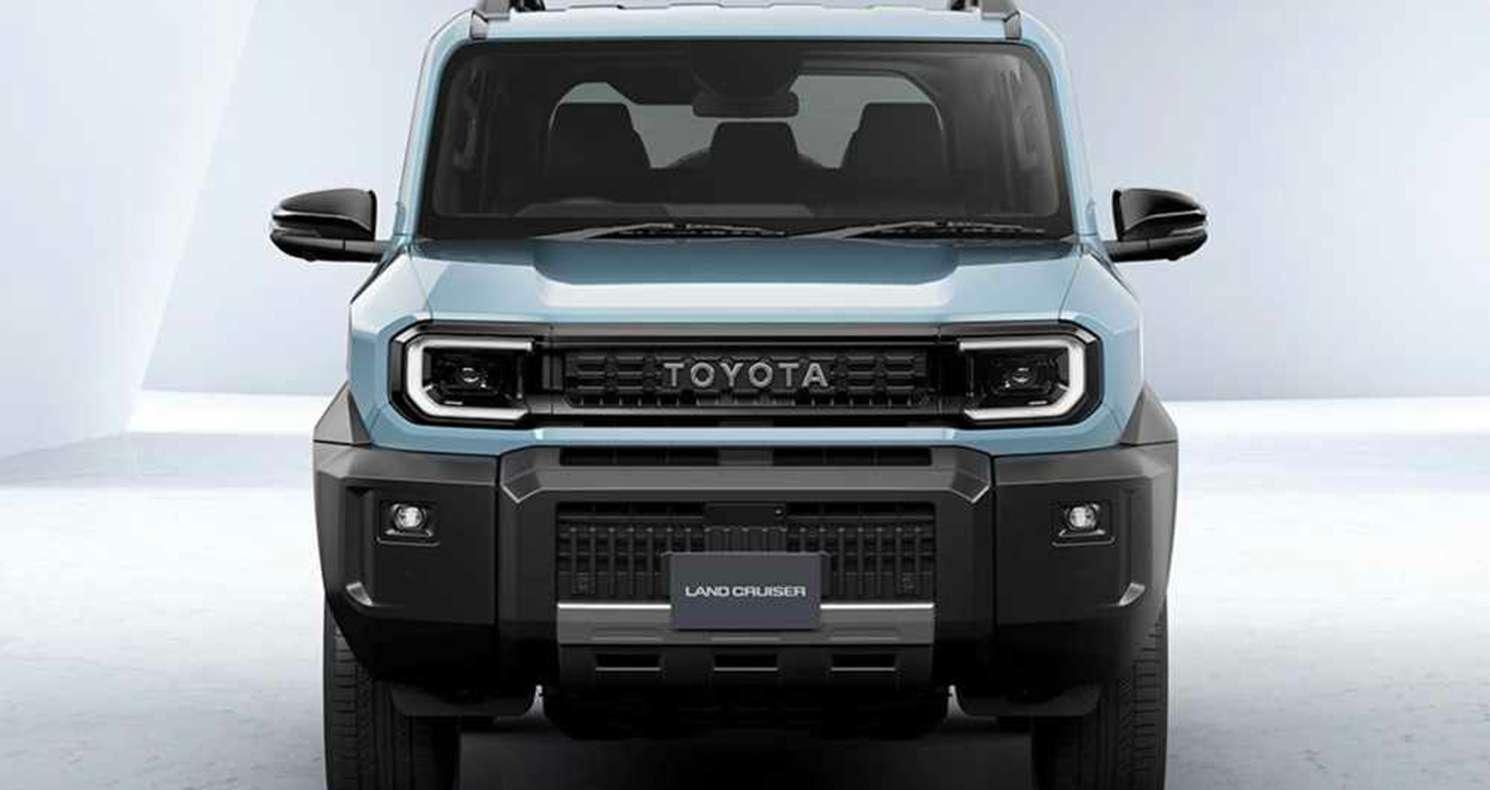
The cheapest LandCruiser the world has ever seen may yet make it to Australia. Reports out of Japan and India this week suggest Toyota is building a new production facility in Maharashtra that will start churning out the LandCruiser FJ from 2029, and crucially, that the FJ will get a petrol-hybrid powertrain there. That single change is what shifts the FJ from "never coming to Australia" to a genuine prospect.
Under $40,000 in its Japanese launch spec, the FJ slots well below anything wearing a Toyota LandCruiser badge today. If it lands here, it would directly attack the Suzuki Jimny, the GWM Tank 300, and a number of the new Chinese off-roaders that have arrived in 2025 and 2026. Carseekers has been watching this rumour build for almost two years, and the engine update is the missing piece.
Why Toyota Australia keeps saying no
The sticking point has always been the engine. The FJ launches in Japan with a basic petrol four-cylinder that would not clear Australia's tightening emissions framework, which now includes the New Vehicle Efficiency Standard and the slow march to Euro 6 compliance. Toyota Australia's former Sales and Marketing VP Sean Hanley laid it out plainly last year, saying the LandCruiser name in Australia would be "very appealing" but that the brand has to plan around "variable regulations, new criteria, new vehicle efficiency standards".
The outcome was a public no from the Australian arm. The FJ was a non-starter not because the market did not want it, but because Toyota could not justify importing a powertrain that would burn through its credit balance under the new emissions rules. Nothing in that calculation has changed yet. What is changing is the powertrain itself.
The India plant unlocks a hybrid pathway
The new Maharashtra plant is expected online in 2029, three years after FJ production begins elsewhere. The publication Rush Lane reports the delayed start is deliberate, intended to pave the way for petrol-electric powertrains built at the same facility. Once those hybrid drivetrains are developed, they would likely be produced at all FJ production hubs.
Australia is unlikely to source FJs from India directly, since the country generally exports right-hand-drive cars from Thailand or Japan into our market. But the existence of a hybrid variant at any production facility solves the regulatory problem. Once a hybrid is available, Toyota Australia gets the option of pulling in cars from Japan or Thailand on a hybrid spec that complies with NVES.
Pricing pressure on Jimny and Tank 300
In Japan, the FJ is expected to start around $4.5 million yen, which converts to just under $40,000. That figure will not translate directly to Australia, but it gives a baseline. A hybrid LandCruiser FJ landing here in 2030 in the high $40,000s to low $50,000s drive-away would sit between the Jimny and the current Tank 500. It would also fundamentally reshape what a budget body-on-frame 4WD looks like in this market.
The Jimny would lose its near-monopoly on the under-$45,000 hardcore 4WD niche overnight. The Tank 300 would suddenly have a Toyota LandCruiser fighting it on price and brand value. Even the Mahindra Pik-Up and Isuzu MU-X derivatives would feel some heat, because the FJ's Land Cruiser DNA is a powerful piece of marketing.
What we expect for Australian spec
No Australian variant has been confirmed, but the building blocks are visible. A hybrid LandCruiser FJ here would almost certainly run a Toyota 2.5-litre Atkinson-cycle petrol-electric drivetrain, paired with a part-time 4WD system and locking rear differential. Towing capacity should sit in the 2,500 to 3,000kg range, which would put it short of a HiLux but ahead of a Jimny.
Expect a single body style, five-door only, with a wheelbase comparable to the current LandCruiser Prado but shorter overall length. The FJ has been previewed with retro design cues, including round headlights and a vertical-bar grille, that genuinely capture the original FJ40 character without descending into Mahindra Roxor parody.
Dealer behaviour to expect
If and when this lands, expect the same playbook Toyota dealers ran with the new Prado and the LC300. Initial allocations will be tight, demonstrator cars will be locked into stock for sale, and waiting lists will run six to twelve months. Trade-in allowances on rival vehicles will tighten as soon as the FJ goes on sale because Toyota dealers will know buyers have nowhere else to go.
The smart play for budget 4WD buyers is to keep an eye on Jimny depreciation through 2028. A confirmed Australian FJ launch would soften Jimny used values noticeably, which would either give you a cheap exit point on a Jimny you already own or a more attractive used buy if you have been waiting for one to come down in price.
Is it actually coming?
The honest answer is not yet. What the latest report confirms is that the powertrain blocker is being engineered out of the FJ programme. That is the precondition for Australia, not a confirmation. Toyota Australia has not commented on the rumour and is unlikely to do so until the hybrid drivetrain is closer to production reality.
For buyers, the practical takeaway is that the cheap LandCruiser is no longer impossible. It is several years away at best, but the engineering pathway exists for the first time. If you are currently shortlisting a Suzuki Jimny or Tank 300 with a five-year ownership plan in mind, the back end of that ownership window is going to look different to the start of it.
Considering finance for your next car? Loanseekers can help you explore car loan options.
The finer details
Your questions answered.
Is the Toyota LandCruiser FJ coming to Australia?
Not yet confirmed. Toyota Australia has ruled it out under current emissions rules because the launch petrol engine fails the New Vehicle Efficiency Standard. A hybrid version planned for Indian production from 2029 could change that, opening the door to an Australian launch around 2030.
How much will the Toyota LandCruiser FJ cost in Australia?
No Australian pricing has been confirmed. In Japan the FJ is expected to start around $4.5 million yen, roughly $40,000. An Australian-bound hybrid version would likely land in the high $40,000s to low $50,000s drive-away, undercutting most current LandCruiser variants and slotting near the Tank 300.
What will the Toyota LandCruiser FJ compete with?
The Suzuki Jimny, GWM Tank 300, and the wave of Chinese off-roaders arriving in 2025 and 2026. It would also pressure the Mahindra Pik-Up and the entry of larger ladder-frame SUVs like the Isuzu MU-X on price.
Why has Toyota Australia ruled out the FJ until now?
The launch engine is a basic petrol four-cylinder that fails Australia's tightening emissions framework. Toyota Australia has said the FJ would be very appealing in this market but cannot be sold here under current regulations without a hybrid or more efficient powertrain.
Will the FJ be a real off-roader or a soft SUV?
A genuine off-roader. The FJ uses a body-on-frame chassis, part-time 4WD with low range, and a locking rear differential. Towing capacity should sit in the 2,500 to 3,000kg range, which puts it ahead of the Jimny but short of the HiLux.
Should I wait for the FJ or buy a Suzuki Jimny now?
The FJ is several years away at the earliest, so waiting only makes sense if you do not need a 4WD now. If you do, a Jimny remains an excellent buy. Just be aware that confirmed FJ news could soften Jimny used values over time, so keep that in mind for your resale plan.