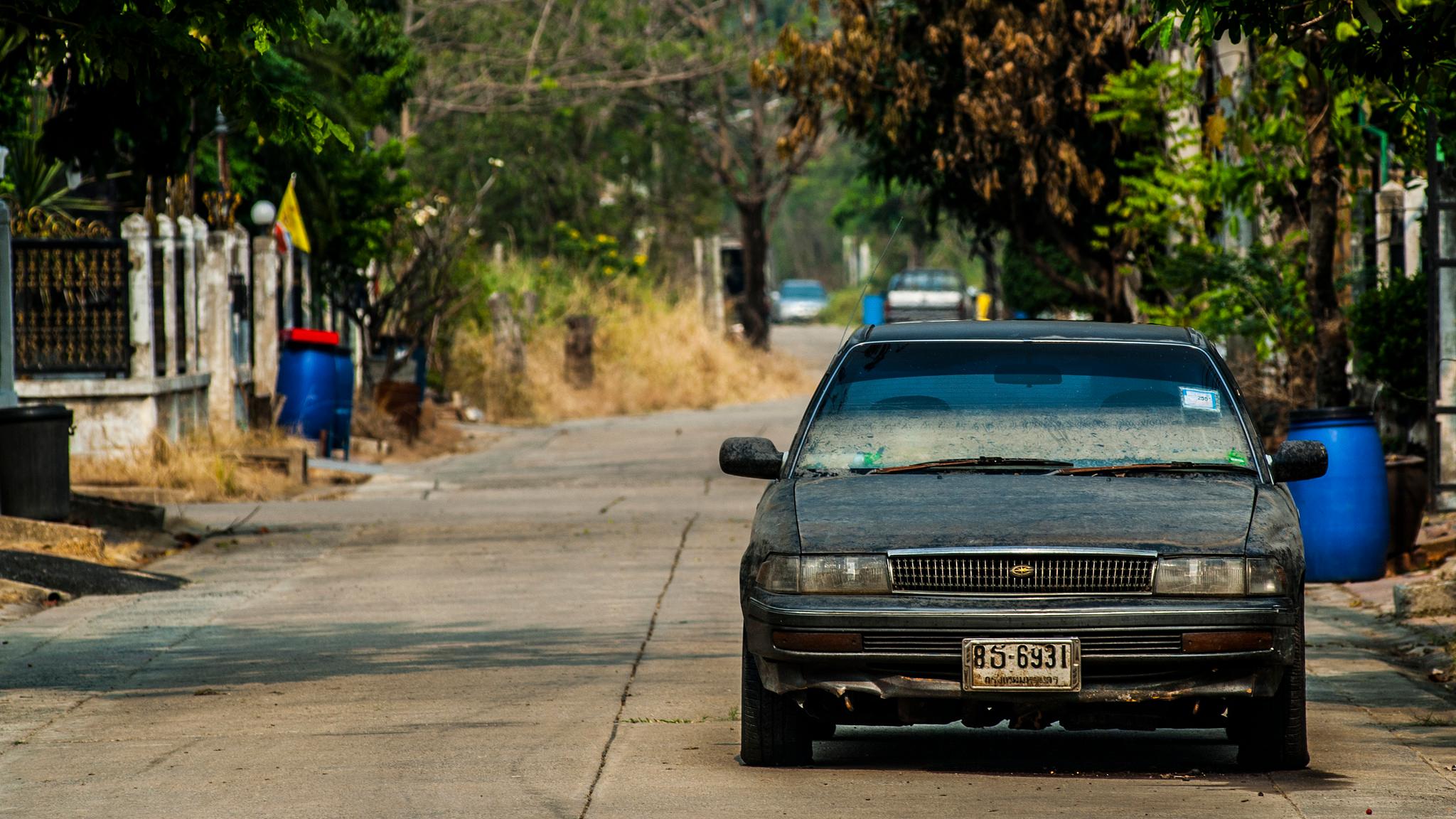

A vehicle photographed in the aftermath of the 2011 Bangkok floods. Historical context; it is not a car offered for sale in Australia. Previews may crop the photograph.
Photo: M.rJirapat · CC BY-SA 4.0
Used-car water damage cannot be ruled out by a polished cabin or a clear advertisement. Ask the seller directly about flood or water exposure, then combine the answer with records and an independent inspection.
The NSW written-off vehicle guidance warns that some flood-affected vehicles are not total losses and will not enter the register. Absence from a written-off register therefore does not establish that a car has never had water damage.
Begin with the paper trail
Match the VIN on the car to the documents and search results. Ask for known damage, insurance assessment, repairs and any written-off history in writing. Resolve a change of identity or a record mismatch before paying.
Check the relevant registration authority's rules and the official vehicle-history information for the jurisdiction. NSW restricts re-registration of written-off light vehicles to limited circumstances; do not assume another state's process or a seller's repair invoice settles NSW eligibility.
Queensland's water-damaged product guidance explains dealer disclosure and the distinction between statutory and repairable write-offs. Use the rules that apply to your actual sale and registration, rather than generalising a single state's outcome.
Give the inspector a water-damage brief
Ask the inspector to assess possible water exposure and repair quality, including the cabin, accessible body cavities, electrical equipment and relevant safety systems. Request written findings and a clear statement of areas or tests excluded.
Record unusual staining, persistent smells, corrosion, silt or inconsistent replacement trim as questions for that inspection. None of those observations on its own proves flood damage, and their absence does not certify the car is clear.
Do not pull apart safety components, disturb wiring or enter a hazardous vehicle to investigate. If exposure is suspected, ask a competent vehicle specialist to determine the appropriate inspection scope.
Use an evidence decision, not a bargain threshold
Proceed to inspection: the seller supplies consistent identity and history information and permits the checks you need.
Hold: paperwork, repair details or inspection findings remain unresolved. Obtain an answer before committing rather than pricing an unknown defect as a small discount.
Move on: the evidence you need is refused or the combination does not suit your risk and repair budget. A low asking price is not evidence that later repairs will be affordable.
Our used-EV checklist adds battery and charging questions where relevant. Water-damage history needs this separate attention regardless of powertrain.
If considering finance, take the vehicle identity and known-damage information to Loanseekers before assuming the car will be acceptable to a lender.