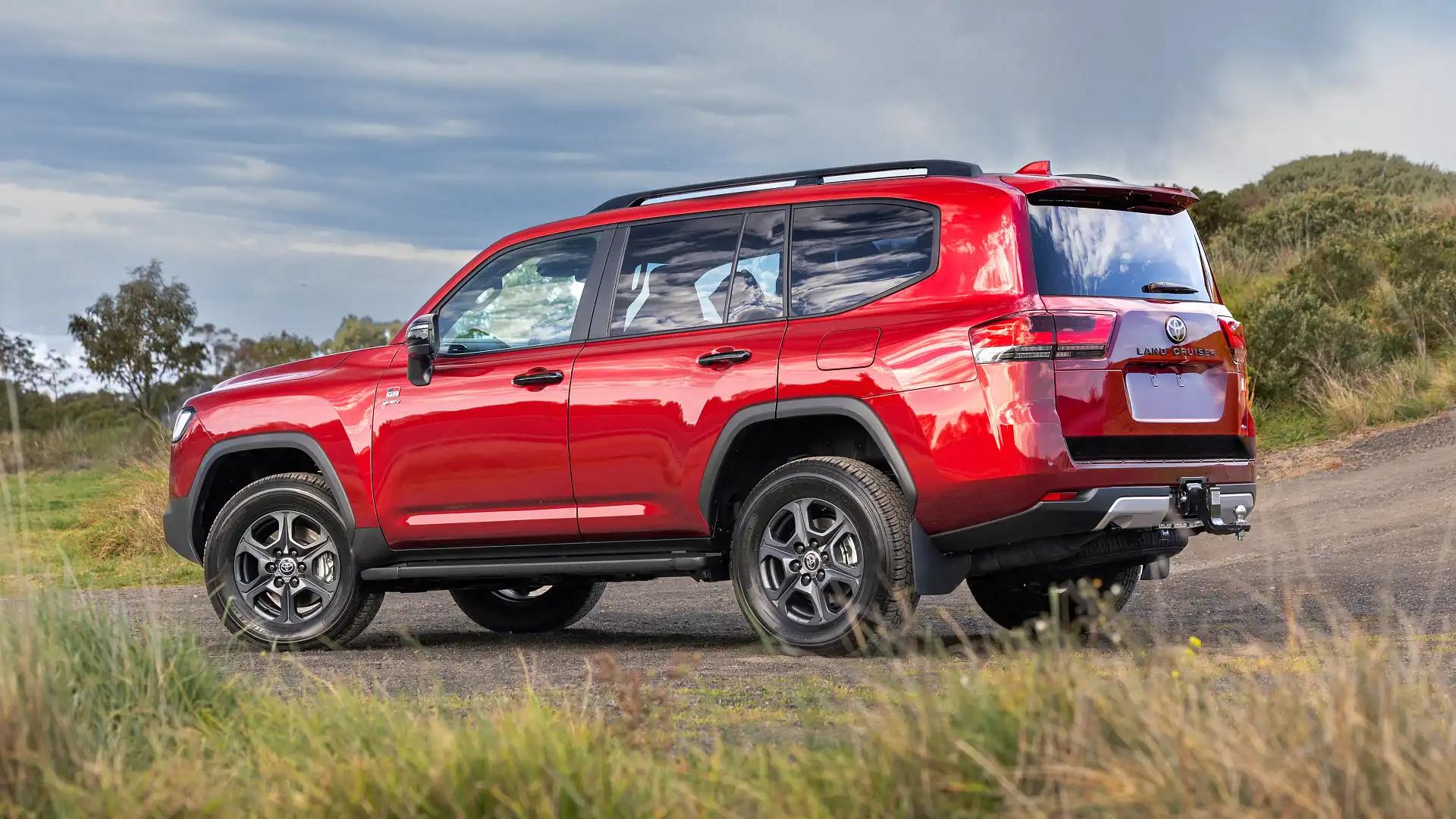
Toyota has confirmed pricing for the first ever hybrid LandCruiser 300, and the headline number is steep. The 2026 Toyota LandCruiser 300 Series Performance Hybrid will be priced from $156,060 plus on-road costs for the GR Sport, and $156,810 plus on-roads for the top-of-the-range Sahara ZX, with first deliveries due from the middle of the year.
Those numbers represent a premium of $8900 over the equivalent diesel V6 grades, and they make this the most expensive LandCruiser ever sold in Australia. They also make it the most powerful, with 341kW and 790Nm putting 114kW and 90Nm more on the table than the existing 3.3-litre turbo-diesel V6.
For Carseekers readers shopping a top-tier 4WD wagon, this is a moment that has been a long time coming. The diesel-only LandCruiser 300 Series was the lowest-selling LandCruiser family in 2025, and the hybrid is Toyota's response to buyers asking for both more power and lower fuel use.
What you actually get for the $8900 premium
The LandCruiser 300 Hybrid pairs a 3.4-litre twin-turbo petrol V6 with a 36kW electric motor, sharing its drivetrain with the related Lexus LX700h and the Toyota Tundra pick-up sold overseas. Total system output is 341kW and 790Nm, against the diesel V6's 227kW and 700Nm.
Fuel consumption is rated at 10 litres per 100 kilometres, compared with 8.9L/100km for the diesel. That higher official figure tells you everything you need to know about the powertrain logic: this is not a fuel-saving hybrid like a Toyota RAV4. It is a power-boosting hybrid that lets the 300 Series tow harder and accelerate faster while still meeting tightening emissions rules.
Unlike a RAV4, which uses two electric motors and a complex set of gears to vary between petrol and electric drive, the 300 Hybrid places one electric motor between the engine and gearbox. It retains a 10-speed torque-converter automatic, mechanical four-wheel drive and a low-range transfer case, which matters for serious off-road use and tow operation.
Why the hybrid is more expensive to buy than the diesel
The diesel LandCruiser has been Toyota's volume seller in this segment for decades, and the brand has priced the hybrid at a clear premium rather than a parallel offer. That tells you Toyota expects buyers to choose hybrid for performance and emissions reasons, not for outright running cost reduction.
With fuel use rated higher than the diesel and pump prices for 95 or 98 RON petrol routinely 15 to 20 cents per litre above diesel, the running-cost calculation favours the diesel V6 by several thousand dollars over a typical five-year hold. The hybrid wins on power, refinement and probable resale value, which is what most buyers in this price band actually pay for.
For pure work-and-tow buyers, the diesel remains the rational choice. For lifestyle owners who tow a caravan a few times a year and want better acceleration on the highway, the hybrid is the smarter ticket despite the higher fuel bill.
GR Sport vs Sahara ZX: how to choose
The more off-road-oriented GR Sport uses front and rear locking differentials and Electronic Kinetic Dynamic Suspension System (E-KDSS) for serious bushwork. The Sahara ZX is the road-biased luxury flagship, with a limited-slip rear diff rather than full lockers.
This is the same fork that exists in the diesel range, and the choice should be driven by how you actually use the car. If you genuinely take a 300 Series off-road on hard tracks, the GR Sport is the only sensible option. If you tow a caravan and do school runs in between, the Sahara ZX gets you a more comfortable ride and better luxury kit.
A new addition for the hybrid is electric power steering, where the diesel retains hydraulic. There is also a 200V/1500W rear auxiliary socket for powering small appliances, which the diesel does not get. That is a useful camping feature and a quiet differentiator if you are cross-shopping between the two powertrains.
Standard equipment, safety and tech
Inside, the hybrid matches the diesel's 12.3-inch digital instrument cluster, paired to a 14-speaker JBL sound system. The Sahara ZX gets a dual rear seat entertainment system as standard. Standard specifications match the diesel's broad suite of advanced safety features.
Those include autonomous emergency braking with pedestrian and daytime cyclist detection, adaptive cruise control, lane-keep assist via braking, traffic sign recognition, blind-spot monitoring, rear cross-traffic alert, front and rear parking sensors, and door exit warning.
This is the standard kit list buyers expect at $156,000 plus drive-away. The hybrid does not unlock additional safety or convenience tech beyond what is already in the diesel; it adds power and refinement, not features.
How it stacks up against the LX700h and the Tundra
The shared Lexus LX700h hybrid drivetrain sits in a more luxurious wrapper at higher pricing, while the Toyota Tundra hybrid is a US-market full-size pickup not sold in Australia. Buyers shopping the LandCruiser hybrid against premium 4WD wagons in this price band will also be cross-shopping the Range Rover D350, BMW X7 xDrive40d, and the diesel Mercedes-Benz GLS.
Against those Europeans, the LandCruiser's selling points are unchanged: bulletproof reliability reputation, genuine off-road capability, retained-value strength, and dealer network coverage in regional Australia. The hybrid powertrain just closes the only real gap the 300 Series had against rivals on power and acceleration.
For the Toyota LandCruiser Prado buyer thinking about stepping up, the 300 Hybrid is the natural next ticket. The Prado is the better daily driver for suburban families. The 300 Hybrid is the heavy-duty option for caravan towers and remote-area travellers who genuinely need the extra capability.
What Carseekers thinks
The LandCruiser 300 Hybrid is a real performance step-up rather than a fuel-economy play, and the $8900 premium is fair given the extra 114kW. Buyers should choose between the GR Sport and Sahara ZX based on actual off-road use rather than cabin features. Anyone who tows fewer than a dozen times a year will be perfectly happy with the cheaper diesel, which remains the more logical pick for pure work duty.
Considering finance for your next car? Loanseekers can help you explore car loan options.
The finer details
Your questions answered.
How much does the 2026 Toyota LandCruiser 300 Hybrid cost?
The Performance Hybrid is priced from $156,060 plus on-road costs for the GR Sport and $156,810 plus on-roads for the Sahara ZX. That represents an $8900 premium over equivalent diesel V6 grades, making it the most expensive LandCruiser ever sold in Australia.
When does the LandCruiser 300 Hybrid arrive?
Toyota has confirmed first customer deliveries from the middle of 2026. Pre-orders are running through Toyota dealer network, with availability subject to allocation across the GR Sport and Sahara ZX grades.
Is the hybrid more fuel efficient than the diesel?
No. The hybrid is rated at 10 litres per 100 kilometres against 8.9L/100km for the 3.3-litre diesel V6. The hybrid is a power-boosting setup rather than a fuel-saving one, prioritising performance and emissions compliance over running cost reduction.
How powerful is the LandCruiser 300 Hybrid?
The hybrid system produces 341kW and 790Nm combined, which is 114kW and 90Nm more than the 3.3-litre turbo-diesel V6 it sits alongside. It is the most powerful LandCruiser ever sold in Australia.
Should I buy the hybrid or stick with the diesel V6?
If you tow regularly or value acceleration and refinement, the hybrid is the better choice. If you use the LandCruiser primarily for work, towing heavy loads through regional Australia, the diesel V6 is more economical to run and better suited to long-distance touring with consistent fuel availability.
GR Sport or Sahara ZX, which one is right for me?
Choose the GR Sport if you regularly take the 300 Series off-road, since it gets front and rear locking differentials plus E-KDSS suspension. The Sahara ZX is the road-biased luxury flagship with a limited-slip rear diff, which is the better pick for caravan towing, family use and most country highway driving.