
Is Toyota becoming the new Holden? Not in a good way. The Japanese brand has dominated the Australian market for more than a decade. In 2025, almost one in every five new vehicles sold here wore a Toyota badge.
So the brand cannot be in trouble, right? Surely Toyota is too big to fail. Well, it is only early in 2026, but there are warning signs that the run does not continue uninterrupted forever.
Sales are down more than 20 per cent over the first four months of 2026. Toyota has lost almost five per cent of its market share, slipping to 15.9 per cent from over 20 per cent at the end of last year. The slide is not the end of the world. Toyota is still well ahead of its nearest rival. But the people who used to work at Holden will tell you complacency in this industry is a slow disease, not a sudden one.
The Holden parallel is uncomfortable for a reason
Holden failed for many reasons, but central among them was an over-reliance on the strength of the Lion badge and a lack of investment in the products and segments that mattered. Late-era Holden management seemed to feel that you could prop up showroom volume on the Commodore and fill the rest of the range with rebadged Daewoos like the Captiva, Epica, Viva and Barina.
That worked for a while. Holden sales stayed strong. Some of those rebadged models even sold in big numbers. But buyers eventually figured out that these were not the bullet-proof Holdens of memory, and they started looking elsewhere.
In many cases, that elsewhere was a Toyota. A HiLux, a RAV4, a Prado, a Camry, or any of the other models that built the brand's reputation for reliability and resale value.
Toyota's current line-up is not as fresh as the badge implies
Nobody is suggesting that Toyota's current models are on par with the rebadged Daewoos Holden tried to push at the end. The 2026 Toyota range is still well-engineered, broadly reliable, and supported by the deepest dealer network in the country.
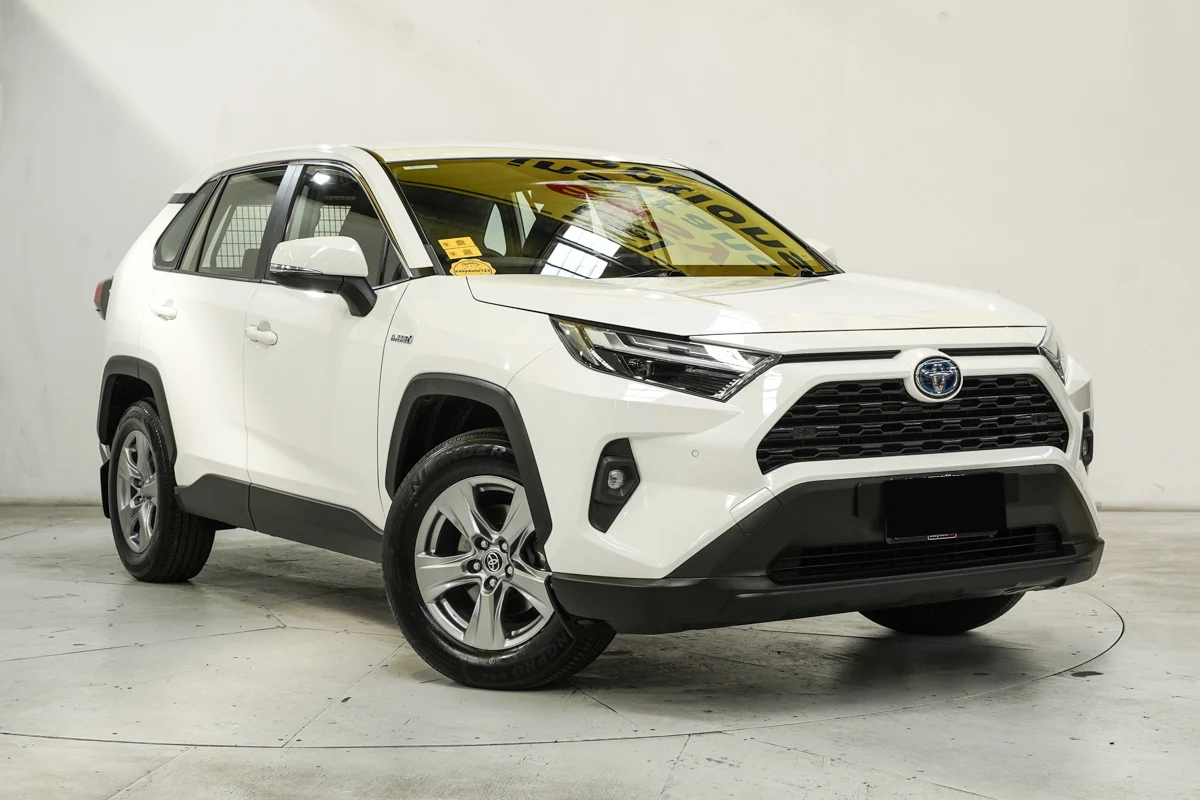
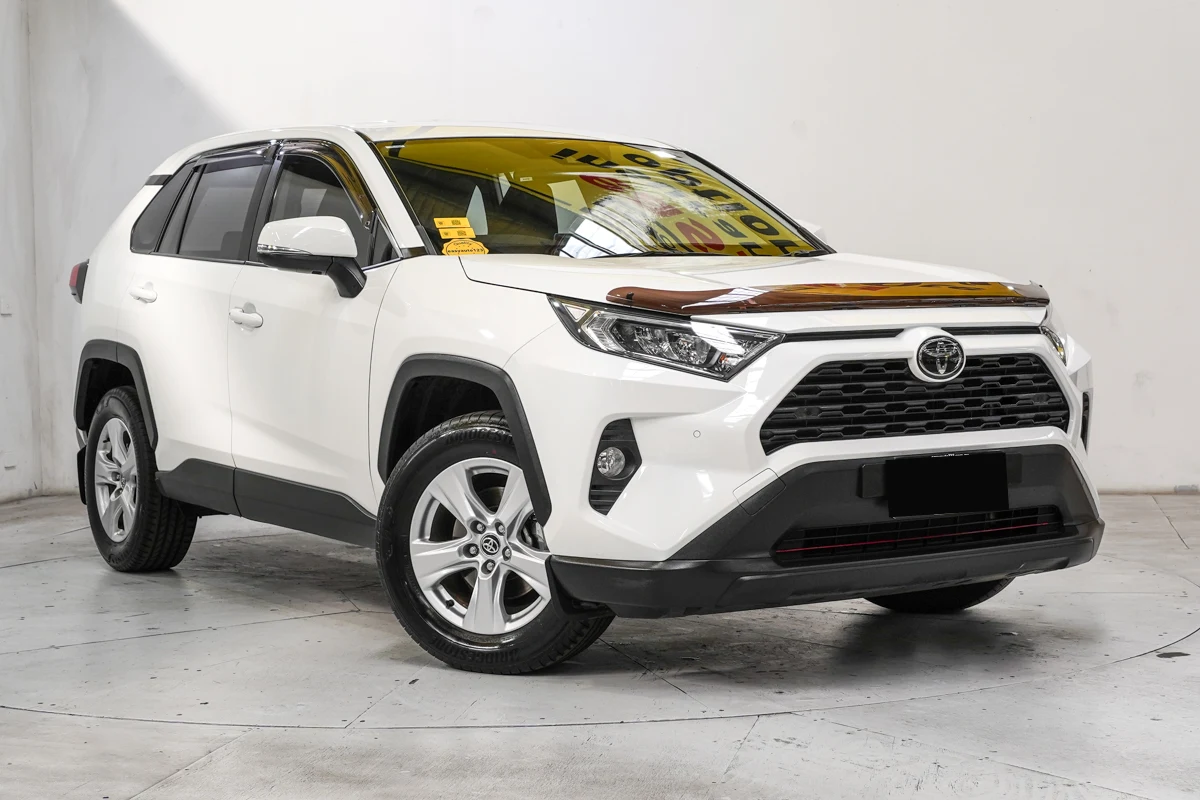
But there is a trend. Most of Toyota's headline updates in the last two years have been facelifts or updates rather than all-new vehicles. The 2026 RAV4 is the clearest example. It is an update of the previous model with a less powerful hybrid engine that now requires more expensive premium unleaded petrol for only marginal fuel economy improvements.
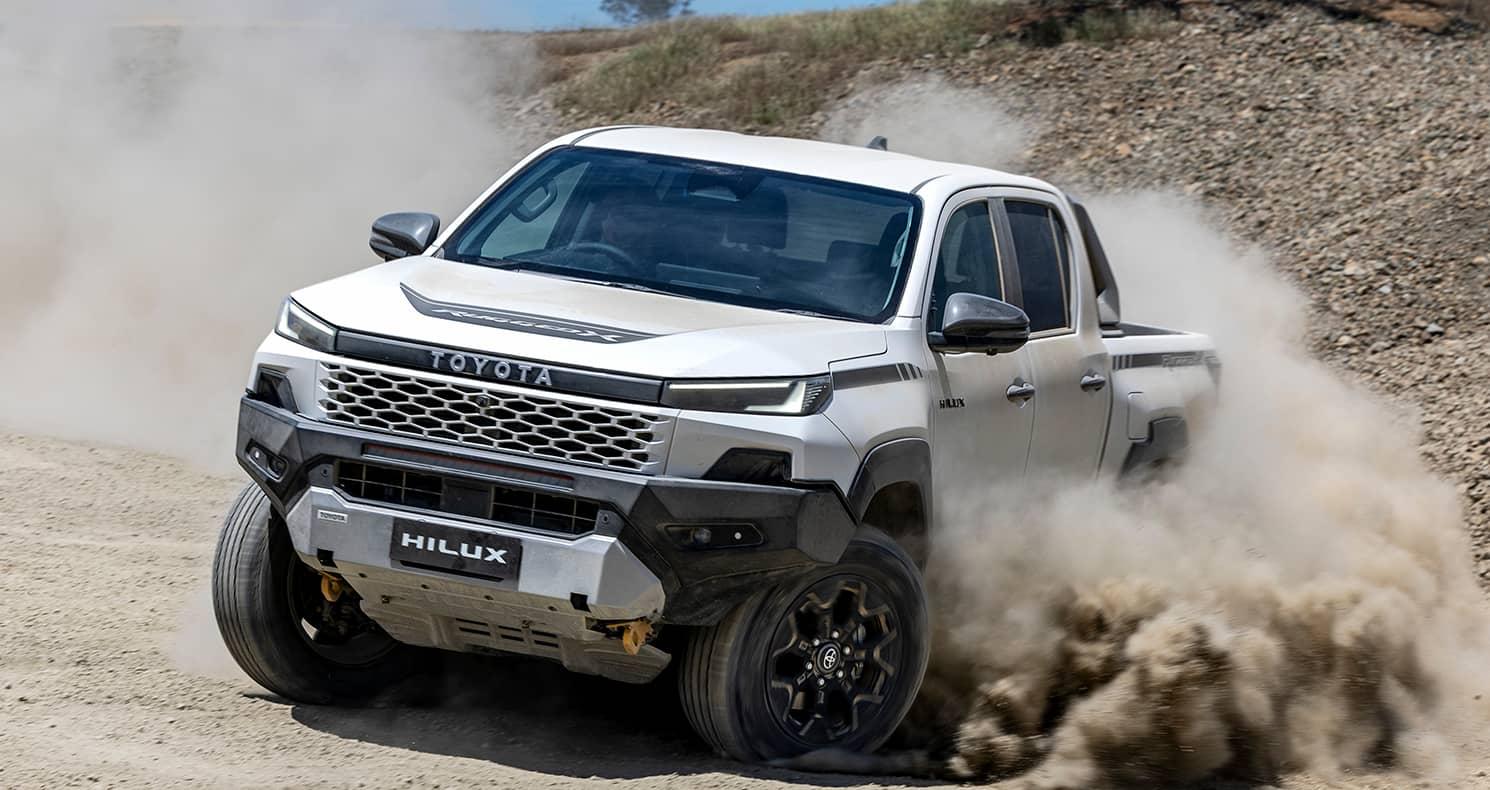
The HiLux is the next case study. The beloved ute skipped the newer TNGA-F underpinnings used by the Prado and Tundra and instead still sits on the same basic architecture that has been around since the mid-2000s. A new model is coming at the end of 2025 and into 2026, but it is more evolution than revolution. Compare that to the Ford Ranger, which has been on a much fresher platform for years.
The defence is logical but Holden made the same defence
It is easy to understand why Toyota is leaning on the if-it-is-not-broken-do-not-fix-it approach. The RAV4 and HiLux are among the most popular cars in the country. Why radically change them, especially when Toyota needs to spend billions developing electric and hydrogen technology under its multi-pathway strategy?
The problem is that this is exactly the logic Holden used. We have the Commodore, the badge is strong, fleet buyers will keep coming, the next investment cycle is for tomorrow. Tomorrow arrived faster than expected and the badge did not save them.
Toyota has more cash and more global scale than Holden ever did, so the comparison is not perfect. But the philosophical posture is uncomfortably similar.
What the sales data is actually saying
The 2026 numbers tell a clear story. The Corolla is down 17.7 per cent. The Yaris Cross has slumped 29 per cent. Prado sales have plummeted by more than 40 per cent. The Kluger is down 20.1 per cent. The RAV4 is down 57 per cent, though that is at least partially explained by the handover to the new model. Even the HiLux is down 11.1 per cent.
Some of this is cyclical. Model changeovers always create temporary drops as old stock dries up and new stock is allocated. But the scale and breadth of the declines tells you the cause is bigger than one model launch. Buyers are looking elsewhere.
Where are they going? Some are going to the Chinese marques. BYD, GWM, Chery, MG, and Geely have all moved volume hard in 2026, and they are doing it with fresh products, lower drive-away prices, and longer warranties. Others are going to Korean brands, which have spent the last decade closing the quality gap on Toyota while undercutting it on equipment for the money.
Dealer behaviour is changing too
For years, Toyota dealers operated like they were doing you a favour by letting you buy a car. Long waitlists on RAV4 and Prado, no discounting, take-it-or-leave-it accessory packs. Some of that was real supply constraint. Some was sales-floor culture.
That is shifting. Sales-down means stock-up. There is more RAV4 hybrid availability now than there has been for years. Prado allocations are sitting on lots rather than racing out the door. Several dealers have quietly begun offering small discounts and matched finance deals, things that were unheard of in 2023 and 2024.
If you are looking at a Toyota in mid-2026, the buying environment is the most negotiable it has been in years. Use that leverage. Get firm drive-away pricing in writing, push back on dealer-fitted accessory packs, and shop the same model across two or three dealers in your state before signing. Carseekers sees Toyota dealer behaviour shifting week by week as the brand adjusts to its weaker sales backdrop, and the buyer holds more cards than they did a year ago.
What this means if you want a RAV4 or HiLux
The 2026 RAV4 is still a good car. Hybrid efficiency, strong resale, well-supported dealer network. But the premium fuel requirement is a real-world cost increase, and the package is no longer the segment leader on equipment or value. Cross-shop the Honda CR-V hybrid, the Hyundai Tucson hybrid, the Mazda CX-5, and the BYD Sealion 6 PHEV before signing. You may still pick the RAV4, but you will pick it knowing what you traded away.
The HiLux story is similar. It remains an honest, hard-working ute with the best dealer network for remote support. But the new 2026 model is on old bones, and the Ranger has the platform and tech advantage. If you are buying a ute for fleet duty or genuine remote touring, the HiLux still makes sense. If you are buying it for suburban duty and weekend boat-towing, the Ranger or even the Volkswagen Amarok on shared underpinnings is the smarter look.
The honest read for buyers
Nobody is calling time on Toyota. The brand is too well-resourced, too widely dealer-supported, and too deeply trusted to disappear quickly. But the 2026 numbers are a warning shot. Buyers who default to Toyota because their parents did, or because the badge is the badge, need to do the cross-shop work this year.
The lesson of Holden is that brand strength erodes slowly until the day it does not. Toyota Australia has the resources to course-correct. The question is whether the next round of model updates is genuinely all-new, or whether the company keeps offering facelifts and asking the badge to do the heavy lifting. Buyers will decide which it is, one signed contract at a time.
Considering finance for your next car? Loanseekers can help you explore car loan options.
The finer details
Your questions answered.
Why are Toyota sales falling in Australia in 2026?
Toyota sales are down more than 20 per cent year to date, with key models like the RAV4, Prado, Corolla and Kluger all losing volume. The brand is in a transition between old and new generations on its biggest models, while Chinese brands like BYD, GWM and Chery are pulling buyers away with sharper pricing and fresher tech.
Does the 2026 Toyota RAV4 really need premium unleaded fuel?
Yes. The updated hybrid powertrain in the 2026 RAV4 now calls for 95 RON premium unleaded, which is more expensive than the regular 91 the previous model could use. The fuel economy improvement is modest, so for many drivers the higher fuel grade cancels out the savings at the pump.
Is the 2026 Toyota HiLux a new model or just a facelift?
The 2026 HiLux is an update on the existing platform, not an all-new vehicle. It still rides on architecture that dates back to the mid-2000s rather than the newer TNGA-F platform used by the Prado and Tundra. Rivals like the Ford Ranger are on much fresher underpinnings.
What are the best alternatives to the Toyota RAV4 in Australia?
The Honda CR-V, Hyundai Tucson and Mazda CX-5 cover the same brief with stronger value in 2026. Chinese options like the BYD Sealion 6 PHEV, Chery Tiggo 7 Hybrid and GWM Haval H6 Hybrid undercut the RAV4 on price while matching or beating it on equipment. Lead times on those rivals are usually shorter too.
What are the best alternatives to the Toyota HiLux in Australia?
The Ford Ranger sits at the top of the segment and outsold the HiLux comfortably in early 2026. The Isuzu D-Max is the value pick, the Volkswagen Amarok shares Ranger underpinnings with a Euro badge, and the BYD Shark 6 PHEV is the new fuel-cost wildcard. Each has a clearer story than the HiLux today.
Will Toyota really fall like Holden did in Australia?
Not overnight. Toyota still leads the sales chart by a comfortable margin and has dealer reach no rival can match. But Holden's collapse was a slow erosion of buyer trust through underwhelming product, badge engineering and complacency. Toyota's current update cycle is leaning on brand strength rather than new platforms, and that is exactly the trap Holden fell into.