
Three Beijing motor shows in a row tell the same story in three different chapters. The first chapter was about scale. The second was about ambition. The third, in 2026, was about export. Chinese carmakers have stopped showing off at home and started shipping to the world.
For Australian buyers, that is not abstract industry news. It is the reason the showroom landscape in 2026 looks dramatically different from the one in 2022. And it is a hint at how much further the change has to run.
Less weird, more polished
This year's Beijing Motor Show marked an unexpected shift that should strike fear into popular incumbents used to topping charts around the world. The stands were noticeably scaled back. Gone were the weird and wacky Chinese domestic market specials that defined previous shows.
The replacement was a more controlled, more international presentation. Stands were slick and professional and showcased a handful of global-market ready models. Where past shows displayed odd concepts that would never leave China, the 2026 show was full of cars Aussies might actually be able to buy.
The flavour was international. If the previous two shows were experimental and expansion-themed respectively, the 2026 Beijing show was an announcement. Chinese automakers are not just for China anymore.
What Geely was saying without saying
The Geely Group stand was happy to show older cars, like the Monjaro SUV and Preface sedan, but also vehicles fully prepared for export with a variety of fresh hybrid powertrains designed to please international markets with different emissions settings and charging infrastructure.
Even Geely's primary reveal was relatively tame. A concept sedan previewing a new design language. But the message was clear. This is our new unified design for the world, not just for China, and it is powertrain agnostic. You will know a Geely when you see it, and it will have exactly what you want under the bonnet.
This is the signature shift across the Chinese industry. Brands are pivoting from market-specific oddities to global design and powertrain flexibility. That is the same play Hyundai and Kia made 15 years ago. It worked then. It is working again.
GAC, HongQi and the others quietly upgrading
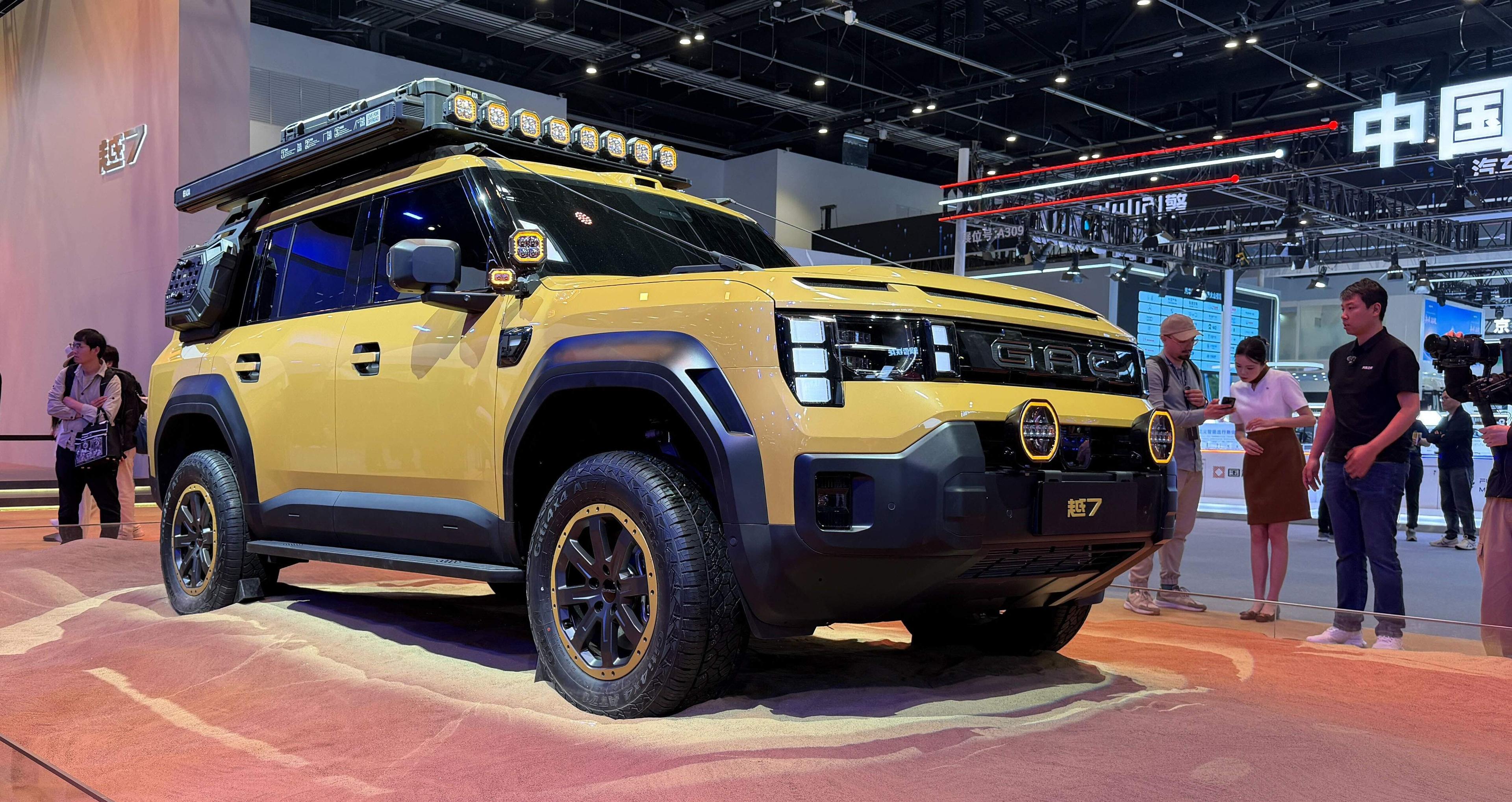
GAC showed off its global market off-road SUV alongside an array of export-ready models. The more obscure once-domestic-only marques like the luxury HongQi and the off-road-focused 212 had taken a massive step up in terms of the international appeal of their stands. HongQi in particular looked like a credible challenger to mid-tier European luxury given enough time.
These are not household names in Australia yet. Some of them will be within five years. The pattern is the same. Build for export. Polish for export. Sell for export. Domestic market becomes a base, not the ceiling.
Nissan and Toyota are pivoting to China for export models
Another very telling shift was the renewed interest in brands like Nissan and Toyota. Not the globally recognised versions of these brands, but their Chinese joint-venture incarnations, which have created hype in the months before the show in markets outside China.
Nissan's stand went from a sad handful of dated sedans in previous years to absolutely heaving with interest, thanks to its Frontier Pro plug-in hybrid ute and just-revealed Terrano SUV. Nissan has unapologetically re-oriented toward its joint venture with Dongfeng in China for these models, declaring it has to lean on China Speed to reignite interest in its otherwise ailing global footprint.
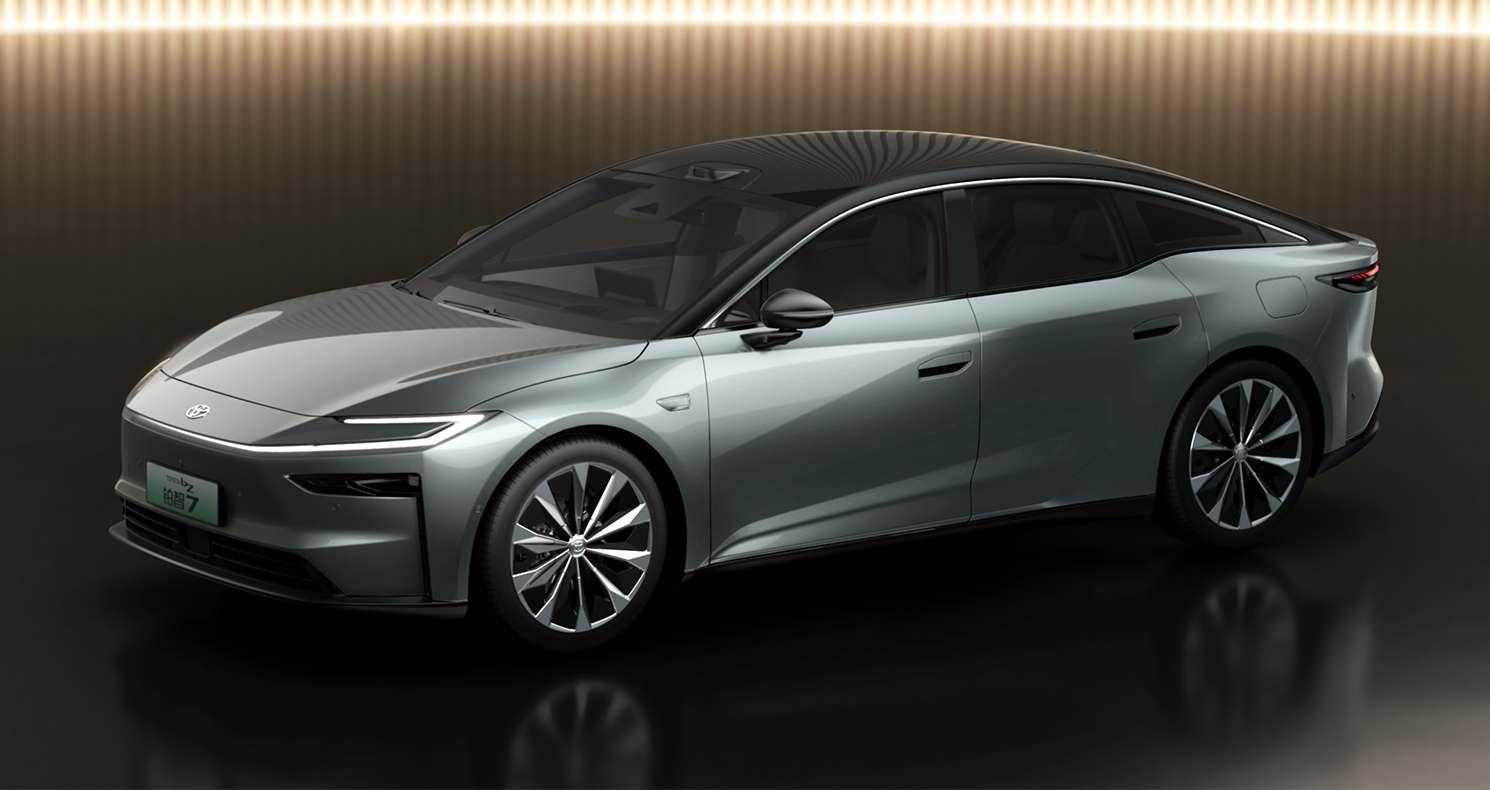
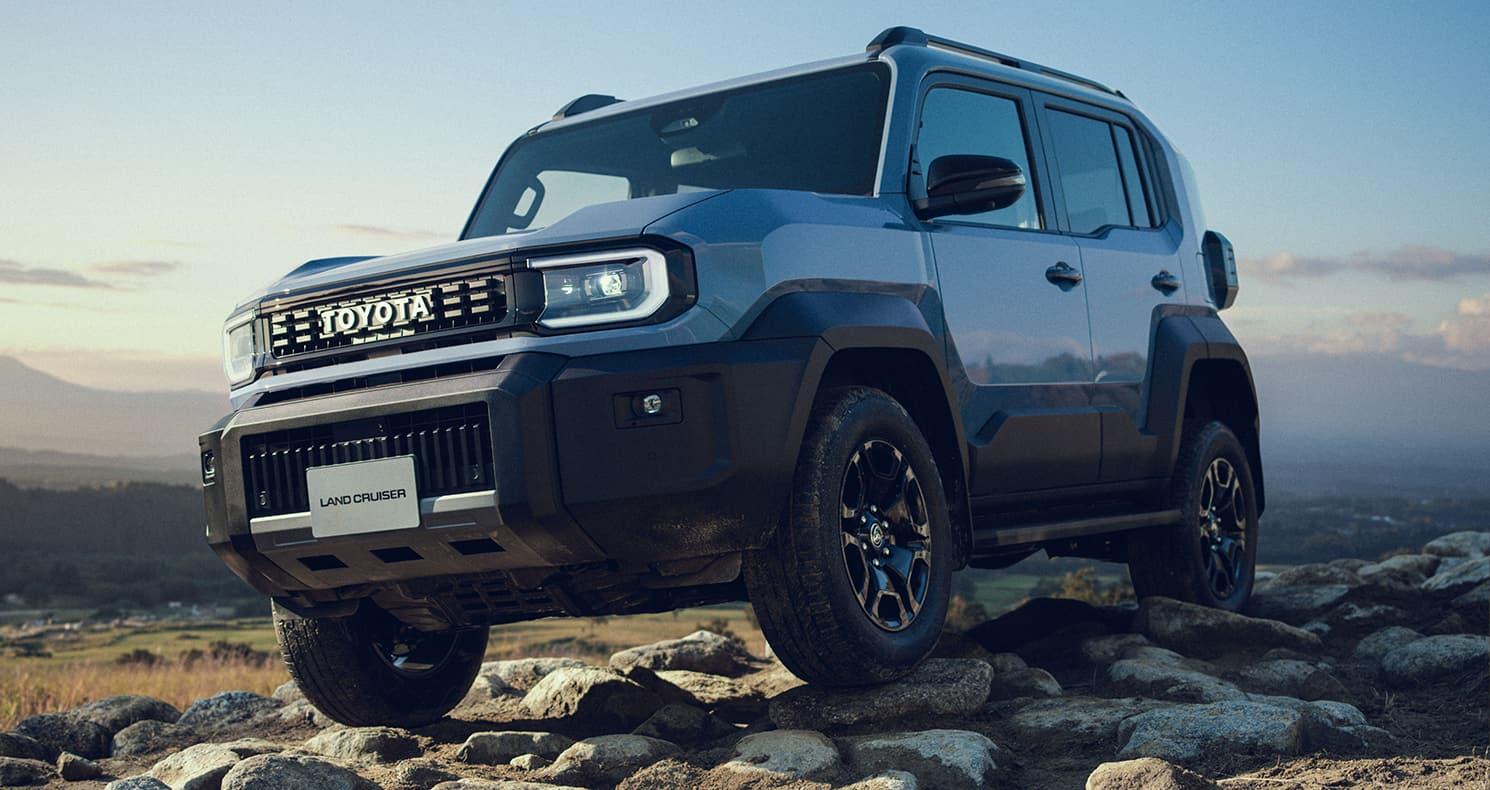
Toyota meanwhile showed a stand primarily of joint-venture models with BYD and GAC, many of which may start to be exported as more of the world seeks a more electrified lineup than the Japanese juggernaut has previously been keen to offer. The implication is significant. Even Toyota now sees its Chinese joint ventures as the engine room for future global model development, not its traditional Japan-based R&D centres alone.
The price war driving the export pivot
This shift makes a lot of sense in context. Domestically, Chinese automakers have been engaged in a brutal price war as Beijing's subsidies shift between production of New Energy Vehicles and the actual sales pipeline, with the government seeking to rapidly get combustion vehicles off the road.
The result has seen the biggest players double down on export as a way to absorb production capacity that the domestic market alone can no longer support at profitable prices. Putting it bluntly, Chinese brands need to sell cars overseas because they cannot sell them at home for enough money.
That is good news for Australian buyers. Australia, as a right-hand-drive market with comparatively healthy margins and relatively friendly import policy, is a priority destination for Chinese exporters. The cars arriving here are not cast-offs. They are the cars Chinese brands have engineered specifically with global markets in mind.
What this means for Toyota and Volkswagen specifically
Toyota Australia is already feeling the heat. Sales are down more than 20 per cent year to date in 2026. Market share has fallen close to five percentage points. The 2026 RAV4 and updated HiLux are facelifts, not all-new platforms, while Chinese rivals arrive with fresh tech and lower prices.
Volkswagen Australia has been more measured but is now publicly comparing itself favourably to BYD, Denza, MG and Xpeng. That is not the posture of a brand confident in its segment dominance. It is the posture of a brand that knows its margins are under siege.
For Australian buyers, this competitive pressure is the best thing that has happened to new car pricing in a decade. Drive-away offers are sharper. Standard equipment is richer. Warranties are longer. All of it traces back to the moment Chinese brands stopped being a curiosity and started being a credible threat.
The risks Aussie buyers should still weigh
Not every Chinese export will be a hit. Some brands will arrive with strong product but underdeveloped dealer networks. Some will price-bomb their way in and struggle on after-sales. A few will probably exit the Australian market within five years.
That is part of why cross-shopping matters more than ever in 2026. Confirm warranty terms, parts availability, and service network coverage in writing. Look at resale value forecasts where available. Talk to owners on local forums before committing to less-established badges. Carseekers tracks dealer launches and ownership feedback for every new Chinese brand entering Australia, and the variance between brands is real.
The established players like BYD, MG, GWM and Chery have a meaningful head start. Newer entrants like Xpeng, Denza, Zeekr, GAC and HongQi will need to prove themselves over their first 24 to 36 Australian months.
What this all means for buying a new car in 2026
The practical takeaway from the 2026 Beijing Motor Show is that Chinese brands have stopped being optional cross-shop entries. They are now mandatory cross-shop entries for any new car purchase under $80,000 drive-away in Australia.
If you are buying a small EV, you must price a BYD Atto 3, MG 4, Geely EX5 or equivalent alongside the Tesla and Hyundai options. If you are buying a family SUV, the Sealion 7, GWM Haval H6 Hybrid, Chery Tiggo 7 Hybrid and Zeekr 7X are mandatory comparisons. If you are buying a dual-cab ute, the BYD Shark 6 and JAC Hunter join Ranger, HiLux and D-Max as defaults.
This is not about brand loyalty. It is about doing the maths properly before you sign. The Beijing 2026 show told the global industry that the Chinese pivot to export is now structural. Australian buyers who do not respond to that with their own pivot in shopping behaviour will be the ones paying the legacy-brand tax for the next several years.
Considering finance for your next car? Loanseekers can help you explore car loan options.
The finer details
Your questions answered.
What was the big takeaway from the 2026 Beijing Motor Show?
The standout message was that Chinese carmakers are now designing and showing cars for global export, not just domestic consumption. The flashy domestic-only concepts of past shows were largely absent. Polished, professional, internationally-ready models dominated the stands.
Which Chinese brands are most aggressively going global?
BYD, Geely, GWM, Chery, MG, Zeekr and GAC are leading the export push. HongQi and 212 are emerging premium and off-road plays. Nissan and Toyota's Chinese joint ventures with Dongfeng and BYD are also being positioned as global export pipelines, not just domestic plays.
Why are Chinese carmakers going global now?
The Chinese domestic market is in a brutal price war. Beijing has shifted subsidies from production to sales pipelines for New Energy Vehicles. To grow, Chinese brands need new markets. Export is no longer optional. It is survival strategy for the bigger players.
Should Australian buyers be worried about quality from new Chinese brands?
Early experience with established Chinese exports like BYD, MG, GWM and Chery has been broadly positive. Newer arrivals will need to prove themselves on long term reliability, parts supply, and resale. Cross-shop carefully, confirm warranty and service support in writing, and treat new entrants like any unproven brand.
Will Toyota and Volkswagen really lose market share to Chinese brands in Australia?
It is already happening. Toyota Australia sales are down 20 per cent year to date in 2026 and the brand has lost almost five percentage points of market share. VW Australia is keeping volume but is now publicly comparing itself favourably to BYD, MG and Xpeng. Both are responding to a real threat, not a hypothetical one.
Are Chinese cars cheaper than legacy brands in Australia?
On equivalent specs, yes. BYD, MG and GWM typically undercut Toyota, Ford, Hyundai and Kia by $3,000 to $10,000 drive-away depending on segment. The price gap is the main reason for the share shift, but feature-for-feature value is the bigger story most weeks.