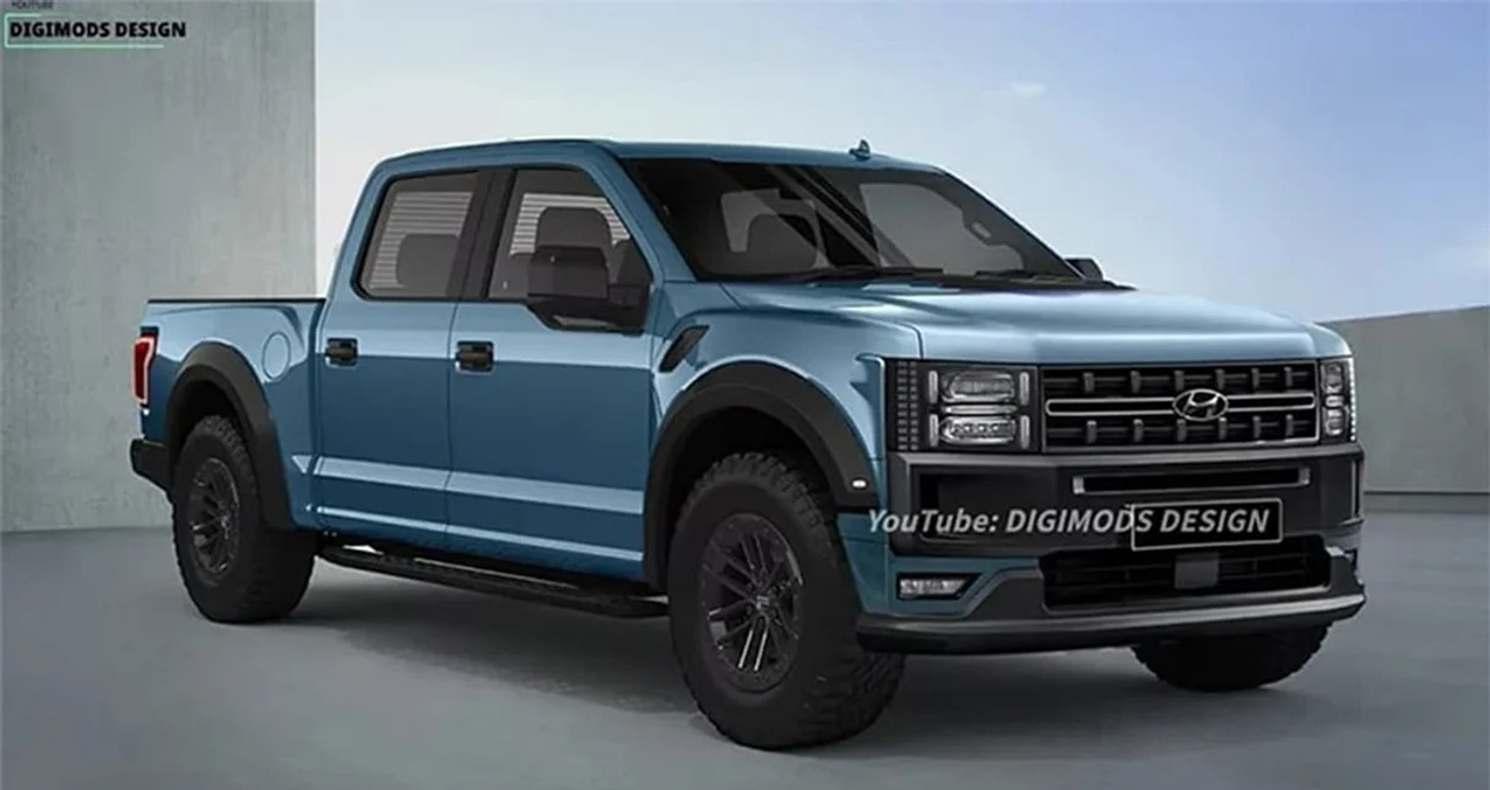

Hyundai has confirmed an in-house-developed dual-cab ute will arrive before the end of the decade, with sales planned for both the United States and Australia. The Boulder concept unveiled at the New York Auto Show gave a preview of the design direction, and based on Hyundai's recent track record on product quality, the production ute is likely to be a genuinely impressive vehicle.
The problem is not the product. The problem is the market it is launching into. Carseekers thinks Hyundai is walking into a tougher Australian ute environment than the company appears to be planning for, and the Kia Tasman story over the past twelve months should be the warning shot.
The Australian ute lore that no longer holds
It has long been Australian automotive lore that to be successful here, a manufacturer needs a dual-cab ute in the lineup. Toyota, Ford, Mazda, Nissan, Mitsubishi, Volkswagen and Jeep have all heeded that call and found a workhorse for their Australian customer base.
That conventional wisdom has rested on a stable underlying assumption: that the ute segment was big enough and resilient enough to reward a serious investment in a new entrant. In 2026, that assumption is no longer obviously true.
The ute segment is contracting in Australia. Mid-size SUVs are back to being the dominant vehicle category, and Toyota's own forecasts suggest that pattern is not changing anytime soon. The segment has shed more than 2,500 sales since the beginning of 2026 compared with the first three months of 2025.
More worrying for any new entrant, the segment is also being flooded with affordable competition from Chinese brands. BYD, GWM, JAC, Foton, LDV and MG are all selling utes in Australia right now, and Chery is about to add a diesel plug-in hybrid ute to the mix. The competitive density at the cheaper end of the ute segment is unprecedented.
What the Kia Tasman story actually says
The Kia Tasman is the obvious case study. Kia entered the segment with a credible product, strong Korean engineering, the backing of one of Australia's most successful brand-building strategies of the past decade, and an established dealer network ready to support sales from day one.
Despite all those advantages, the Tasman has not delivered the sales it was expecting. Hopes are still high that it will eventually reach its annual target of around 20,000 vehicles, but that will require a facelift, new powertrain options, and a stronger focus on fleet customers.
The problem is not that the Tasman is a bad ute. It is a good ute. The problem is that being a good ute is no longer enough when the segment is shrinking, when buyers are increasingly price-sensitive, and when Toyota HiLux and Ford Ranger loyalty is reinforced by years of dealer relationships and resale value.
The structural challenges Hyundai will face
Hyundai's ute will arrive in a market environment with three structural headwinds.
The segment is shrinking. Even if Hyundai captures a respectable five per cent of dual-cab ute sales, that absolute number gets smaller every year as overall ute volume contracts. Hyundai will need higher market share just to hit modest unit targets.
Chinese competition is fierce. A new $40,000 to $50,000 ute from BYD, GWM, JAC or Foton can land with strong specs, generous warranties, and aggressive pricing. Hyundai will not be able to compete on price the way it can in Korea or the US, where Chinese brands do not yet have a presence.
Loyalty to incumbents is deep. HiLux and Ranger buyers tend to stay loyal across multiple ownership cycles. Convincing them to switch brands is one of the hardest sales challenges in the Australian market, and Kia has already proven that strong product alone does not break the loyalty.
Where Hyundai could win
Despite all those headwinds, there are realistic paths to a successful Australian launch.
The first is hybrid or plug-in hybrid powertrains. The current generation of Chinese PHEV utes have shown there is genuine appetite for electrified workhorses, particularly among fleet buyers managing total cost of ownership across long lifecycles. If Hyundai launches with a competitive PHEV from day one, it would slot into a fast-growing sub-segment rather than the contracting diesel base.
The second is fleet sales. Hyundai has built strong fleet relationships through the Santa Fe, Tucson and Staria lineup. Those relationships translate well into commercial vehicle sales when the product is right. Fleet buyers care less about brand heritage and more about lifecycle cost, warranty support, and parts availability.
The third is positioning. If Hyundai resists the temptation to chase the HiLux and Ranger head-on and instead pitches the ute as a different kind of dual-cab (better-equipped urban-friendly, more premium-feeling, with strong everyday usability) it could carve out the buyer who wants a ute that does not look or drive like a traditional workhorse.
The US market is the wrong lesson
Hyundai's senior leadership has talked about the US market as the global motivator for the ute program, and there is sound business logic to that. The US market is massive (though dominated by the Toyota Tacoma), Chinese brands do not yet exist there, and a strong North American ute presence delivers attractive scale economics.
The risk is that Hyundai assumes the Australian opportunity looks like the American one. It does not. The Australian dual-cab ute market is more competitive on a per-capita basis than the American one, and the presence of Chinese brands fundamentally changes the pricing and product strategy.
The US-derived ute product may need significant local adaptation to land well here. Australian buyers want longer warranties, simpler equipment lists tied to Australian working conditions, and pricing structures that account for the presence of $40,000 PHEV alternatives that simply do not exist in the US showroom.
What buyers should watch for
The Hyundai ute is still some years away from showrooms, which means the next eighteen months will reveal a lot about how the company plans to position it. Key signals to watch.
Watch the powertrain announcements. A hybrid or PHEV at launch signals Hyundai understands the Australian electrification opportunity. A diesel-only launch signals the company is targeting the legacy Ranger and HiLux buyer, which is the harder fight.
Watch the pricing strategy. If Hyundai opens above $60,000 for a base diesel variant, it will struggle against the established players' loyalty and the cheaper Chinese alternatives at the same money. If it can open closer to $50,000 for a well-equipped base variant, the conversation becomes more competitive.
Watch the dealer strategy. Hyundai's existing dealer network is strong for passenger cars and SUVs but does not have the same depth of commercial vehicle expertise as Ford or Toyota. Investment in fleet specialists and commercial parts inventory will be a leading indicator of how serious the company is about the segment.
The Carseekers view
The Hyundai ute will probably be a very good vehicle. The Boulder concept looked spectacular, the brand is on a tear of quality products across the lineup, and Hyundai has the engineering depth to deliver a competitive workhorse.
The risk is not the product. The risk is the timing. Launching a new dual-cab ute into a contracting Australian segment, against established loyalty and a flood of cheap Chinese alternatives, is the hardest entry challenge in the Australian market in 2026.
The Kia Tasman has already shown what that looks like. Good product, strong brand, established dealer network, and still struggling to hit unit targets. Hyundai has time to study that experience and adjust its strategy. If it does, the ute could land successfully. If it copies Kia's playbook unchanged, it could repeat Kia's results.
For Australian buyers, the noise around the Hyundai ute is mostly good news. More competition in a contracting segment means dealers will sharpen pricing and add-on bundles to retain buyers. Whether or not you end up buying a Hyundai ute, the launch is likely to push the rest of the segment to offer better value than it would otherwise.
Considering finance for your next car? Loanseekers can help you explore car loan options.
The finer details
Your questions answered.
When is Hyundai launching a dual-cab ute in Australia?
Hyundai has confirmed an in-house-developed dual-cab ute will arrive in both the United States and Australia before the end of the decade, with the Boulder concept previewing the likely design direction. A precise Australian launch date has not been announced, but expect 2028 or 2029.
How is the Kia Tasman selling in Australia?
The Kia [Tasman](https://www.carseekers.com.au/model/kia/tasman) has not delivered the sales it was originally targeting, although hopes remain for the long-term goal of around 20,000 annual units. The path to that target will require a facelift, new powertrain options, and a stronger fleet sales focus.
Why is the Australian ute market contracting?
Mid-size SUVs have reclaimed dominance as the vehicle category of choice, and Toyota's own forecasts suggest the trend will not reverse soon. The dual-cab ute segment shed more than 2,500 sales in the first three months of 2026 against the same period in 2025, despite an influx of new brands and models.
Will Hyundai's new ute be hybrid or diesel?
Hyundai has not formally confirmed powertrain options yet. A hybrid or plug-in hybrid launch would position the ute in a fast-growing electrified sub-segment, while a diesel-only launch would target the traditional [HiLux](https://www.carseekers.com.au/model/toyota/hilux) and [Ranger](https://www.carseekers.com.au/model/ford/ranger) buyer base, which is a harder competitive fight.
How will the Hyundai ute compete with Chinese alternatives?
Chinese brands like BYD, GWM, JAC and Foton are pricing utes aggressively below $50,000 with strong specifications. Hyundai will likely be priced above those rivals but can compete on dealer network depth, established brand reputation, fleet support, and warranty terms. Pure price competition with the Chinese players is not a realistic strategy.
Should I wait for the Hyundai ute or buy a HiLux or Ranger now?
If you need a ute in 2026, the established Ranger and HiLux options remain the safest plays for resale value and dealer support, and the new PHEV ute alternatives like the BYD Shark 6, GWM Cannon Alpha and JAC Hunter offer compelling electrified options. The Hyundai ute is too far away to wait for unless your current vehicle has plenty of life left.