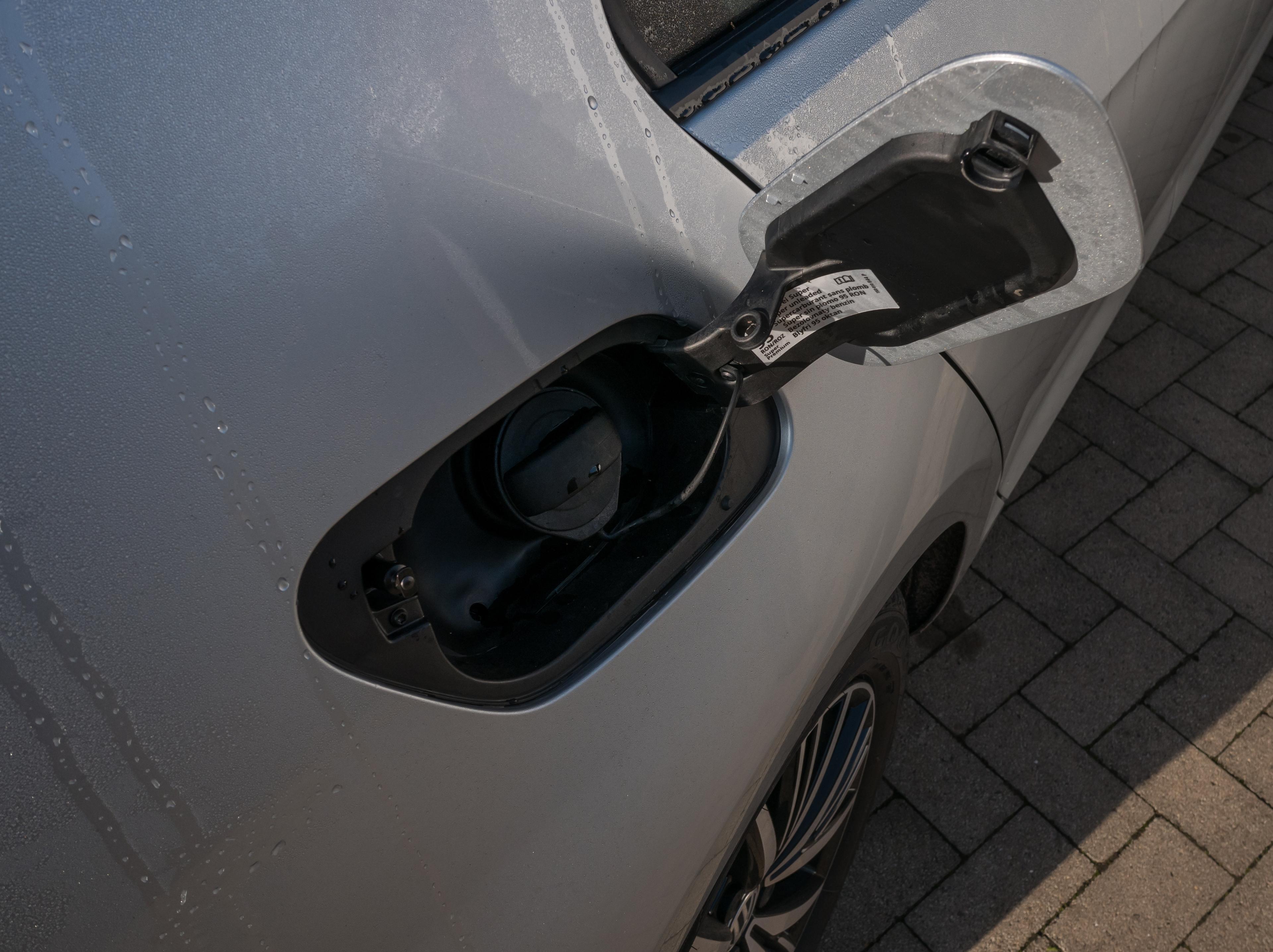

A Volkswagen Golf fuel filler flap and cap. Illustrative fuel-label context, not a fuel recommendation for another car. Previews may crop the photograph.
Photo: Basotxerri · CC BY-SA 4.0
Minimum and recommended RON wording needs reading in the exact car's instructions. Do not infer permission to use a lower grade because an advertisement only says petrol, or because another engine in the range accepts it.
The NSW octane explanation describes RON as the rating commonly displayed at service stations and says fuel must meet the manufacturer's specified minimum. Ford's Australian fuel guidance directs owners to the fuel flap and manual for their particular vehicle.
Write down the complete instruction
Record the engine and variant, manual edition, minimum permitted grade, recommended grade and any conditions attached to an alternative. Check ethanol compatibility separately rather than treating a higher octane number as permission for every blend.
If the fuel flap and manual seem inconsistent, ask the manufacturer or authorised service department to explain in writing. A salesperson's general statement about the whole model range does not resolve an engine-specific instruction.
Compare two fictional labels carefully
Suppose one fictional manual states 95 RON minimum. That is not an invitation to use 91 RON because it costs less.
Suppose another fictional manual expressly permits 91 RON and recommends a higher grade for specified performance conditions. Record both instructions and those conditions. Do not transfer that permission to a different car whose manual only recommends premium.
These labels illustrate how to read wording; they are not specifications for an identifiable vehicle. If your manual does not clearly permit the lower grade, obtain clarification before using it.
Put the price difference into your own budget
Use actual annual fuel purchased, or a clearly labelled estimate. Multiply litres by the price difference per litre, keeping the compared prices from the same place and time.
For a hypothetical example, 1000 litres multiplied by a $0.20 difference is $200 per year. That is only a price-gap calculation. It assumes the same fuel quantity and does not claim the fuels produce the same consumption or performance.
Our 91 RON model shortlist is a starting point for shopping. The fuel instruction for the exact engine you buy remains the check that matters.
If fuel cost changes your preferred car or total budget, price the ownership assumptions before signing. For vehicle-finance information, visit Loanseekers after separating the purchase amount from your fuel forecast.