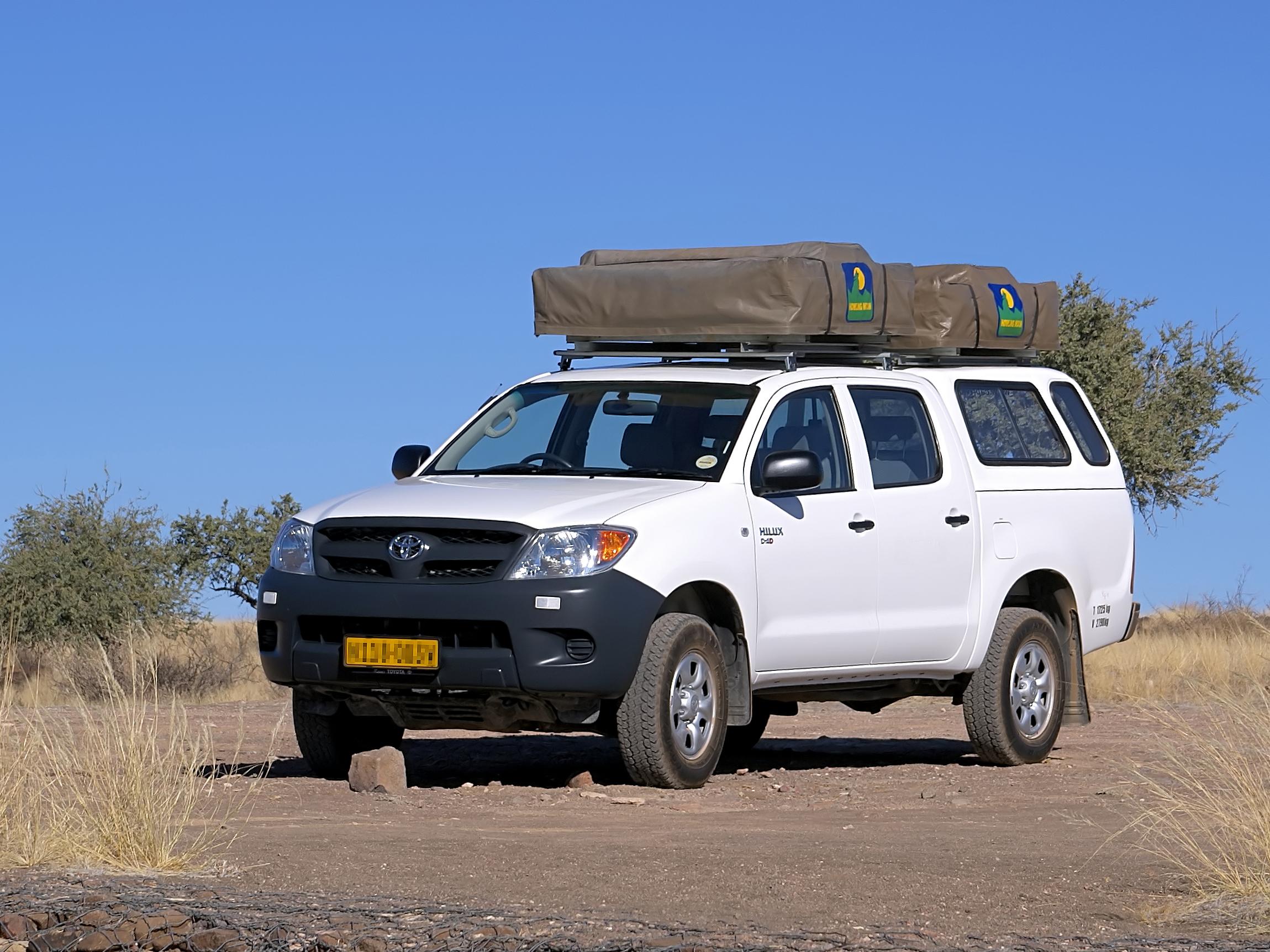
Roof tents carried on a Toyota Hilux in Namibia. Illustrative equipment context, not approval of the vehicle or roof load. Previews may crop the photograph.
Photo: Hans Hillewaert · CC BY-SA 3.0
Roof loads need checking before the rooftop tent goes on the shopping list. The useful figure is the limit for the complete system on your exact vehicle, under the conditions in which you will use it.
A large number on a rack brochure does not answer whether the roof, mounting points or vehicle manufacturer permit the same load.
Keep travel and parked ratings separate
Ask the vehicle manufacturer for its roof-load instructions and any restrictions on rooftop tents. Ask the rack supplier for the approved vehicle fitment and operating conditions. Ask the tent supplier what mounting arrangement it requires.
Record a travelling rating and a parked rating only where the relevant manufacturer actually provides them. Do not multiply a driving limit to invent a parked limit, or transfer a figure from a similar vehicle.
Tesla's roof-rack instructions demonstrate the principle: roof load includes the rack, accessory racks and carried load, and the stated limits for the rack, accessories and vehicle must be respected. Those instructions do not approve a rooftop tent for every car.
Use a lowest-limit worksheet
Vehicle: exact variant, roof type, mounting points, permitted loading conditions and the manufacturer's written restriction.
Rack: exact feet, bars or platform, fitment kit and load conditions. Confirm whether the quoted allowance already includes the rack's own weight.
Tent and extras: tent, mounting hardware, bedding carried in transit and other equipment. Weigh the actual travelling package rather than relying on a tent-only listing.
A hypothetical example shows why definitions matter. Suppose the vehicle permits 75 kg above the roof, a compatible rack weighs 15 kg, and the tent with its fittings weighs 55 kg. The travelling total is 70 kg, leaving 5 kg under that vehicle limit. A lower applicable component limit could still rule the setup out.
This arithmetic is not approval. Occupants, bedding used when parked, uneven surfaces and off-road restrictions require their own manufacturer answers.
Check the rest of the vehicle too
Record overall loaded height, vehicle payload and axle limits. Ask the fitter how the load will be secured and checked, following the supplied instructions. Do not treat a successful roof calculation as a completed vehicle-loading assessment.
Our HiLux GVM-upgrade explainer concerns a different limit. An increase in vehicle payload is not evidence that a roof system can carry more.
If buying a vehicle for the trip, price the compatible rack and tent before finalising the budget. If considering finance for the vehicle, take the agreed purchase price to Loanseekers alongside your equipment budget.